Top 20 Free Do-Follow Backlinks for Startups (That Actually Work in 2026)
You just launched your startup.
You've got the product. You've got the website. You've written a few blog posts that your mom thinks are great. And now you're staring at a DA of 1, a DR of 0, and a Google position of "doesn't exist."
Here's the uncomfortable reality: every competitor you're trying to outrank has been building authority for years. They have hundreds — sometimes thousands — of backlinks pointing to them. Each one is a trust vote telling Google, "this site matters."
You have none.
Starting from zero isn't just discouraging. In SEO terms, it means Google has no reason to rank you for anything competitive. You're a new face in a room full of people who've been networking for years.
But here's the thing they don't tell you: there are dozens of high-authority platforms that will give you a free, legitimate, indexed dofollow link just for showing up and creating a profile. No pitching. No payment. No months of waiting.
A single dofollow link from a DA 90+ platform can do more for your nascent domain authority than 50 spammy directory submissions. And for a startup with $0 budgeted for link building, these are the platforms you should hit first.
This is that list. Real sites, real links, real impact.
But first — two minutes that'll save you weeks of wasted effort.
Get Organic SEO Traffic in Days
Ideal for individuals and small teams looking for simple, powerful SEO tools.
Use the code SECRETCODE100 And unlock a free trial!
$0
/month
Free Page Structure Audit
Find top pages by SEO traffic
Backlinks Finder & Builder
AI-visibility Checker
Export data
Color-coded SEO elements
Email Support
LLM Topic Finder
What "Dofollow" Actually Means (And Why You Should Care)
When a website links to you, it sends one of two types of signals to Google.
A dofollow link tells Google's crawlers: "Follow this link. This website endorses that one. Pass authority through." Dofollow links transfer what SEOs call "link juice" — the ranking power and trust signals that flow from the linking domain to yours. More high-quality dofollow links = higher domain authority = better ranking potential.
A nofollow link includes a rel="nofollow" attribute that historically told Google: "We're linking here, but don't use this as an endorsement." Originally, this meant zero SEO value.
Then Google changed the rules in 2019. Nofollow is now treated as a "hint" rather than a directive — Google may choose to count it or not. In practice, nofollow links from high-authority domains still contribute to brand signal recognition, crawl frequency, and indirect ranking benefits.
But for a startup with zero authority trying to build fast? Dofollow links are what you're hunting. They pass link equity directly. They build DA faster. They compound over time.
The bad news: plenty of platforms that show up on "free backlink" lists are actually nofollow. We'll flag every one clearly here.
One more thing: Google updated its spam policies and now specifically targets manipulative link schemes — so the era of submitting to 500 random directories and watching your DA climb is dead. What works now is legitimate presence on genuine, high-authority platforms. Fortunately, that's exactly what this list covers.
The Golden Rules Before You Start
One profile per domain. Creating five profiles on the same platform from different accounts is a red flag to both the platform and Google.
Complete every profile fully. Half-empty profiles get ignored by algorithms and moderators alike. Add your real business name, a genuine bio (unique to each platform — do NOT copy-paste), your website URL, a professional photo or logo, and your location if relevant. Google's entity recognition relies on consistent NAP (Name, Address, Phone) data across platforms.
Never copy-paste your bio across every profile. Google's 2026 algorithms are sophisticated enough to recognize when the same block of text appears across dozens of different domains. Write a fresh, 100–150 word description for each platform. Sounds tedious. Does wonders.
Pace yourself. Creating 20 profiles in a single afternoon looks unnatural. Aim for 3–5 per week over a month. Natural pacing signals organic growth.
Track everything. Use a spreadsheet. Log the platform, registration date, profile URL, link type (dofollow/nofollow), and DR/DA of the platform. This becomes your link building asset register.
Now — the list.
1. Crunchbase — DA 91 | Dofollow ✅
What it is: The world's most-used startup and company database. Investors, journalists, and potential customers use Crunchbase to research companies before meetings, coverage, and purchases.
Why it matters: By creating a Crunchbase account and linking to your website, you'll get a backlink from a website with a domain authority score of 91. That is an extraordinary free link. A single Crunchbase profile link carries more authority weight than hundreds of low-quality directory submissions.
The hidden bonus: When journalists research your company for coverage, they often cite your Crunchbase profile, which generates secondary editorial links from media coverage pieces. The initial link becomes a gateway to more.
How to get it: Go to crunchbase.com. Create a free account. Add your organization profile. Fill in funding details, founders, description, and website URL in full. The website field passes a dofollow link.
Startup-specific tip: Add your founding date, team members, and any funding rounds (even a seed round or bootstrapped). More complete profiles get indexed faster and rank in Crunchbase's own search results.
2. Product Hunt — DA 91 | Dofollow ✅
What it is: The go-to platform for discovering new products. Tech enthusiasts, early adopters, investors, and journalists use it daily to find what's new.
Why it matters: Product Hunt has a DR of 91 and provides dofollow links, making it high-value for tech early adopters. Beyond the link itself, a well-executed Product Hunt launch can drive thousands of real users to your site in a single day — with referral traffic that converts.
How to get it: Register on producthunt.com. Create a maker profile with your website link. Then submit your product. Even if your launch doesn't make the front page, the product listing page with your website link is indexed and the dofollow link is live.
Startup-specific tip: Don't launch without community preparation. Get 10–20 people ready to upvote and leave genuine first-hour reviews. The first hour velocity determines visibility for the day. A Product Hunt front-page appearance for even 24 hours can drive hundreds of new backlinks from blogs writing roundups of "today's top launches."
3. G2 — DA 91 | Dofollow ✅
What it is: The largest software review platform in the world. Buyers — including enterprise procurement teams — use G2 to research every software purchase.
Why it matters: G2 has a DR of 91 and provides dofollow links with very high traffic value from commercial-intent buyers. If you're a SaaS startup, not being on G2 is the equivalent of not having a LinkedIn page. Buyers will search for your product name + reviews and find nothing — which erodes trust immediately.
How to get it: Go to g2.com. Claim or create a free product listing. Fill in your product description, category, pricing, and website URL. The website link in your product profile is dofollow.
Startup-specific tip: Immediately after launching your G2 profile, ask your first 5–10 users to leave honest reviews. G2 products with reviews get dramatically more profile traffic, more referral clicks, and in some categories, G2 profile pages themselves rank on Google for "[product name] reviews" searches — giving you a second result on page one for your own brand.
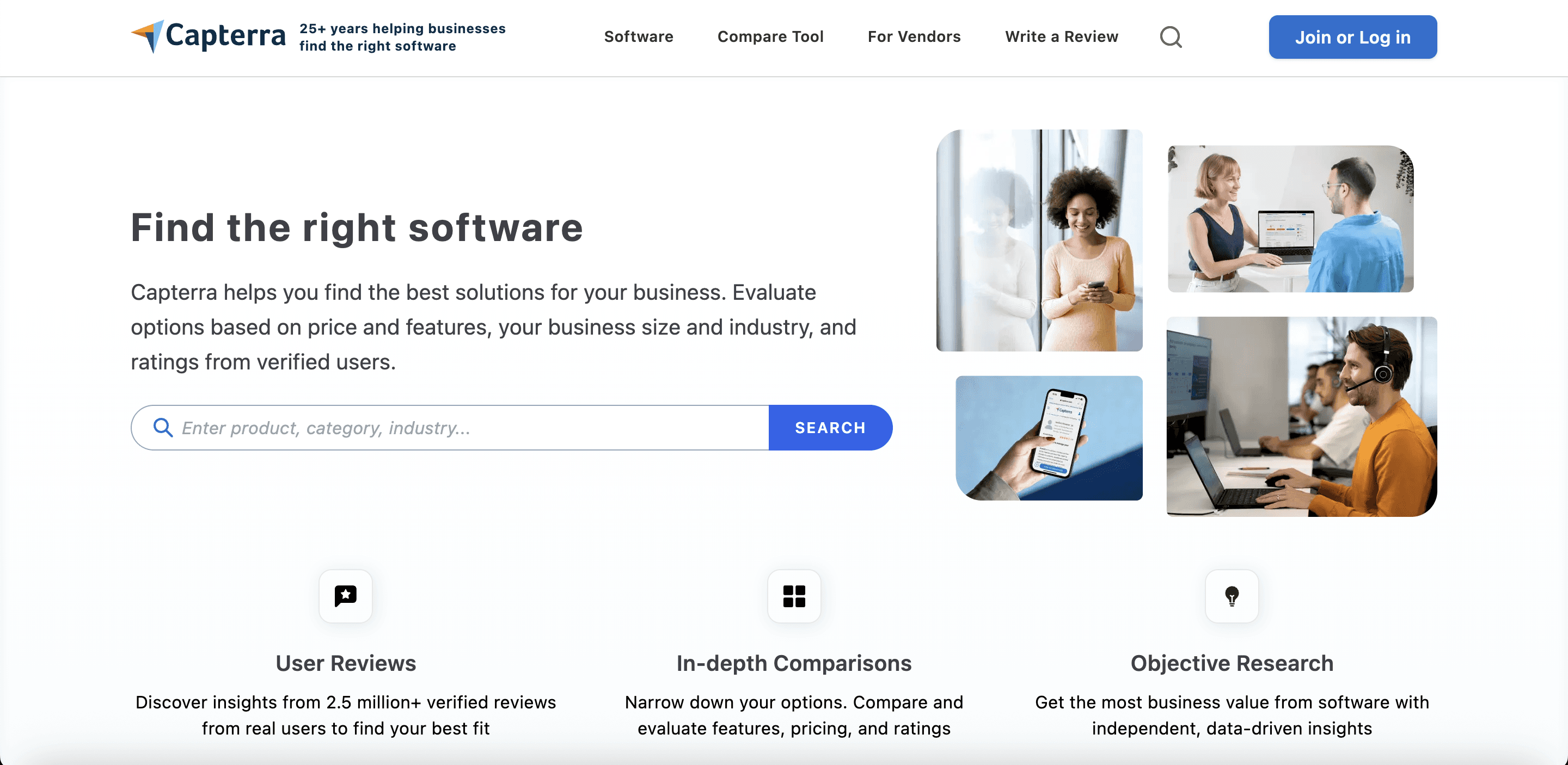
4. Capterra — DA 91 | Dofollow ✅
What it is: A leading software discovery and review platform, particularly strong with SMB and mid-market buyers.
Why it matters: Capterra provides dofollow links with very high traffic value from enterprise software buyers. Like G2, a Capterra listing is table stakes for any B2B SaaS product. The combined G2 + Capterra presence creates a review ecosystem that reinforces your credibility across multiple high-authority domains simultaneously.
How to get it: Submit your product at capterra.com/vendors. Free listings are available. Include full product description, categories, and your website URL.
Startup-specific tip: Capterra listings that include screenshots, a demo video, and pricing information convert significantly better. The more complete your listing, the more Capterra's algorithm promotes your product in category searches.
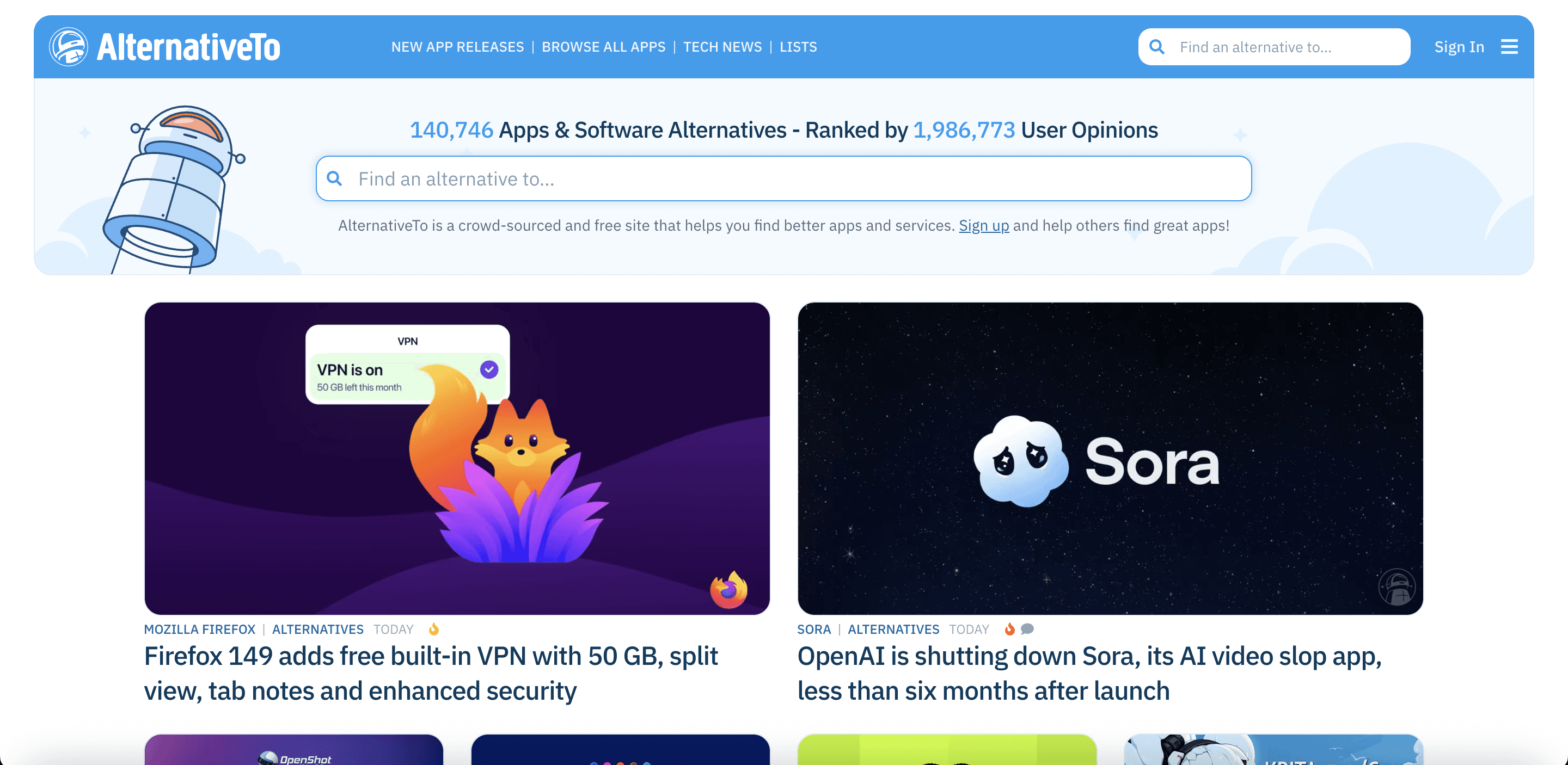
5. AlternativeTo — DA 89 | Dofollow ✅
What it is: A crowdsourced software recommendation engine where people search for alternatives to tools they already use.
Why it matters: AlternativeTo has a DR of 89 and provides dofollow links. The traffic quality is exceptional — people searching on AlternativeTo are actively looking for software solutions in your category. They have intent. They have budget. They're comparing options.
How to get it: Add your app at alternativeto.net/add. Free submission. Include your website URL, category, and description. List competing products your tool is an alternative to.
Startup-specific tip: This platform is a stealth traffic source most startups ignore. If you compete with established tools (Slack, Notion, HubSpot), people search "Notion alternatives" constantly. Being listed as an alternative to category leaders puts you in front of their disgruntled users.
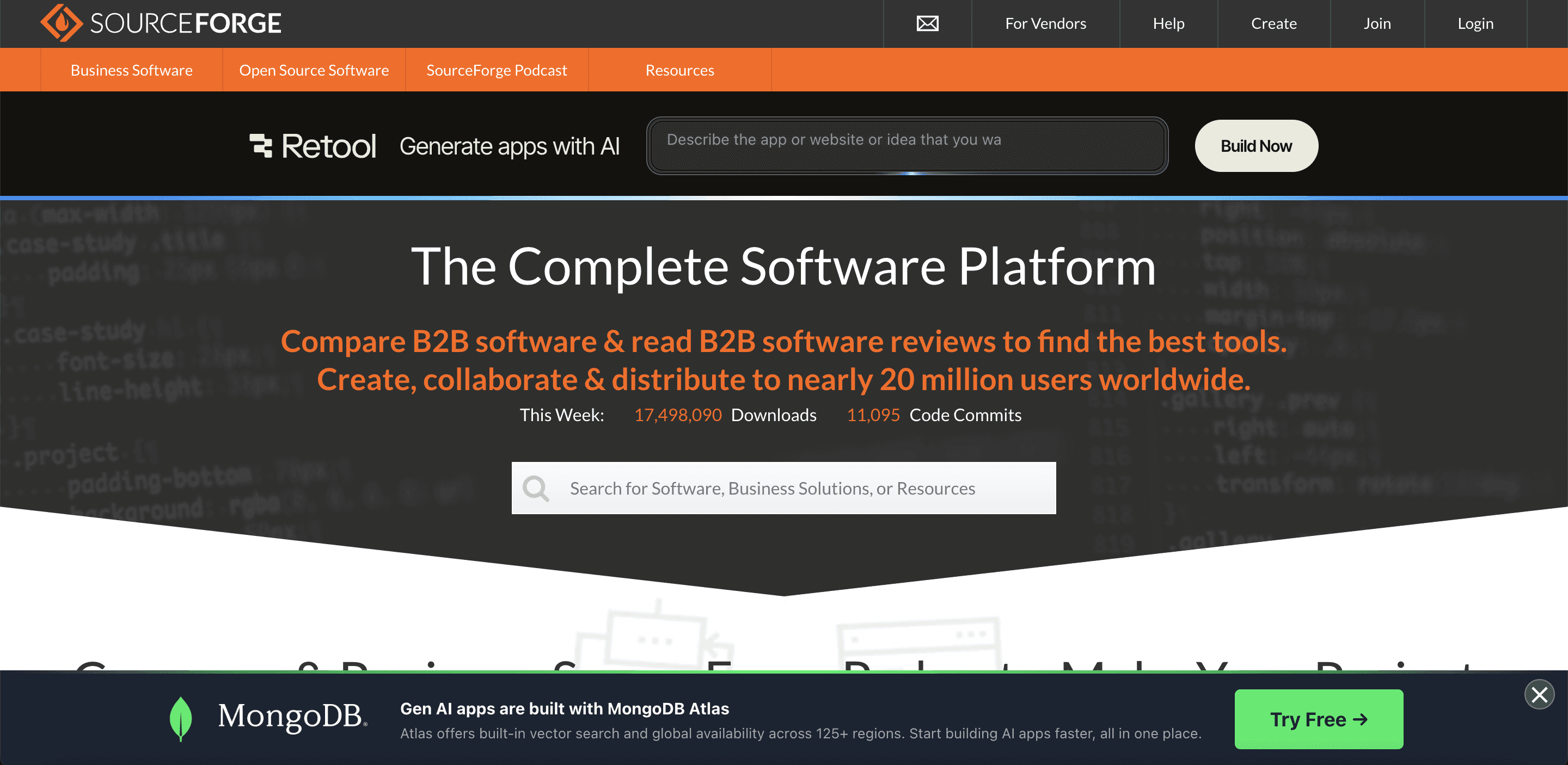
6. SourceForge — DA 86 | Dofollow ✅
What it is: One of the original software hosting and discovery platforms. Still heavily used by developers and IT professionals evaluating tools.
Why it matters: DR 86, dofollow, and free. SourceForge has millions of monthly visitors and strong category pages that rank well in Google for software comparison queries.
How to get it: Register your project at sourceforge.net. Add description, website URL, screenshots, and documentation. Open-source and commercial software both qualify.
Startup-specific tip: SourceForge is particularly valuable for developer tools, open-source projects, and infrastructure software. If your startup has a free tier or open-source component, SourceForge listings consistently attract developer audiences that convert into power users and champions.
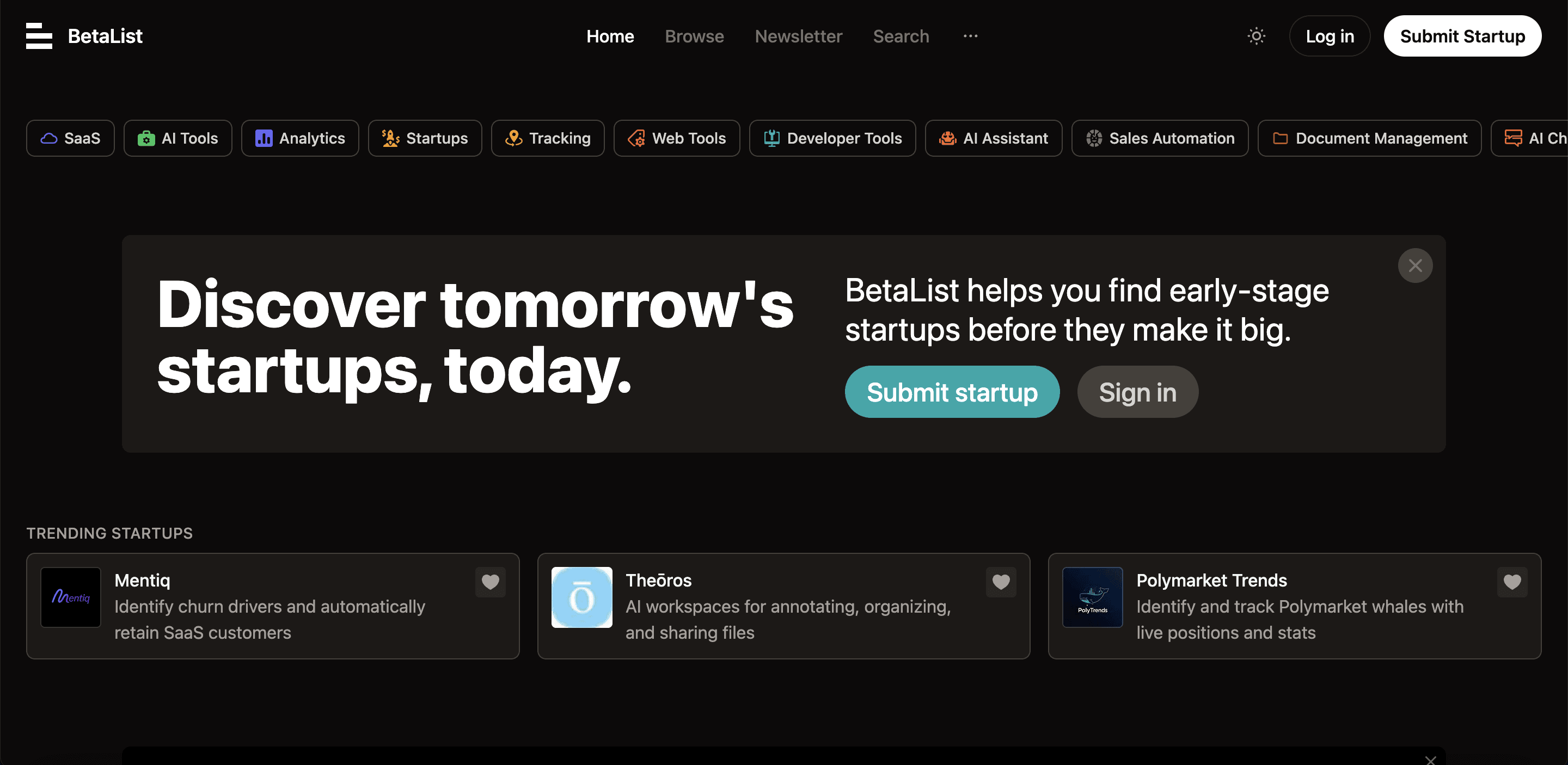
7. BetaList — DA 65 | Dofollow ✅
What it is: A curated directory of early-stage internet startups, specifically designed for pre-launch and recently-launched products.
Why it matters: The audience on BetaList is a concentrated cluster of early adopters, angel investors, tech journalists, and founder-curious professionals. These are the people who write about what they find, invest in what excites them, and tell their networks about tools they discover early. The dofollow backlink is valuable, but the audience quality is exceptional.
How to get it: Submit your startup at betalist.com/submit. Free submissions are accepted, though priority listing (faster review) is paid. The free path works fine — just requires more patience.
Startup-specific tip: Use the BetaList submission to start building a waitlist. The platform has an email capture mechanism and actively promotes upcoming launches. A pre-launch BetaList listing that gathers 500 waitlist signups before you go live is a signal worth more than most paid acquisition.
8. Hashnode — DA 72 | Dofollow ✅
What it is: A developer-focused blogging platform and community that publishes technical content and hosts developer blogs.
Why it matters: Hashnode gives you something the other platforms on this list don't: a contextual dofollow link embedded in genuinely useful content you write yourself. Articles published on Hashnode can rank in Google independently, driving traffic to your site from multiple angles simultaneously.
How to get it: Create a free account at hashnode.com. Publish technical articles relevant to your product's domain. Within each article, link naturally back to your website or specific relevant pages. These are contextual dofollow links from a high-authority domain.
Startup-specific tip: Write technical deep-dives related to your product's problem space. A startup building developer tools should be publishing detailed technical articles on Hashnode. These pieces rank, build credibility in the developer community, and drive referral traffic — plus the backlinks. It's the platform equivalent of a guest post, but without the pitching.
9. DEV Community (dev.to) — DA 87 | Dofollow ✅
What it is: One of the largest developer content communities on the internet. Hundreds of thousands of developers publish, read, and discuss technical content daily.
Why it matters: DEV.to is to developer-focused startups what Medium once was to everyone — a high-authority platform where your content can get indexed, shared, and ranked on its own. Links from published articles back to your site are dofollow from a DA 87 domain.
How to get it: Create an account at dev.to. Publish useful, technical content. Link back to your product, tutorial, or relevant documentation within context. Avoid overt promotional posts — the DEV community moderates aggressively against spam.
Startup-specific tip: The best-performing content on DEV.to is practical and honest — build logs, technical retrospectives, engineering challenges, and how-tos. A post titled "How We Built X in 3 Days" with honest detail consistently outperforms promotional product announcements.
10. Medium — DA 95 | Dofollow (in some contexts) ⚠️
What it is: The world's largest independent publishing platform. Enormous domain authority, massive readership, and strong search presence.
Why it matters: Medium has a DA of 95. The domain authority alone makes it worth publishing on. However, here's the important nuance: Medium's standard external links are nofollow. But links within your own publication and within certain formatted article contexts have been observed to pass follow signals in practice.
How to get it: Create an account at medium.com. Start a publication under your startup's name. Publish substantive articles with contextual links back to your site. Even the nofollow links from Medium drive real referral traffic given the platform's readership size.
Startup-specific tip: The SEO value of Medium is partially indirect — articles published on Medium rank in Google on their own (Medium.com subdomain results appear frequently), and when your Medium article ranks, it drives awareness that leads to natural editorial links from people who read it elsewhere. Medium is a traffic amplifier as much as a link source.
11. LinkedIn — DA 98 | Nofollow (but critical) ⚠️
What it is: The world's largest professional network with the highest domain authority of any social platform.
Why it matters: Technically nofollow. But dismissing LinkedIn as a backlink source misses the bigger picture. Google's 2019 nofollow policy update means nofollow links are now "hints" — and links from a DA 98 platform are very strong hints. More importantly: According to recent SEO research, 89% of SEOs believe nofollow links influence rankings under Google's post-2019 policy. LinkedIn company pages are indexed by Google, often ranking on page one for brand searches.
How to get it: Create a LinkedIn Company Page for your startup. Fill in all details including your website URL. Publish updates, articles, and announcements regularly. Encourage team members to list the company on their personal profiles.
Startup-specific tip: A LinkedIn Company Page with consistent activity and a complete profile often outranks your own website for brand name searches in the early days when your DA is still low. Control that result — make your LinkedIn page a polished, trustworthy first impression.
12. AngelList / Wellfound — DA 82 | Dofollow ✅
What it is: The leading startup jobs and investor platform, rebranded as Wellfound but still widely known as AngelList. Used by thousands of investors for deal flow discovery and by job seekers for startup opportunities.
Why it matters: Dofollow link from a DA 82 domain, plus a real distribution channel. Investors actively browse Wellfound. Startup job seekers do too. Your presence here builds credibility with exactly the audiences that matter most in early stages — investors who might fund you and talent who might join you.
How to get it: Register your company at wellfound.com. Complete the company profile including funding details, team members, description, and website URL.
Startup-specific tip: Even if you're not actively hiring, Wellfound company profiles are indexed and rank in search. A complete Wellfound profile signals to investors doing due diligence that your company is legitimate and established.
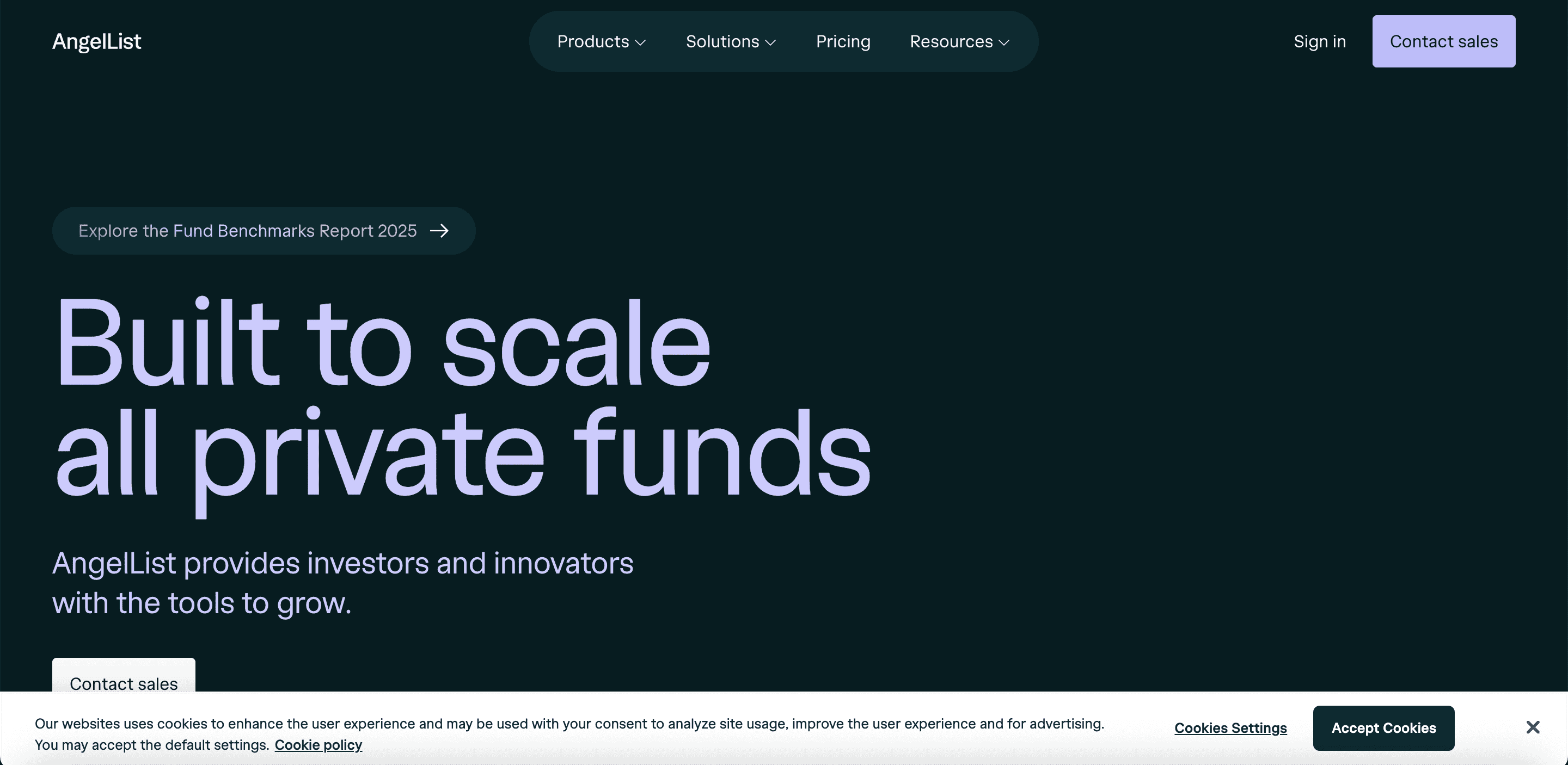
13. Clutch.co — DA 83 | Dofollow ✅
What it is: A B2B ratings and reviews platform specifically for service companies — agencies, development firms, design studios, consultancies.
Why it matters: If your startup is a service business or has a services component, Clutch is a premium dofollow source. DA 83, buyer-intent traffic, and a platform Google consistently ranks for commercial service queries.
How to get it: Claim or create a profile at clutch.co. Free listings are available. Add your services, description, team size, pricing, and website URL.
Startup-specific tip: Clutch listings without reviews are essentially invisible. Collect at least 3 verified client reviews in your first 60 days of listing. Once you hit 5+ reviews with a strong average, Clutch actively promotes your profile in category searches — driving real inbound leads on top of the backlink value.
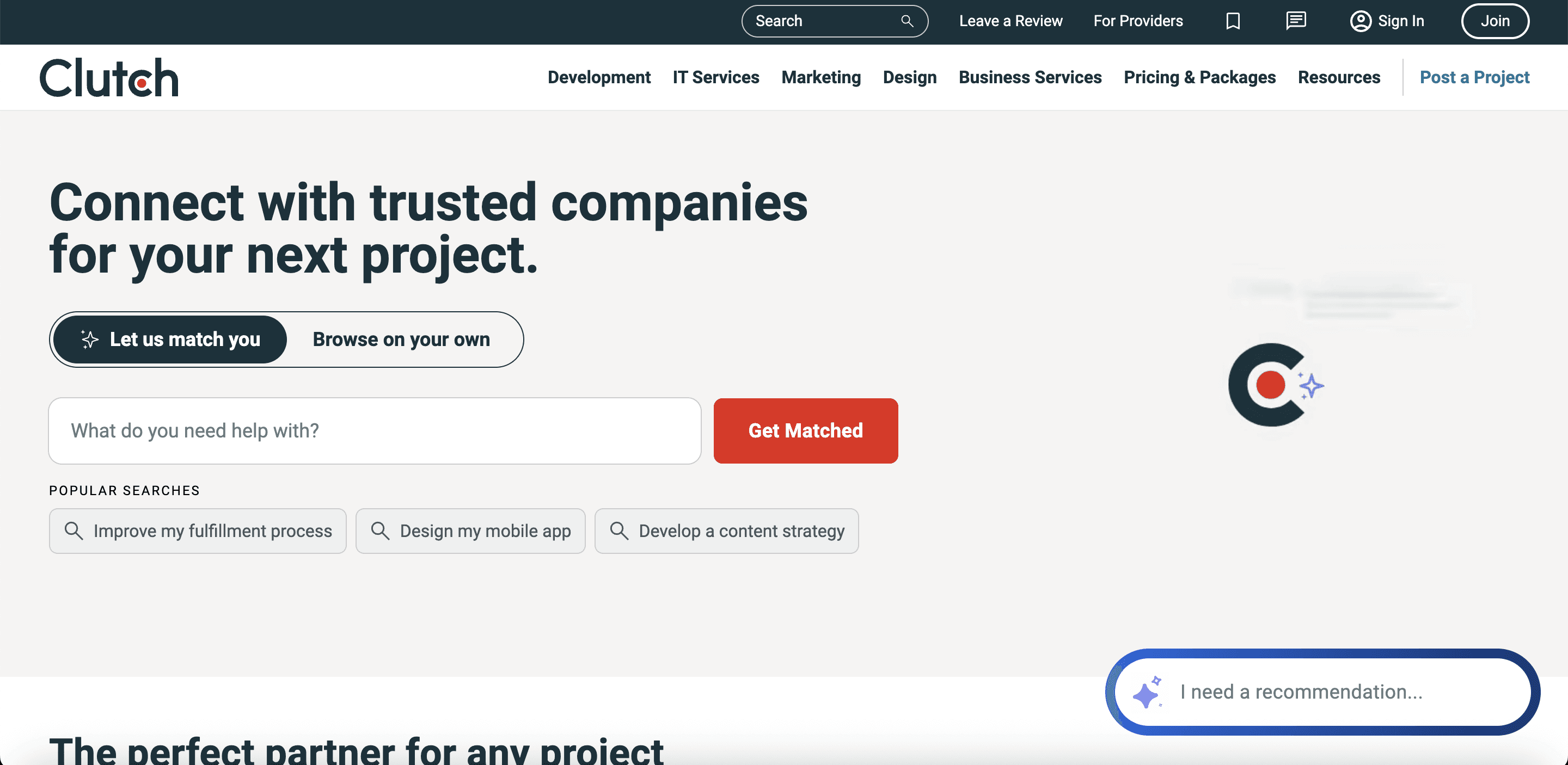
14. About.me — DA 75 | Dofollow ✅
What it is: A personal profile creation platform that lets founders, consultants, and creators build a simple, polished web presence with links to their work.
Why it matters: About.me profiles consistently get indexed by Google and show up in personal brand searches. For founders, having an About.me profile with a link to your startup creates a founder-to-company link signal that adds entity recognition — helping Google understand that you and your startup are connected.
How to get it: Create a profile at about.me. Add your professional bio, photo, and website link. The website field is dofollow.
Startup-specific tip: Founders are underrated SEO assets. Google increasingly uses entity knowledge graphs — understanding that Person A founded Company B at Location C. Every platform that connects your personal profile to your startup's domain strengthens this entity recognition. About.me is one of the cleanest ways to build this signal for free.
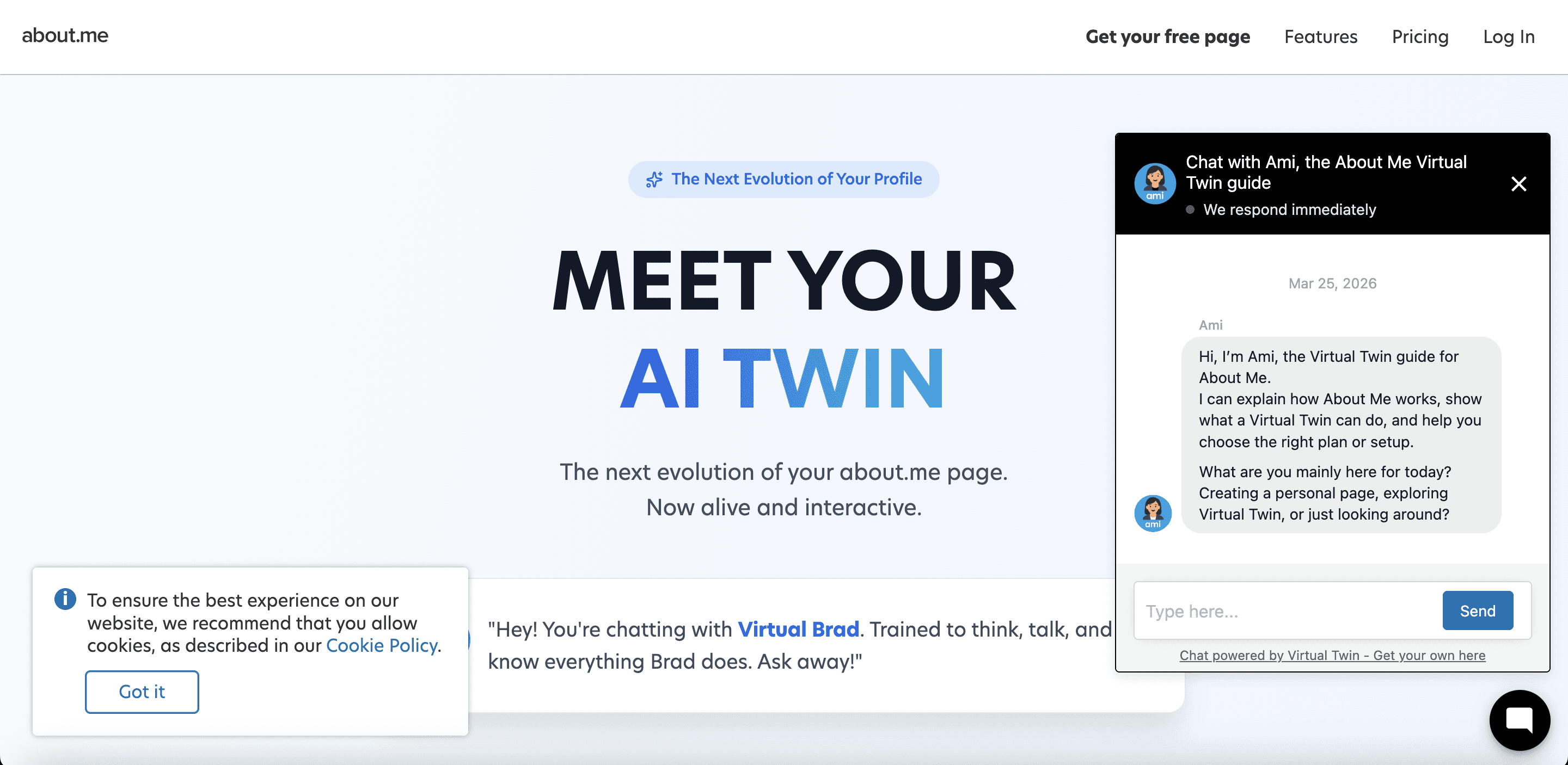
15. Muck Rack — DA 85 | Dofollow ✅
What it is: A journalist and PR professional network used heavily by media to find expert sources and company PR contacts.
Why it matters: Muck Rack exists at the intersection of PR and SEO in the most literal way. The platform is used by journalists to find people to quote and companies to cover. A complete Muck Rack profile with your website link does two things simultaneously: provides a dofollow backlink from a DA 85 domain, and puts your startup in front of journalists actively looking for story sources in your industry.
How to get it: Create a free account at muckrack.com. Set up your journalist or PR profile with your startup's website link in your bio.
Startup-specific tip: Set your expertise areas specifically. A journalist writing about fintech startups might search Muck Rack for "fintech founder" sources. Being findable here with a complete profile, a media-ready bio, and a press contact email has generated editorial coverage for startups that spent nothing on PR outreach.
16. Behance — DA 93 | Dofollow ✅
What it is: Adobe's creative portfolio platform used by designers, developers, and creative agencies to showcase work.
Why it matters: Behance has a DA of 93 and passes dofollow links from the website field in your profile. For design-adjacent startups, creative tools, or any company with visual work to showcase, Behance is one of the highest-authority free dofollow links available.
How to get it: Create a free account at behance.net. Build a portfolio showcasing your product design, UI screenshots, brand work, or any visual output. Add your website URL to your profile.
Startup-specific tip: Even non-design startups can find angles here. Product interface screenshots, data visualization work, or brand identity projects qualify. A Behance portfolio case study documenting your product's design process is both a dofollow backlink source and a credibility asset when pitching design-conscious investors or enterprise clients.
17. Slideshare — DA 95 | Dofollow ✅
What it is: LinkedIn's presentation-sharing platform. Millions of professionals browse SlideShare for pitch decks, how-to presentations, industry reports, and training materials.
Why it matters: SlideShare sits on LinkedIn's infrastructure with a DA of 95 and provides dofollow links within presentation descriptions and profile pages. Published presentations index on Google and rank for educational and informational queries.
How to get it: Create a free account at slideshare.net (sign in via LinkedIn). Upload a presentation related to your startup's domain — a "How [Your Industry] Works" deck, a problem-solution framework, or a market trends analysis. Include your website URL in the presentation description.
Startup-specific tip: Repurpose existing content. That long-form blog post you wrote? It's already 80% of the way to becoming a SlideShare deck. Visual slides with strong data points and clean design consistently perform well on the platform, and high-performing SlideShares generate organic backlinks from educators and bloggers who embed them.
18. Disqus — DA 91 | Dofollow ✅
What it is: The most widely used comment management system on the web, embedded on millions of blogs and news sites.
Why it matters: Your Disqus profile page is a DA 91 dofollow link source — and it passively accumulates over time as you engage in genuine discussions across the web. Every comment you leave links back to your Disqus profile, and your profile prominently links to your website.
How to get it: Create a free account at disqus.com. Complete your profile with your real name, bio, and website URL. Then engage genuinely in discussions on blogs and publications in your industry. Your profile, not individual comments, holds the dofollow link.
Startup-specific tip: Use Disqus engagement strategically. Leaving thoughtful, substantive comments on high-traffic industry blogs gets your brand name in front of readers who are already your target audience. The SEO benefit (Disqus profile link) is secondary to the brand awareness and referral traffic that well-placed comments generate.
19. F6S — DA 72 | Dofollow ✅
What it is: A startup community platform with over 3 million founders registered, specifically designed for startup program applications, accelerator listings, and investor connections.
Why it matters: F6S is purpose-built for startups in a way that most platforms on this list are not. It's actively used by accelerator programs, startup programs, and government innovation initiatives — many of which require an F6S profile for applications. A dofollow link from an active, niche-relevant platform is worth more than a link from a generic high-DA directory with no topical connection to your space.
How to get it: Register at f6s.com. Complete your startup profile with a detailed description, founding team, product details, and website URL.
Startup-specific tip: F6S lists hundreds of active startup programs, accelerators, and grant opportunities that you can apply to directly from your profile. The platform is both a link source and a business development tool — particularly valuable for early-stage founders looking for non-dilutive funding and mentorship programs.
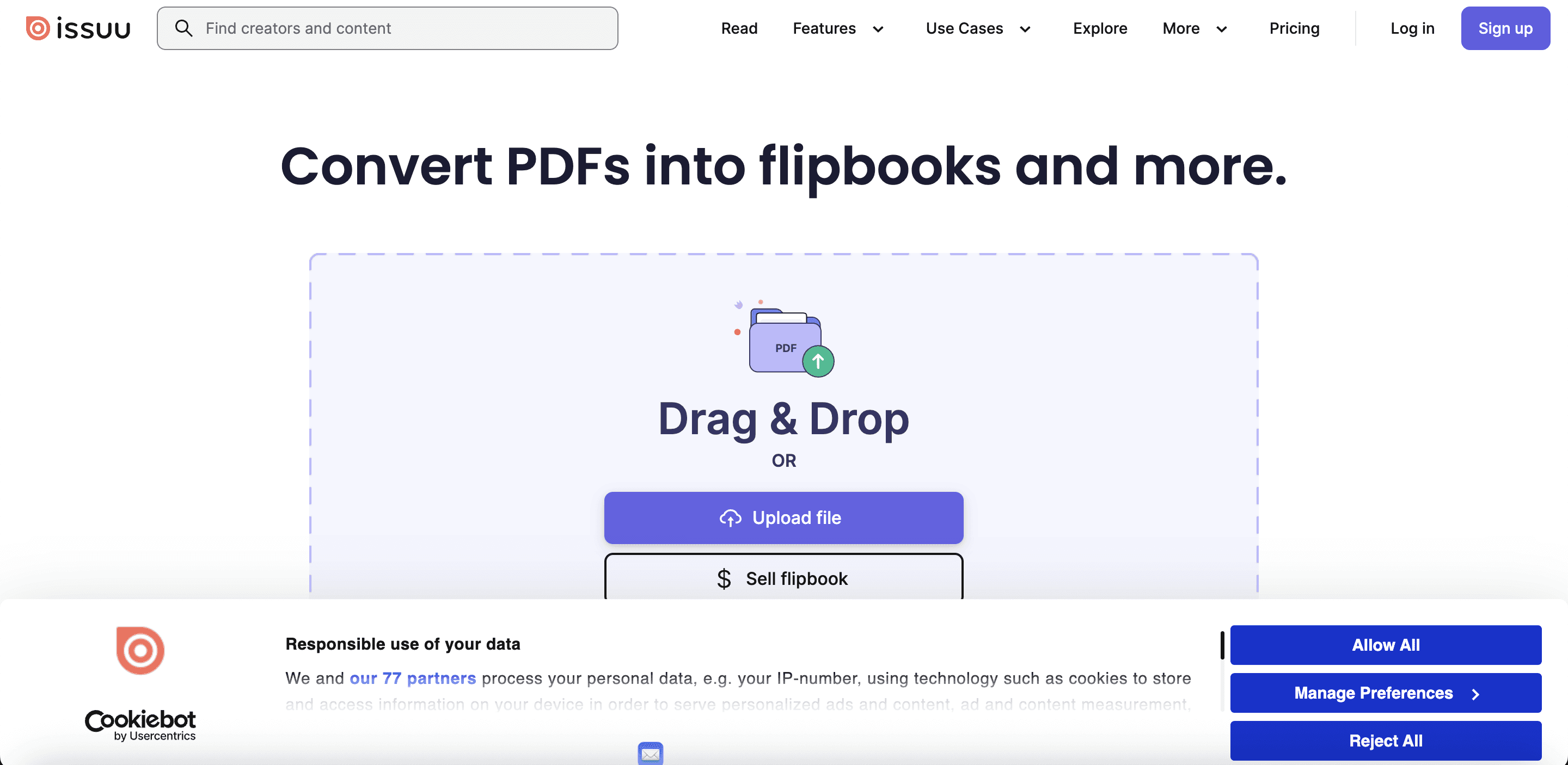
20. Issuu — DA 94 | Dofollow ✅
What it is: A digital publishing platform where companies and creators share PDFs, magazines, brochures, reports, and presentations in an interactive reader format.
Why it matters: Issuu has a DA of 94 and provides dofollow links from publication descriptions and profile pages. More importantly, it's a content distribution channel that most startups completely ignore — meaning competition for visibility is low while the platform's authority is high.
How to get it: Create a free account at issuu.com. Upload documents — investor decks (if shareable), product guides, case studies, industry reports, or white papers. Add your website URL to your profile and in the description of each published document.
Startup-specific tip: Pitch decks that get published on Issuu regularly get shared by startup-focused publications and blogs that curate "best startup decks" content. A well-designed, partially redacted version of your pitch deck published on Issuu is the kind of content that generates unsolicited editorial links from startup media — turning one profile creation into a link magnet.
The Quick-Reference Table
Platform | DA | Link Type | Best For |
|---|---|---|---|
Crunchbase | 91 | Dofollow | All startups |
Product Hunt | 91 | Dofollow | SaaS, apps, tools |
G2 | 91 | Dofollow | SaaS, software |
Capterra | 91 | Dofollow | B2B software |
AlternativeTo | 89 | Dofollow | Software alternatives |
SourceForge | 86 | Dofollow | Dev tools, open-source |
BetaList | 65 | Dofollow | Pre-launch startups |
Hashnode | 72 | Dofollow | Developer startups |
DEV Community | 87 | Dofollow | Developer-focused |
Medium | 95 | Mixed | All (content plays) |
98 | Nofollow | All (brand signal) | |
AngelList/Wellfound | 82 | Dofollow | Funded startups |
Clutch | 83 | Dofollow | Service businesses |
About.me | 75 | Dofollow | Founder profiles |
Muck Rack | 85 | Dofollow | PR-seeking startups |
Behance | 93 | Dofollow | Design-adjacent |
SlideShare | 95 | Dofollow | Content marketers |
Disqus | 91 | Dofollow | Community-active brands |
F6S | 72 | Dofollow | Early-stage startups |
Issuu | 94 | Dofollow | Content-rich brands |
The Order of Operations: How to Execute This List
Don't just create 20 profiles in one sitting and hope for the best. Here's the smart rollout sequence.
Week 1 — The Big Four: Crunchbase, LinkedIn, Product Hunt, G2. These are non-negotiable regardless of your startup type and should be completed first because they carry the most authority weight and are most likely to be checked during due diligence.
Week 2 — Category-Specific Listings: Based on your product type, complete the most relevant platforms: Capterra and AlternativeTo for software, Clutch for service businesses, SourceForge and DEV for developer tools.
Weeks 3–4 — Content Platforms: Publish your first Hashnode and DEV.to articles. Publish a presentation to SlideShare. Upload a document to Issuu. These require more effort but produce links with genuine contextual relevance.
Weeks 5–6 — Profile Completion: About.me, Muck Rack, Behance, F6S, AngelList, Disqus profile setup.
The Hard Truth About Free Backlinks
Free dofollow backlinks from the platforms on this list will move your domain authority meaningfully — especially in the early stages, where going from DR 0 to DR 20 is achievable through profile and content link building alone.
But they won't get you to DR 60. They won't make you competitive for high-volume commercial keywords. They're the foundation — the authority baseline from which every other link building strategy you run will produce better results.
Think of this list as your baseline. Get every single one of these done in your first two months. Then stack editorial link building, guest posting, digital PR, and content that earns unsolicited links on top of it.
The startups that win in SEO aren't the ones who found a magic list and submitted to it. They're the ones who built something genuinely worth linking to, got it in front of the right audiences, and created enough institutional presence on the web that authority accumulates naturally.
This list gets you off zero. What you build from there is the real work.
Keywords: free dofollow backlinks for startups, free backlinks list 2025, dofollow backlinks sites, startup backlink strategy, high DA dofollow backlinks, free link building for startups, where to get free backlinks, startup SEO backlinks, dofollow backlink sites list, free high authority backlinks, product hunt backlink, crunchbase backlink, G2 backlink, free backlinks for new website
Blogs
More Blogs
From keyword goldmines to AI-driven content hacks—expert insights to help your blog posts dominate the first page.