Blog

Blog

SEO Software Comparison Choosing the Right Tool

SEO Software Comparison Choosing the Right Tool

Blog

SEO Software Comparison Choosing the Right Tool

Picking the right SEO software really comes down to what you're trying to accomplish. If you need a complete marketing toolkit, an all-in-one platform like Semrush is a workhorse. For obsessive backlink analysis, nothing beats a specialized tool like Ahrefs. And then you have newcomers like Viral SEO, which bring an AI-first approach to building a smarter content strategy.

This seo software comparison isn't just another feature list. My goal here is to give you a solid framework for picking the tool that actually fits your workflow and goals.

How to Choose the Right SEO Software

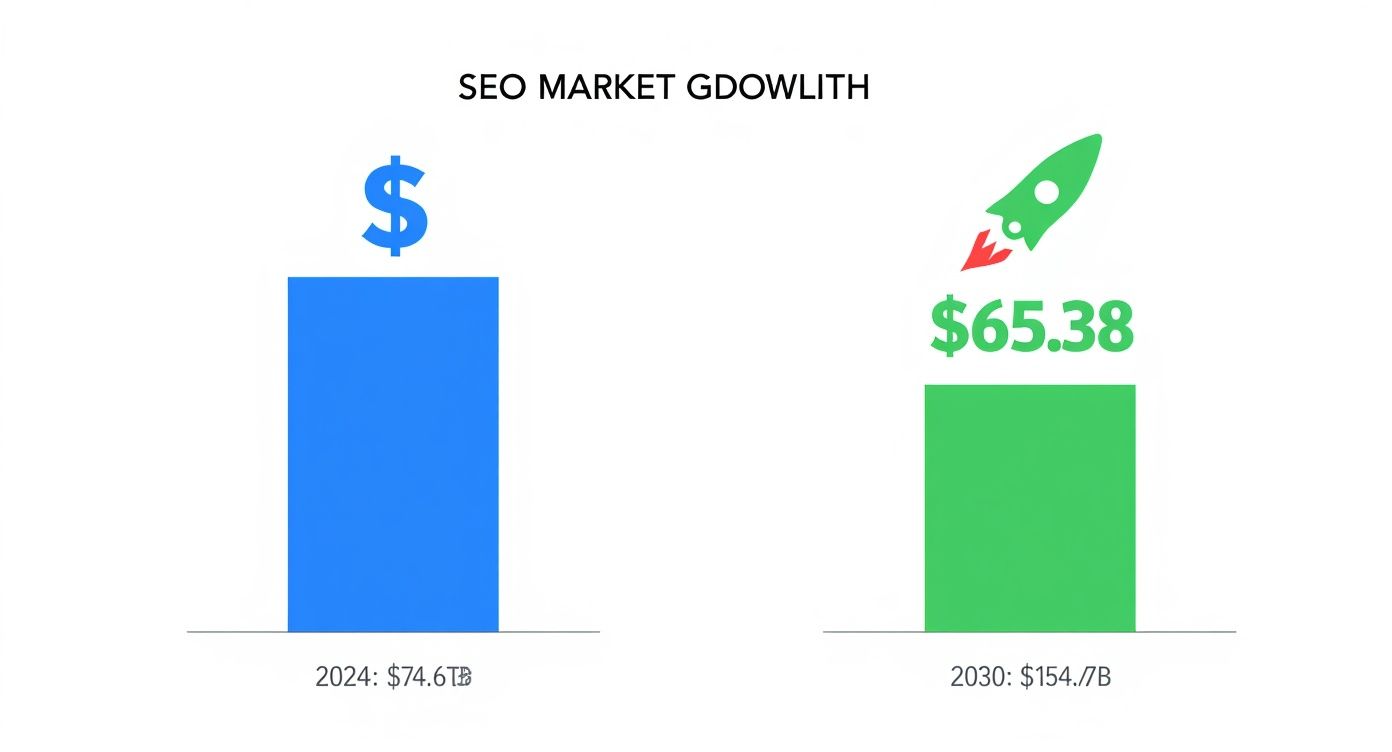
Let's be honest, picking an SEO platform is a big deal. It's a decision that can directly shape your online success. The global SEO software market is now valued at a staggering USD 74.6 billion in 2024, and that explosion in growth means you have more choices than ever—which can feel a bit paralyzing. Read the full research on the SEO software market.

In this guide, we’ll put market leaders and innovative new platforms side-by-side, focusing on what really counts. We'll measure each tool against the key things that drive results, helping you match its strengths to your own goals, whether you're flying solo, part of an in-house team, or running a busy agency.

Core Evaluation Criteria

Before we jump into the head-to-head comparisons, we need to agree on what we're looking for. When I'm evaluating any SEO tool, I always come back to these four fundamentals:

  • Keyword Research Accuracy: How trustworthy is the search volume and difficulty data? Can you dig deep into the SERPs to see what's really going on?

  • Backlink Index Depth: The size and freshness of a tool's backlink database is everything. It's the foundation for solid competitor analysis and finding new link-building opportunities.

  • Site Audit Capabilities: A good site audit doesn't just list errors. It needs to tell you what's most important and give you clear, actionable steps to fix it.

  • User Experience (UX): A clunky, confusing interface just slows everyone down. A clean, intuitive design means your team can spend less time learning and more time doing.

Think of this as our foundation for a fair seo software comparison. For a broader perspective on vetting digital tools, this a comprehensive guide to choosing software offers some great methodologies that are just as relevant here.

Key Takeaway: There's no single "best" SEO software. The right choice is completely dependent on your budget, team size, and what you need to achieve—whether that's pumping out content or getting deep into technical SEO.

Using these criteria helps cut through the marketing fluff and zero in on what will actually provide value. As we break down each platform, you'll start to see how their unique strengths line up with different business needs. To see these ideas in action, take a look at our other in-depth SEO articles.

Comparing Core SEO Features and Functionality

When you're picking an SEO platform, a simple feature list doesn't tell the whole story. The real test is how those core functions actually perform day-to-day. This is where the big players—Semrush, Ahrefs, Moz Pro, and the AI-driven Viral SEO—really show their stripes.

A truly great SEO suite supports you at every step, from the initial keyword hunt to the endless cycle of optimization. But let's be honest, not all keyword databases or backlink crawlers are built the same. Let’s dig into the differences that actually matter.

This infographic shows the projected growth of the SEO software market from 2024 to 2030.
Infographic about seo software comparison

That steep curve isn't just a number; it reflects how much businesses are willing to invest in powerful tools to get a leg up on the competition.

Keyword Research Capabilities

Keyword research is the foundation of any SEO campaign, and each tool brings a different philosophy to the table. While a massive keyword database looks great on paper, it's the usability and insight that count.

Semrush is a beast when it comes to sheer volume. Its huge database is fantastic for brainstorming and uncovering a massive spectrum of potential topics. I find their "Keyword Magic Tool" especially handy for digging into long-tail variations and grouping keywords semantically.

Ahrefs, on the other hand, is my go-to for its surgical precision. While its database is also enormous, its powerful filtering and its rock-solid Keyword Difficulty (KD) score are what set it apart. For many pros, Ahrefs' KD is the gold standard for figuring out if you actually stand a chance of ranking.

Moz Pro offers a really smart approach with its unique "Priority" score. It combines search volume, difficulty, and organic click-through rate to help you focus your energy where it will have the most impact. It's a lifesaver for teams trying to decide which keywords from a massive list to tackle first. And as you plan, remember to consider how many keywords to target per page for the best results.

Viral SEO flips the script entirely. It centers its approach on what’s already working for your competition. Instead of dumping a list of keywords on you, its "Content Gap Analyzer" pinpoints the exact topics and pages sending traffic to your rivals. This gives you a proven, direct path to a content strategy that works.

Backlink Analysis and Index Freshness

A tool's backlink index is its map of the web. The size of that map, how often it's updated, and its accuracy will make or break your ability to build a strong link profile.

  • Ahrefs: Most in the industry would agree Ahrefs wears the crown here. It boasts the largest index of live backlinks and the fastest crawler, which means you're getting the freshest data on new and lost links. Its "Link Intersect" tool is an absolute gem for finding sites linking to your competitors but not you.

  • Semrush: Don't sleep on Semrush, though. Its backlink database has become incredibly strong over the years. I particularly like its backlink audit tool for sniffing out and disavowing toxic links, and its integration with Google Search Console is seamless.

  • Moz Pro: Moz's "Link Explorer" is famous for its proprietary metrics: Domain Authority (DA) and Page Authority (PA). While its index might not be as vast as the others, DA and PA remain industry shorthand for quickly sizing up a site's authority.

Key Differentiator: The real difference comes down to speed versus workflow. Ahrefs gives you unmatched, near-real-time data at a massive scale. Semrush, in contrast, provides a more streamlined, integrated workflow for auditing and managing your backlink profile.

Technical Site Auditing Tools

A good site audit tool does more than just find problems; it helps you figure out what to fix first. It crawls your site just like Googlebot would, flagging technical issues that are dragging you down.

Ahrefs' "Site Audit" is incredibly fast and thorough. It gives you clear visuals of your site's structure and detailed, easy-to-understand explanations for every issue it finds. It’s great at catching everything from simple broken links to complex hreflang tag problems.

Semrush also has a powerhouse "Site Audit" tool. I appreciate how it sorts issues into "Errors," "Warnings," and "Notices," which immediately helps you prioritize your to-do list. The thematic reports are also a nice touch, letting you focus on specific areas like crawlability or internal linking.

Moz Pro's site crawler is reliable and particularly user-friendly, especially for flagging on-page SEO mistakes and duplicate content. The reports are straightforward, making it a solid choice for those who aren't deep in the technical weeds.

Viral SEO takes a much more focused approach with its free page structure audit. It's built for simplicity, giving content writers quick, actionable feedback on core on-page elements. It bypasses the complexity of a full technical crawl, perfectly suiting its content-first philosophy.

Core SEO Feature Comparison Matrix

To make sense of it all, here's a direct comparison of how these platforms stack up on the essential SEO functions we've discussed. This isn't just about whether a feature exists, but how well it performs and its practical scope.

Feature

Semrush

Ahrefs

Moz Pro

Viral SEO

Keyword Research

Excellent: Massive database and strong topic discovery tools.

Excellent: Industry-leading difficulty score and superior data filtering.

Good: Unique "Priority" score helps focus efforts on high-impact keywords.

Specialized: Focuses on competitive content gap analysis for proven topics.

Backlink Analysis

Very Good: Robust database with an excellent integrated auditing workflow.

Excellent: Largest, freshest index of live links and powerful competitor analysis.

Good: Relies on industry-standard DA/PA metrics with a solid link index.

N/A: Does not include a dedicated backlink analysis tool.

Technical Site Audit

Excellent: Powerful, well-organized audits with clear prioritization.

Excellent: Fast, comprehensive crawls with great data visualization.

Good: User-friendly crawler, strong on on-page SEO and duplicate content.

Basic: Offers a free, on-page structure audit focused on content elements.

Content Optimization

Very Good: "SEO Writing Assistant" provides real-time feedback.

Good: "Content Explorer" helps analyze top-performing content.

Good: On-page grading and recommendations are clear and actionable.

Excellent: AI-driven content editor provides deep, SERP-based guidance.

This matrix shows that while Semrush and Ahrefs are the all-in-one powerhouses, Moz Pro offers a more guided, accessible experience. Viral SEO, meanwhile, carves out its niche by doubling down on AI-powered content creation and competitive intelligence, rather than trying to be an all-in-one solution.

A Real-World Look at Pricing and Value

The monthly price tag on an SEO tool rarely tells the whole story. To understand the real cost, you have to dig deeper into the usage limits, hidden fees, and how the pricing model fits—or fights—the way you actually work. A "cheap" plan can get expensive fast once you run out of projects, tracked keywords, or user seats.

When we break down the pricing of the top SEO platforms, it becomes clear that what works for a solo SEO consultant will absolutely hamstring a growing agency. The trick is to figure out the cost-per-feature based on what you truly need day-to-day.

How They Structure Their Prices

Every platform builds its pricing tiers around different chokepoints. Semrush and Ahrefs, for example, are notorious for gating their plans based on the number of projects and tracked keywords. For an agency, this is a huge deal—each client can easily eat up one of those precious "project" slots.

Moz Pro ties its value heavily to keyword tracking and how many on-demand crawls you can run. This can become a major bottleneck for teams that need to perform frequent, deep site audits. Viral SEO, on the other hand, takes a simpler approach. Its free "Essential" plan covers the basics, while the affordable "Pro" tier gives you access to its powerful Content Gap Analyzer without the complicated caps, making it a no-brainer for content-heavy teams and startups.

The real differentiator isn't just the price. It's how the platform’s limits grow with your business. A cheap entry-level plan is worthless if you have to upgrade after just a few months because you hit a core feature limit.

This core difference in pricing philosophy leads to very different use cases. Let's see how this shakes out for different types of users.

Scenario 1: The Freelance SEO Consultant

A solo consultant is usually juggling 3-5 client projects at any given time. What they really need is reliable rank tracking, good keyword research tools, and a way to run site audits efficiently.

  • Semrush & Ahrefs (Pro/Standard Tiers): Starting around $130-$250/month, these plans offer a powerful all-in-one toolkit. The problem is, the project and keyword limits can feel tight. Freelancers often find themselves playing a frustrating game of "client whack-a-mole," constantly swapping which projects are actively tracked to stay under the limit.

  • Viral SEO (Pro Tier): For a fraction of the cost, Viral SEO zeroes in on content strategy and competitive analysis. If your main job is to drive growth through content, this tool is a goldmine. It helps you find proven traffic opportunities without the high overhead or strict project caps of the bigger platforms. It’s the perfect specialist tool for the job.

For a freelancer, true value means getting the essential features you need every day without being punished for landing one more client.

Scenario 2: The Multi-Client Agency

An agency managing 10+ clients is playing a completely different game. They need multiple user seats, tons of project capacity, and API access to build custom reports. Here, the cost-per-feature calculation is absolutely critical.

Agency-level plans from Semrush or Ahrefs can easily cost $450 to over $1,000 per month. It's a steep price, but it buys you the scale needed to manage a large roster of clients, with essentials like white-label reporting and much higher data limits. The cost is often justified by the sheer efficiency it brings to the whole team.

But there's another way to play it. A smart agency might invest in a high-tier plan from one of the big players for technical audits and backlink analysis but equip their content team with Viral SEO. This hybrid model gives specialists the best-in-class tool for their specific role and can actually deliver a better ROI than forcing everyone to use one monolithic platform for everything. The real value here is about empowering your experts with the right tool for the right job.

Getting a Feel for the Software: User Experience and Ease of Use

A feature-packed SEO tool is useless if your team hates using it. That’s why the user experience (UX) and overall interface design are so important when you're comparing SEO software. The real value of a platform isn't just what it can do, but how easily your team can get in there and actually start getting results.

Think about it: a clean, intuitive dashboard can save you hours every single week. On the flip side, a clunky, confusing interface is a surefire recipe for frustration and wasted time. The learning curve is a real factor that determines how quickly you'll see a return on your investment.

Dashboard showing user-friendly interface

Onboarding and That Initial Learning Curve

How a tool welcomes you sets the stage for your entire experience. Platforms like Semrush and Ahrefs are incredibly powerful, but they are also dense. For a beginner, the learning curve can feel more like a learning cliff. They have great tutorials, but the sheer number of features can be overwhelming at first.

For instance, a new user jumping into Semrush might burn a whole week just figuring out the difference between the "Keyword Magic Tool" and the "Keyword Gap" analysis. This depth is fantastic for a seasoned pro, but it's a real hurdle for smaller teams that don't have a full-time SEO expert.

Moz Pro tries to smooth this out with a more guided approach. Its interface feels cleaner, focusing on core concepts like Domain Authority, which makes it much more welcoming for people just starting out. It tends to hold your hand more, walking you through setups and reports with helpful pointers.

Usability from Different Points of View

Not everyone on your team uses SEO software the same way, so you have to think about who will be in the driver's seat.

  • The SEO Specialist: These folks love data, and Ahrefs is often their top pick for its data-heavy design. They appreciate dashboards packed with metrics that let them dig deep without a lot of fluff.

  • The Content Marketer: Semrush offers a great all-in-one workflow, but its massive toolset can sometimes be distracting. This is where a tool like Viral SEO shines. It was built from the ground up for content teams. Its focused interface, built around the Content Gap Analyzer, cuts out the noise and points writers directly to what they need to do next.

  • The Founder or Manager: They just want the highlights. High-level dashboards are critical for seeing performance at a glance without getting bogged down in the weeds. Moz Pro and SE Ranking are often good choices here, as they do a great job of presenting top-line metrics in a clean, easy-to-understand way.

Expert Insight: An SEO tool’s design tells a story about who it's for. Cluttered interfaces loaded with every metric imaginable are built for technical analysts. Clean, step-by-step workflows are built to help marketers and business owners get things done.

Help When You Need It: Support and Resources

When you inevitably get stuck, the quality of support and educational materials really matters. All the big players have solid knowledge bases, but how you access that help can be a different story.

Semrush and Ahrefs have massive libraries of blogs and video tutorials, but finding a specific answer can feel like digging through an encyclopedia. Viral SEO, being more focused on its core features, can offer more direct, to-the-point support. Its affordable Pro plan even includes priority support, which is a huge deal for small teams that can’t afford to be stuck waiting for an answer about its core content strategy tools.

Matching Software Strengths to Your Business Goals

The whole point of an seo software comparison is to find the right tool for the job. But let's be honest—there's no single "best" platform for everyone. The right software is the one that fits your specific goals and how you actually work. A tool that's indispensable for a global B2B company is complete overkill for a local bakery.

This is why you have to look past the shiny feature lists. It's about mapping what each platform does best to real-world business needs. Once you understand these nuances, you can pick a tool that doesn't just give you data but actually helps you execute your growth strategy.

For Deep Backlink Analysis and Competitor Teardowns

When your game is all about off-page SEO and you need to dissect every single move your competition makes, Ahrefs is in a league of its own. It was practically built for people who live and breathe link data.

Ahrefs has a massive, constantly updated index of live backlinks, which is crucial for finding new link-building opportunities as they happen. For any serious competitor analysis, tools like "Link Intersect" and "Content Gap" are non-negotiable. They show you exactly who's linking to your rivals but ignoring you, which is pure gold for strategy.

This snapshot of the Ahrefs dashboard shows just how deep you can go when analyzing a site's backlink profile and organic traffic. What stands out is how it visualizes referring domains and keyword growth, helping you spot trends and competitive weak points in seconds.

Ideal Use Case: An agency or an in-house SEO specialist whose entire strategy hinges on building a superior backlink profile and reverse-engineering what works for the market leaders. If your main KPI is link velocity or growing your referring domains, Ahrefs is your command center.

For Integrated, All-In-One Marketing Campaigns

If you see SEO as one crucial piece of a much larger marketing puzzle, then Semrush is your platform. Its power lies in its incredibly comprehensive, all-in-one toolkit that connects the dots between SEO, PPC, content marketing, and social media.

Semrush really shines when you're trying to coordinate campaigns across different channels. You can track your keyword rankings, manage your ad campaigns, audit your site, and schedule social media posts all from one spot. That integration is a massive time-saver and gives you a holistic view of your entire digital footprint. The United States is a dominant force in the global SEO software market, generating USD 20.8 billion in revenue in 2024, largely because businesses have embraced these kinds of integrated strategies. You can dig into more data on the global SEO software market.

  • Best for: Marketing managers and full-service agencies that need a single source of truth for all their digital marketing campaigns.

  • Key Advantage: The ability to see exactly how your SEO work influences—and is influenced by—other channels like paid search and social media.

For Local Businesses and Rank Tracking Accuracy

For any business that lives and dies by local visibility—think dentists, plumbers, or cafes—Moz Pro has long been a go-to. Its tools are fine-tuned to help you own the local search results.

Moz Pro is fantastic for managing and optimizing Google Business Profile listings, tracking local keyword rankings with pinpoint accuracy, and keeping on top of online reviews. Its interface is also more approachable for business owners who aren't necessarily SEO experts but know they need to be found online. If this is your focus, our local SEO checklist is a great place to get your strategy in order.

Its rank tracking is known for being incredibly reliable, and its famous Domain Authority (DA) metric is still the standard for a quick check of a website's overall strength.

For AI-Driven Content Ideation and Execution

When your growth plan is built around pumping out high-impact content at scale, Viral SEO brings a unique, laser-focused advantage to the table. It skips the "all-in-one" bloat to double down on what truly matters for content-driven growth: finding proven ideas and executing them perfectly.

Viral SEO's secret weapon is its Content Gap Analyzer. It uses an AI-powered approach to instantly show you the exact topics and pages that are driving real traffic to your competitors. This completely removes the guesswork from brainstorming and hands you a data-backed roadmap for what to create next.

  • Primary Goal: To build a content plan based on topics that are already proven to attract an audience, instead of just chasing random keywords.

  • Ideal User: SaaS startups, content marketers, and bloggers who need an efficient, results-focused way to create content that actually ranks.

By zeroing in on competitive intelligence and AI-powered insights, Viral SEO is designed for teams that need to move fast and get their content strategy right the first time.

How to Choose the Right SEO Tool for You

When you're trying to pick the right SEO software, it's easy to get lost in feature lists. The real key isn't finding the platform with the most bells and whistles; it's about finding the one that fits your team, your budget, and what you're actually trying to accomplish. A startup laser-focused on content has completely different needs than a huge enterprise team drowning in data.

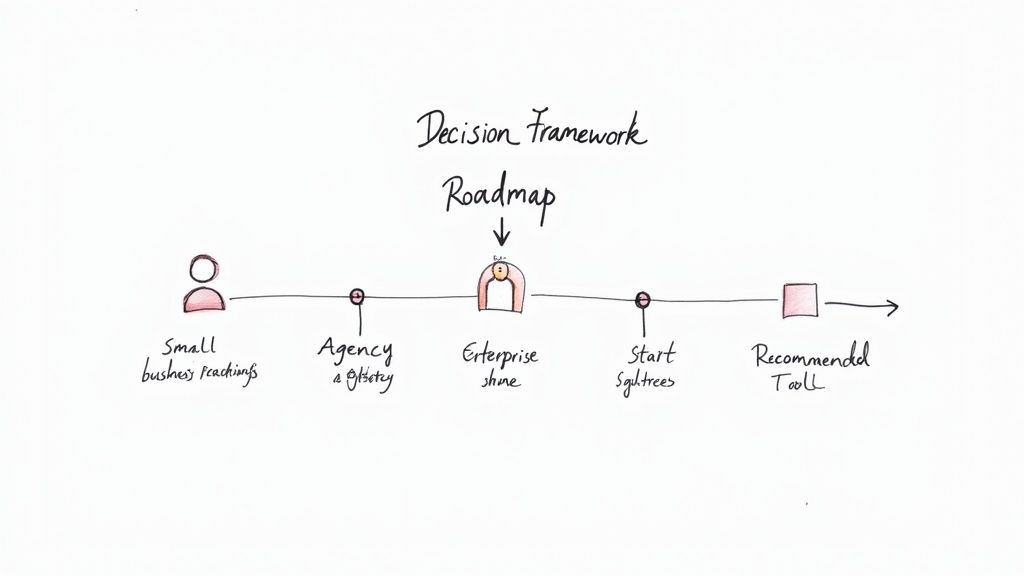
So, before you look at another pricing page, look inward. What’s the number one SEO task you absolutely have to get right every single day? Is it digging up fresh content ideas? Picking apart a competitor's backlink strategy? Or maybe it's just making sure your local business listings are in order. Your answer to that question will instantly cut through the noise.
A person making a decision in front of a flowchart

Who Are You? Matching a Tool to Your Team

Let's break this down with some real-world scenarios to make the choice clearer.

  • The Small Business on a Tight Budget: You need to get the most bang for your buck, period. Your best move is a tool with a strong free version or an affordable entry-level plan that nails one or two core functions. Viral SEO is a great fit here, with a free plan for on-page audits and a reasonably priced Pro tier that gives you a serious edge in competitive content creation without a scary monthly payment.

  • The Data-Obsessed Enterprise Team: You live and breathe granular data. You need API access, custom dashboards, and reporting that can handle massive campaigns. This is home turf for the industry giants, Semrush and Ahrefs. They deliver the comprehensive analytics required to track large-scale SEO efforts and dissect competitor moves from every angle.

  • The Fast-Paced Marketing Agency: Juggling multiple clients means you need efficiency and tools that scale. The smart play is often a mix-and-match approach. An all-in-one powerhouse like Semrush is perfect for technical audits and broad-stroke analysis, while a specialized tool like Viral SEO can empower your content team with a repeatable, high-speed workflow for pumping out articles that actually rank.

  • The Content-Driven Startup: Your blog is your engine for growth. You need to take the guesswork out of content strategy and execution. Viral SEO was built for this exact purpose. Its Content Gap Analyzer is designed to pinpoint proven topics and guide your writers from idea to publication.

The Bottom Line: Why pay for a dozen features you'll never touch? A focused tool that solves your biggest headache is infinitely more valuable than a bloated, expensive platform that’s a jack-of-all-trades but a master of none. Find the most direct path to your specific goals.

As you narrow down your choices, it's always a good idea to get a second opinion. Checking out user reviews on software marketplaces like Capterra can give you a feel for how these tools perform in the real world. Think of it as a final sanity check before you commit.

It's also worth noting that this decision is happening in a rapidly growing global market. The Asia Pacific region, in particular, is set to become the fastest-growing market for SEO software, with a projected compound annual growth rate of 16.52% between 2025 and 2034. This surge, driven largely by mobile search, shows just how critical it is to have the right tools in your corner.

Common Questions About SEO Software

Picking the right SEO software can feel overwhelming, and it's natural to have a few questions before you commit. The goal is to find a platform that not only fits your budget but actually helps you get results without a steep learning curve.

Let's tackle some of the most frequent questions we hear from people trying to make that final decision.

Can a Small Business Get By With a Free SEO Tool?

Absolutely, but you'll hit a ceiling pretty quickly. Free tools are fantastic for dipping your toes in the water. They're great for learning the fundamentals of SEO or handling one-off tasks like checking on-page elements or doing some basic keyword brainstorming.

The problem is, as you start to grow, you'll run into limitations. Free plans almost always cap the number of keywords you can track, pages you can crawl, or reports you can run. These restrictions make it tough to build and scale a serious SEO strategy. To really understand what your competitors are doing, you'll need the deeper data a paid tool provides.

Key Insight: Think of free tools as a great starting point for single tasks. For a complete, scalable growth strategy, investing in an affordable paid plan that removes data restrictions is almost always necessary to achieve significant results.

How Important Are Data Accuracy and Freshness?

In SEO, data accuracy is everything. If your tool gives you a bad keyword difficulty score, you could waste months chasing a keyword you have no chance of ranking for. If its backlink index is old, you're blind to the new links your competitors are building right now.

The best platforms pour huge resources into their web crawlers and data processing to give you the freshest information. For example, a tool with a fast backlink crawler can show you a competitor's brand-new links almost as they happen. That speed gives you a massive competitive edge, letting you jump on the same opportunities before they become common knowledge.

What's a Realistic Budget for SEO Software?

The price range is huge, from free all the way to enterprise plans that cost thousands every month. For most small teams, freelancers, or solo business owners, a solid, all-in-one tool usually lands somewhere between $50 and $200 per month.

But don't just look at the price tag; consider the value. Ask yourself a few key questions before signing up:

  • Does this plan limit how many projects or websites I can manage?

  • Are critical features like competitor analysis hidden in more expensive tiers?

  • How many people on my team can use this account?

Getting answers to these questions helps you find a plan that can grow with you, so you aren't hit with surprise costs later on.

Ready to stop guessing and start ranking? Viral SEO provides a focused, AI-driven workflow to uncover your competitors' winning content strategies. Get the insights you need to drive predictable organic growth without the complexity.

Discover Your Content Gaps with Viral SEO

Picking the right SEO software really comes down to what you're trying to accomplish. If you need a complete marketing toolkit, an all-in-one platform like Semrush is a workhorse. For obsessive backlink analysis, nothing beats a specialized tool like Ahrefs. And then you have newcomers like Viral SEO, which bring an AI-first approach to building a smarter content strategy.

This seo software comparison isn't just another feature list. My goal here is to give you a solid framework for picking the tool that actually fits your workflow and goals.

How to Choose the Right SEO Software

Let's be honest, picking an SEO platform is a big deal. It's a decision that can directly shape your online success. The global SEO software market is now valued at a staggering USD 74.6 billion in 2024, and that explosion in growth means you have more choices than ever—which can feel a bit paralyzing. Read the full research on the SEO software market.

In this guide, we’ll put market leaders and innovative new platforms side-by-side, focusing on what really counts. We'll measure each tool against the key things that drive results, helping you match its strengths to your own goals, whether you're flying solo, part of an in-house team, or running a busy agency.

Core Evaluation Criteria

Before we jump into the head-to-head comparisons, we need to agree on what we're looking for. When I'm evaluating any SEO tool, I always come back to these four fundamentals:

  • Keyword Research Accuracy: How trustworthy is the search volume and difficulty data? Can you dig deep into the SERPs to see what's really going on?

  • Backlink Index Depth: The size and freshness of a tool's backlink database is everything. It's the foundation for solid competitor analysis and finding new link-building opportunities.

  • Site Audit Capabilities: A good site audit doesn't just list errors. It needs to tell you what's most important and give you clear, actionable steps to fix it.

  • User Experience (UX): A clunky, confusing interface just slows everyone down. A clean, intuitive design means your team can spend less time learning and more time doing.

Think of this as our foundation for a fair seo software comparison. For a broader perspective on vetting digital tools, this a comprehensive guide to choosing software offers some great methodologies that are just as relevant here.

Key Takeaway: There's no single "best" SEO software. The right choice is completely dependent on your budget, team size, and what you need to achieve—whether that's pumping out content or getting deep into technical SEO.

Using these criteria helps cut through the marketing fluff and zero in on what will actually provide value. As we break down each platform, you'll start to see how their unique strengths line up with different business needs. To see these ideas in action, take a look at our other in-depth SEO articles.

Comparing Core SEO Features and Functionality

When you're picking an SEO platform, a simple feature list doesn't tell the whole story. The real test is how those core functions actually perform day-to-day. This is where the big players—Semrush, Ahrefs, Moz Pro, and the AI-driven Viral SEO—really show their stripes.

A truly great SEO suite supports you at every step, from the initial keyword hunt to the endless cycle of optimization. But let's be honest, not all keyword databases or backlink crawlers are built the same. Let’s dig into the differences that actually matter.

This infographic shows the projected growth of the SEO software market from 2024 to 2030.

Infographic about seo software comparison

That steep curve isn't just a number; it reflects how much businesses are willing to invest in powerful tools to get a leg up on the competition.

Keyword Research Capabilities

Keyword research is the foundation of any SEO campaign, and each tool brings a different philosophy to the table. While a massive keyword database looks great on paper, it's the usability and insight that count.

Semrush is a beast when it comes to sheer volume. Its huge database is fantastic for brainstorming and uncovering a massive spectrum of potential topics. I find their "Keyword Magic Tool" especially handy for digging into long-tail variations and grouping keywords semantically.

Ahrefs, on the other hand, is my go-to for its surgical precision. While its database is also enormous, its powerful filtering and its rock-solid Keyword Difficulty (KD) score are what set it apart. For many pros, Ahrefs' KD is the gold standard for figuring out if you actually stand a chance of ranking.

Moz Pro offers a really smart approach with its unique "Priority" score. It combines search volume, difficulty, and organic click-through rate to help you focus your energy where it will have the most impact. It's a lifesaver for teams trying to decide which keywords from a massive list to tackle first. And as you plan, remember to consider how many keywords to target per page for the best results.

Viral SEO flips the script entirely. It centers its approach on what’s already working for your competition. Instead of dumping a list of keywords on you, its "Content Gap Analyzer" pinpoints the exact topics and pages sending traffic to your rivals. This gives you a proven, direct path to a content strategy that works.

Backlink Analysis and Index Freshness

A tool's backlink index is its map of the web. The size of that map, how often it's updated, and its accuracy will make or break your ability to build a strong link profile.

  • Ahrefs: Most in the industry would agree Ahrefs wears the crown here. It boasts the largest index of live backlinks and the fastest crawler, which means you're getting the freshest data on new and lost links. Its "Link Intersect" tool is an absolute gem for finding sites linking to your competitors but not you.

  • Semrush: Don't sleep on Semrush, though. Its backlink database has become incredibly strong over the years. I particularly like its backlink audit tool for sniffing out and disavowing toxic links, and its integration with Google Search Console is seamless.

  • Moz Pro: Moz's "Link Explorer" is famous for its proprietary metrics: Domain Authority (DA) and Page Authority (PA). While its index might not be as vast as the others, DA and PA remain industry shorthand for quickly sizing up a site's authority.

Key Differentiator: The real difference comes down to speed versus workflow. Ahrefs gives you unmatched, near-real-time data at a massive scale. Semrush, in contrast, provides a more streamlined, integrated workflow for auditing and managing your backlink profile.

Technical Site Auditing Tools

A good site audit tool does more than just find problems; it helps you figure out what to fix first. It crawls your site just like Googlebot would, flagging technical issues that are dragging you down.

Ahrefs' "Site Audit" is incredibly fast and thorough. It gives you clear visuals of your site's structure and detailed, easy-to-understand explanations for every issue it finds. It’s great at catching everything from simple broken links to complex hreflang tag problems.

Semrush also has a powerhouse "Site Audit" tool. I appreciate how it sorts issues into "Errors," "Warnings," and "Notices," which immediately helps you prioritize your to-do list. The thematic reports are also a nice touch, letting you focus on specific areas like crawlability or internal linking.

Moz Pro's site crawler is reliable and particularly user-friendly, especially for flagging on-page SEO mistakes and duplicate content. The reports are straightforward, making it a solid choice for those who aren't deep in the technical weeds.

Viral SEO takes a much more focused approach with its free page structure audit. It's built for simplicity, giving content writers quick, actionable feedback on core on-page elements. It bypasses the complexity of a full technical crawl, perfectly suiting its content-first philosophy.

Core SEO Feature Comparison Matrix

To make sense of it all, here's a direct comparison of how these platforms stack up on the essential SEO functions we've discussed. This isn't just about whether a feature exists, but how well it performs and its practical scope.

Feature

Semrush

Ahrefs

Moz Pro

Viral SEO

Keyword Research

Excellent: Massive database and strong topic discovery tools.

Excellent: Industry-leading difficulty score and superior data filtering.

Good: Unique "Priority" score helps focus efforts on high-impact keywords.

Specialized: Focuses on competitive content gap analysis for proven topics.

Backlink Analysis

Very Good: Robust database with an excellent integrated auditing workflow.

Excellent: Largest, freshest index of live links and powerful competitor analysis.

Good: Relies on industry-standard DA/PA metrics with a solid link index.

N/A: Does not include a dedicated backlink analysis tool.

Technical Site Audit

Excellent: Powerful, well-organized audits with clear prioritization.

Excellent: Fast, comprehensive crawls with great data visualization.

Good: User-friendly crawler, strong on on-page SEO and duplicate content.

Basic: Offers a free, on-page structure audit focused on content elements.

Content Optimization

Very Good: "SEO Writing Assistant" provides real-time feedback.

Good: "Content Explorer" helps analyze top-performing content.

Good: On-page grading and recommendations are clear and actionable.

Excellent: AI-driven content editor provides deep, SERP-based guidance.

This matrix shows that while Semrush and Ahrefs are the all-in-one powerhouses, Moz Pro offers a more guided, accessible experience. Viral SEO, meanwhile, carves out its niche by doubling down on AI-powered content creation and competitive intelligence, rather than trying to be an all-in-one solution.

A Real-World Look at Pricing and Value

The monthly price tag on an SEO tool rarely tells the whole story. To understand the real cost, you have to dig deeper into the usage limits, hidden fees, and how the pricing model fits—or fights—the way you actually work. A "cheap" plan can get expensive fast once you run out of projects, tracked keywords, or user seats.

When we break down the pricing of the top SEO platforms, it becomes clear that what works for a solo SEO consultant will absolutely hamstring a growing agency. The trick is to figure out the cost-per-feature based on what you truly need day-to-day.

How They Structure Their Prices

Every platform builds its pricing tiers around different chokepoints. Semrush and Ahrefs, for example, are notorious for gating their plans based on the number of projects and tracked keywords. For an agency, this is a huge deal—each client can easily eat up one of those precious "project" slots.

Moz Pro ties its value heavily to keyword tracking and how many on-demand crawls you can run. This can become a major bottleneck for teams that need to perform frequent, deep site audits. Viral SEO, on the other hand, takes a simpler approach. Its free "Essential" plan covers the basics, while the affordable "Pro" tier gives you access to its powerful Content Gap Analyzer without the complicated caps, making it a no-brainer for content-heavy teams and startups.

The real differentiator isn't just the price. It's how the platform’s limits grow with your business. A cheap entry-level plan is worthless if you have to upgrade after just a few months because you hit a core feature limit.

This core difference in pricing philosophy leads to very different use cases. Let's see how this shakes out for different types of users.

Scenario 1: The Freelance SEO Consultant

A solo consultant is usually juggling 3-5 client projects at any given time. What they really need is reliable rank tracking, good keyword research tools, and a way to run site audits efficiently.

  • Semrush & Ahrefs (Pro/Standard Tiers): Starting around $130-$250/month, these plans offer a powerful all-in-one toolkit. The problem is, the project and keyword limits can feel tight. Freelancers often find themselves playing a frustrating game of "client whack-a-mole," constantly swapping which projects are actively tracked to stay under the limit.

  • Viral SEO (Pro Tier): For a fraction of the cost, Viral SEO zeroes in on content strategy and competitive analysis. If your main job is to drive growth through content, this tool is a goldmine. It helps you find proven traffic opportunities without the high overhead or strict project caps of the bigger platforms. It’s the perfect specialist tool for the job.

For a freelancer, true value means getting the essential features you need every day without being punished for landing one more client.

Scenario 2: The Multi-Client Agency

An agency managing 10+ clients is playing a completely different game. They need multiple user seats, tons of project capacity, and API access to build custom reports. Here, the cost-per-feature calculation is absolutely critical.

Agency-level plans from Semrush or Ahrefs can easily cost $450 to over $1,000 per month. It's a steep price, but it buys you the scale needed to manage a large roster of clients, with essentials like white-label reporting and much higher data limits. The cost is often justified by the sheer efficiency it brings to the whole team.

But there's another way to play it. A smart agency might invest in a high-tier plan from one of the big players for technical audits and backlink analysis but equip their content team with Viral SEO. This hybrid model gives specialists the best-in-class tool for their specific role and can actually deliver a better ROI than forcing everyone to use one monolithic platform for everything. The real value here is about empowering your experts with the right tool for the right job.

Getting a Feel for the Software: User Experience and Ease of Use

A feature-packed SEO tool is useless if your team hates using it. That’s why the user experience (UX) and overall interface design are so important when you're comparing SEO software. The real value of a platform isn't just what it can do, but how easily your team can get in there and actually start getting results.

Think about it: a clean, intuitive dashboard can save you hours every single week. On the flip side, a clunky, confusing interface is a surefire recipe for frustration and wasted time. The learning curve is a real factor that determines how quickly you'll see a return on your investment.

Dashboard showing user-friendly interface

Onboarding and That Initial Learning Curve

How a tool welcomes you sets the stage for your entire experience. Platforms like Semrush and Ahrefs are incredibly powerful, but they are also dense. For a beginner, the learning curve can feel more like a learning cliff. They have great tutorials, but the sheer number of features can be overwhelming at first.

For instance, a new user jumping into Semrush might burn a whole week just figuring out the difference between the "Keyword Magic Tool" and the "Keyword Gap" analysis. This depth is fantastic for a seasoned pro, but it's a real hurdle for smaller teams that don't have a full-time SEO expert.

Moz Pro tries to smooth this out with a more guided approach. Its interface feels cleaner, focusing on core concepts like Domain Authority, which makes it much more welcoming for people just starting out. It tends to hold your hand more, walking you through setups and reports with helpful pointers.

Usability from Different Points of View

Not everyone on your team uses SEO software the same way, so you have to think about who will be in the driver's seat.

  • The SEO Specialist: These folks love data, and Ahrefs is often their top pick for its data-heavy design. They appreciate dashboards packed with metrics that let them dig deep without a lot of fluff.

  • The Content Marketer: Semrush offers a great all-in-one workflow, but its massive toolset can sometimes be distracting. This is where a tool like Viral SEO shines. It was built from the ground up for content teams. Its focused interface, built around the Content Gap Analyzer, cuts out the noise and points writers directly to what they need to do next.

  • The Founder or Manager: They just want the highlights. High-level dashboards are critical for seeing performance at a glance without getting bogged down in the weeds. Moz Pro and SE Ranking are often good choices here, as they do a great job of presenting top-line metrics in a clean, easy-to-understand way.

Expert Insight: An SEO tool’s design tells a story about who it's for. Cluttered interfaces loaded with every metric imaginable are built for technical analysts. Clean, step-by-step workflows are built to help marketers and business owners get things done.

Help When You Need It: Support and Resources

When you inevitably get stuck, the quality of support and educational materials really matters. All the big players have solid knowledge bases, but how you access that help can be a different story.

Semrush and Ahrefs have massive libraries of blogs and video tutorials, but finding a specific answer can feel like digging through an encyclopedia. Viral SEO, being more focused on its core features, can offer more direct, to-the-point support. Its affordable Pro plan even includes priority support, which is a huge deal for small teams that can’t afford to be stuck waiting for an answer about its core content strategy tools.

Matching Software Strengths to Your Business Goals

The whole point of an seo software comparison is to find the right tool for the job. But let's be honest—there's no single "best" platform for everyone. The right software is the one that fits your specific goals and how you actually work. A tool that's indispensable for a global B2B company is complete overkill for a local bakery.

This is why you have to look past the shiny feature lists. It's about mapping what each platform does best to real-world business needs. Once you understand these nuances, you can pick a tool that doesn't just give you data but actually helps you execute your growth strategy.

For Deep Backlink Analysis and Competitor Teardowns

When your game is all about off-page SEO and you need to dissect every single move your competition makes, Ahrefs is in a league of its own. It was practically built for people who live and breathe link data.

Ahrefs has a massive, constantly updated index of live backlinks, which is crucial for finding new link-building opportunities as they happen. For any serious competitor analysis, tools like "Link Intersect" and "Content Gap" are non-negotiable. They show you exactly who's linking to your rivals but ignoring you, which is pure gold for strategy.

This snapshot of the Ahrefs dashboard shows just how deep you can go when analyzing a site's backlink profile and organic traffic. What stands out is how it visualizes referring domains and keyword growth, helping you spot trends and competitive weak points in seconds.

Ideal Use Case: An agency or an in-house SEO specialist whose entire strategy hinges on building a superior backlink profile and reverse-engineering what works for the market leaders. If your main KPI is link velocity or growing your referring domains, Ahrefs is your command center.

For Integrated, All-In-One Marketing Campaigns

If you see SEO as one crucial piece of a much larger marketing puzzle, then Semrush is your platform. Its power lies in its incredibly comprehensive, all-in-one toolkit that connects the dots between SEO, PPC, content marketing, and social media.

Semrush really shines when you're trying to coordinate campaigns across different channels. You can track your keyword rankings, manage your ad campaigns, audit your site, and schedule social media posts all from one spot. That integration is a massive time-saver and gives you a holistic view of your entire digital footprint. The United States is a dominant force in the global SEO software market, generating USD 20.8 billion in revenue in 2024, largely because businesses have embraced these kinds of integrated strategies. You can dig into more data on the global SEO software market.

  • Best for: Marketing managers and full-service agencies that need a single source of truth for all their digital marketing campaigns.

  • Key Advantage: The ability to see exactly how your SEO work influences—and is influenced by—other channels like paid search and social media.

For Local Businesses and Rank Tracking Accuracy

For any business that lives and dies by local visibility—think dentists, plumbers, or cafes—Moz Pro has long been a go-to. Its tools are fine-tuned to help you own the local search results.

Moz Pro is fantastic for managing and optimizing Google Business Profile listings, tracking local keyword rankings with pinpoint accuracy, and keeping on top of online reviews. Its interface is also more approachable for business owners who aren't necessarily SEO experts but know they need to be found online. If this is your focus, our local SEO checklist is a great place to get your strategy in order.

Its rank tracking is known for being incredibly reliable, and its famous Domain Authority (DA) metric is still the standard for a quick check of a website's overall strength.

For AI-Driven Content Ideation and Execution

When your growth plan is built around pumping out high-impact content at scale, Viral SEO brings a unique, laser-focused advantage to the table. It skips the "all-in-one" bloat to double down on what truly matters for content-driven growth: finding proven ideas and executing them perfectly.

Viral SEO's secret weapon is its Content Gap Analyzer. It uses an AI-powered approach to instantly show you the exact topics and pages that are driving real traffic to your competitors. This completely removes the guesswork from brainstorming and hands you a data-backed roadmap for what to create next.

  • Primary Goal: To build a content plan based on topics that are already proven to attract an audience, instead of just chasing random keywords.

  • Ideal User: SaaS startups, content marketers, and bloggers who need an efficient, results-focused way to create content that actually ranks.

By zeroing in on competitive intelligence and AI-powered insights, Viral SEO is designed for teams that need to move fast and get their content strategy right the first time.

How to Choose the Right SEO Tool for You

When you're trying to pick the right SEO software, it's easy to get lost in feature lists. The real key isn't finding the platform with the most bells and whistles; it's about finding the one that fits your team, your budget, and what you're actually trying to accomplish. A startup laser-focused on content has completely different needs than a huge enterprise team drowning in data.

So, before you look at another pricing page, look inward. What’s the number one SEO task you absolutely have to get right every single day? Is it digging up fresh content ideas? Picking apart a competitor's backlink strategy? Or maybe it's just making sure your local business listings are in order. Your answer to that question will instantly cut through the noise.

A person making a decision in front of a flowchart

Who Are You? Matching a Tool to Your Team

Let's break this down with some real-world scenarios to make the choice clearer.

  • The Small Business on a Tight Budget: You need to get the most bang for your buck, period. Your best move is a tool with a strong free version or an affordable entry-level plan that nails one or two core functions. Viral SEO is a great fit here, with a free plan for on-page audits and a reasonably priced Pro tier that gives you a serious edge in competitive content creation without a scary monthly payment.

  • The Data-Obsessed Enterprise Team: You live and breathe granular data. You need API access, custom dashboards, and reporting that can handle massive campaigns. This is home turf for the industry giants, Semrush and Ahrefs. They deliver the comprehensive analytics required to track large-scale SEO efforts and dissect competitor moves from every angle.

  • The Fast-Paced Marketing Agency: Juggling multiple clients means you need efficiency and tools that scale. The smart play is often a mix-and-match approach. An all-in-one powerhouse like Semrush is perfect for technical audits and broad-stroke analysis, while a specialized tool like Viral SEO can empower your content team with a repeatable, high-speed workflow for pumping out articles that actually rank.

  • The Content-Driven Startup: Your blog is your engine for growth. You need to take the guesswork out of content strategy and execution. Viral SEO was built for this exact purpose. Its Content Gap Analyzer is designed to pinpoint proven topics and guide your writers from idea to publication.

The Bottom Line: Why pay for a dozen features you'll never touch? A focused tool that solves your biggest headache is infinitely more valuable than a bloated, expensive platform that’s a jack-of-all-trades but a master of none. Find the most direct path to your specific goals.

As you narrow down your choices, it's always a good idea to get a second opinion. Checking out user reviews on software marketplaces like Capterra can give you a feel for how these tools perform in the real world. Think of it as a final sanity check before you commit.

It's also worth noting that this decision is happening in a rapidly growing global market. The Asia Pacific region, in particular, is set to become the fastest-growing market for SEO software, with a projected compound annual growth rate of 16.52% between 2025 and 2034. This surge, driven largely by mobile search, shows just how critical it is to have the right tools in your corner.

Common Questions About SEO Software

Picking the right SEO software can feel overwhelming, and it's natural to have a few questions before you commit. The goal is to find a platform that not only fits your budget but actually helps you get results without a steep learning curve.

Let's tackle some of the most frequent questions we hear from people trying to make that final decision.

Can a Small Business Get By With a Free SEO Tool?

Absolutely, but you'll hit a ceiling pretty quickly. Free tools are fantastic for dipping your toes in the water. They're great for learning the fundamentals of SEO or handling one-off tasks like checking on-page elements or doing some basic keyword brainstorming.

The problem is, as you start to grow, you'll run into limitations. Free plans almost always cap the number of keywords you can track, pages you can crawl, or reports you can run. These restrictions make it tough to build and scale a serious SEO strategy. To really understand what your competitors are doing, you'll need the deeper data a paid tool provides.

Key Insight: Think of free tools as a great starting point for single tasks. For a complete, scalable growth strategy, investing in an affordable paid plan that removes data restrictions is almost always necessary to achieve significant results.

How Important Are Data Accuracy and Freshness?

In SEO, data accuracy is everything. If your tool gives you a bad keyword difficulty score, you could waste months chasing a keyword you have no chance of ranking for. If its backlink index is old, you're blind to the new links your competitors are building right now.

The best platforms pour huge resources into their web crawlers and data processing to give you the freshest information. For example, a tool with a fast backlink crawler can show you a competitor's brand-new links almost as they happen. That speed gives you a massive competitive edge, letting you jump on the same opportunities before they become common knowledge.

What's a Realistic Budget for SEO Software?

The price range is huge, from free all the way to enterprise plans that cost thousands every month. For most small teams, freelancers, or solo business owners, a solid, all-in-one tool usually lands somewhere between $50 and $200 per month.

But don't just look at the price tag; consider the value. Ask yourself a few key questions before signing up:

  • Does this plan limit how many projects or websites I can manage?

  • Are critical features like competitor analysis hidden in more expensive tiers?

  • How many people on my team can use this account?

Getting answers to these questions helps you find a plan that can grow with you, so you aren't hit with surprise costs later on.

Ready to stop guessing and start ranking? Viral SEO provides a focused, AI-driven workflow to uncover your competitors' winning content strategies. Get the insights you need to drive predictable organic growth without the complexity.

Discover Your Content Gaps with Viral SEO