Blog

Blog

10 On Page SEO Best Practices for 2025 Rankings

10 On Page SEO Best Practices for 2025 Rankings

Blog

10 On Page SEO Best Practices for 2025 Rankings

In the competitive landscape of digital content, simply creating great articles is not enough. To capture organic traffic and climb the search engine rankings, you need a mastery of on-page SEO: the art and science of optimizing individual web pages for both search engines and users. While off-page signals like backlinks build authority, on-page factors are entirely within your control, offering a direct and powerful path to improved visibility.

This guide moves beyond generic advice to provide a detailed roundup of the most critical on page SEO best practices. Each item is a crucial lever you can pull to signal relevance to Google, enhance user experience, and ultimately drive predictable, sustainable growth for your business. Think of this as your technical and strategic blueprint for turning every piece of content into a high-performing asset.

We will break down ten essential components, from foundational keyword optimization and compelling title tags to advanced techniques like schema markup and Core Web Vitals. You will learn not just what to do, but how to implement these strategies with actionable steps and clear examples. Whether you are an indie creator building a blog, a SaaS founder aiming for consistent traffic, or an SEO specialist managing client content, this listicle will equip you with the practical knowledge needed to make every page on your site a powerful ranking tool. By mastering these elements, you can directly influence how search engines perceive and rank your content, laying the groundwork for long-term organic success.

1. Keyword Research and Optimization

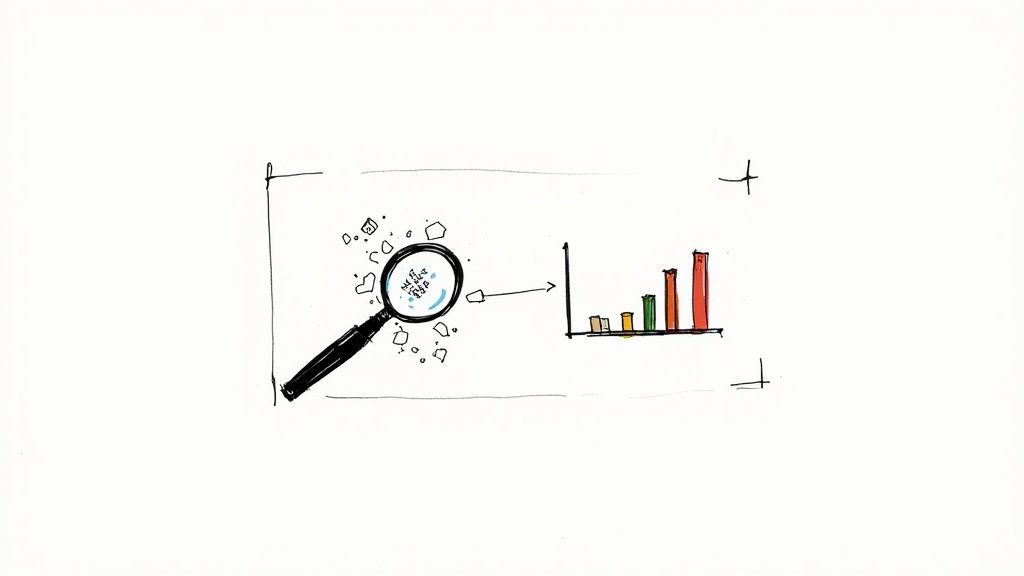
Keyword research is the cornerstone of any effective on-page SEO strategy. It involves identifying the specific words and phrases your target audience uses to find solutions, products, or information online. Optimizing for these terms ensures your content directly addresses user search intent, making it more likely to be discovered and ranked by search engines.
Keyword Research and Optimization

The goal is to align your content's language with the language of your potential customers. By strategically placing these keywords in titles, headings, and body content, you send strong relevance signals to Google, demonstrating that your page is a valuable answer to a specific query. This foundational step dictates your entire content direction and is crucial for attracting qualified organic traffic. For example, industry leaders like Backlinko meticulously research and optimize for terms like "on-page SEO" to create definitive guides that dominate search results.

Actionable Implementation

To implement this practice, start by brainstorming a list of core topics relevant to your business. Use SEO tools like Ahrefs or SEMrush to expand this list, uncovering related terms and analyzing metrics like search volume and keyword difficulty.

  • Target One Primary Keyword: Each page should have a single, clear focus. Choose a primary keyword that best represents the page's core topic.

  • Include 5-10 Related Keywords: Support your primary keyword with a set of secondary and long-tail keywords. This helps you rank for a broader range of queries and adds contextual depth. Digging into these longer, more specific phrases can be a powerful tactic. To master this, you can learn more about long-tail keyword research here.

  • Strategic Placement: Integrate your primary keyword naturally within the first 100 words, in your main H1 title, and in at least one subheading.

  • Prioritize Search Intent: Go beyond just keyword volume. Analyze the current top-ranking pages to understand whether users are looking for informational blog posts, product pages, or comparison guides, and tailor your content accordingly. This is a critical aspect of modern on page seo best practices.

2. Title Tag Optimization

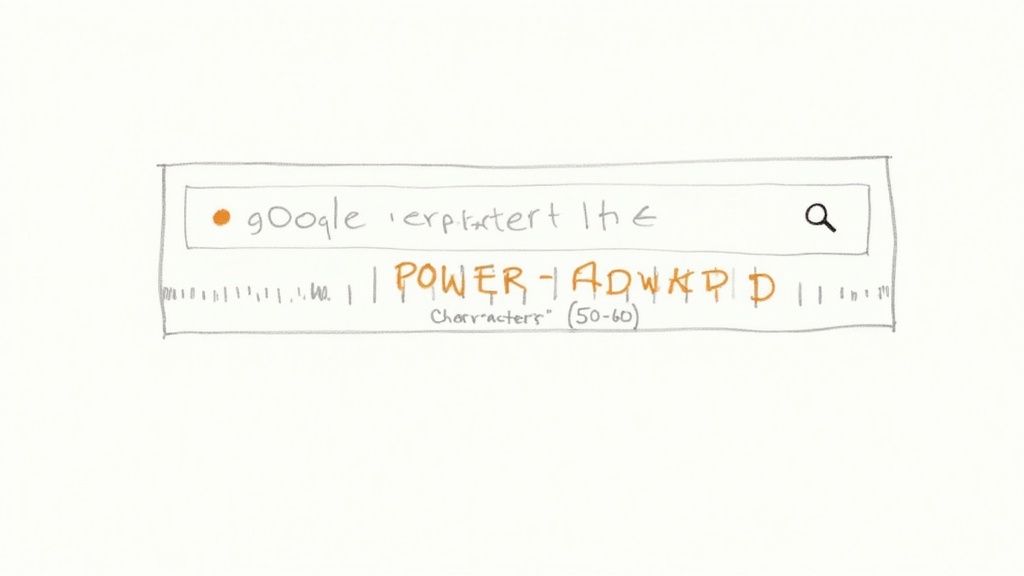
The title tag is one of the most critical on-page ranking factors, serving as the first impression a user gets of your page in the search results. It's the clickable blue headline in Google's listings that tells both users and search engines what your content is about. Crafting a compelling, keyword-rich title is essential for attracting clicks and signaling relevance.
Title Tag Optimization

A well-optimized title tag balances keyword placement with user appeal, directly impacting your click-through rate (CTR), a key user engagement signal. Search engines like Google pay close attention to which results get clicked, so an enticing title can lead to higher rankings over time. For example, titles like Backlinko's "On-Page SEO: The Definitive Guide (2024)" are effective because they include the primary keyword, a powerful descriptor ("Definitive Guide"), and a freshness indicator (the year).

Actionable Implementation

To implement this practice, focus on creating unique, descriptive titles for every page on your website. Avoid generic or default titles like "Home" or "New Page," as they offer no SEO value and discourage clicks.

  • Place Keywords First: Position your primary keyword as close to the beginning of the title tag as possible. This gives it more weight in search engine algorithms and captures user attention immediately.

  • Keep it 50-60 Characters: Google typically displays the first 50-60 characters of a title tag. Staying within this limit prevents your title from being truncated in search results, ensuring your full message is seen.

  • Add Modifiers and Power Words: Enhance your titles with words like "guide," "checklist," "ultimate," or "proven" to increase appeal. Including numbers, like Yoast's "SEO Checklist: 101 Actionable Tips," is also highly effective at drawing clicks.

  • Ensure Uniqueness: Every title tag on your site must be unique. Duplicate titles can confuse search engines about which page is more relevant for a query, which is detrimental to your on page seo best practices.

  • Include Your Brand Name: For established authority, consider adding your brand name at the end of the title, separated by a pipe (|) or hyphen (-).

3. Meta Description Optimization

While not a direct ranking factor, the meta description is your sales pitch in the search engine results pages (SERPs). It's a short snippet, typically 150-160 characters, that summarizes a page's content, and its primary job is to convince a user to click your link instead of a competitor's. A compelling description can significantly boost your click-through rate (CTR), which is a crucial user engagement signal for Google.

The goal is to provide a concise, accurate, and enticing preview of what the user will find on the page. By clearly communicating value and aligning with the user's search query, you turn impressions into valuable website traffic. For instance, industry leaders like HubSpot craft descriptions that promise comprehensive knowledge, such as, "Learn the fundamentals of SEO with our comprehensive guide. Discover proven strategies to improve your search rankings and drive organic traffic."

Actionable Implementation

To optimize your meta descriptions, think like a copywriter focused on earning the click. Your description must bridge the gap between a user's search query and the solution your page offers. It’s a key component of on-page SEO because it directly influences user behavior right from the SERP.

  • Keep It Concise and Compelling: Aim for the 150-160 character sweet spot to avoid truncation on desktop searches. Lead with the most important information to capture attention immediately. To ensure you stay within these limits, using a character counter tool is incredibly helpful.

  • Include Your Primary Keyword: Naturally integrate your primary keyword to show relevance. When a user's search term appears in your description, Google often bolds it, making your listing stand out.

  • Add a Clear Call-to-Action (CTA): Encourage users to take the next step with action-oriented words like "Learn," "Discover," "Explore," or "Find out." This creates a sense of purpose and direction.

  • Ensure Uniqueness and Relevance: Every page on your site should have a unique meta description that accurately reflects its specific content. Duplicating descriptions can dilute their effectiveness and confuse search engines. This is a fundamental aspect of executing high-quality on page seo best practices.

4. Heading Structure and Hierarchy (H1-H6 Tags)

A well-organized heading structure is like a table of contents for both your readers and search engines. Implementing proper hierarchical heading tags (H1, H2, H3, etc.) organizes your content logically, improves readability, and sends clear signals about your page's structure and key topics to crawlers like Google. It helps break down complex information into digestible sections, enhancing the user experience.

The primary goal is to create a logical outline. Your H1 tag is the main title of the page, followed by H2 tags for major sections, H3 tags for subsections within those sections, and so on. This hierarchy allows search engines to understand the relationship between different content blocks and the overall subject matter. Websites renowned for their content structure, like Wikipedia and Search Engine Journal, masterfully use headings to guide users through extensive information, a core component of great on page seo best practices.

Actionable Implementation

To implement a strong heading hierarchy, think of your article as an outline before you write. This ensures your headings flow logically and cover the topic comprehensively. A clear structure not only boosts SEO but also makes your content more scannable for readers who are looking for specific information.

  • Use One H1 Tag: Every page must have a single, unique H1 tag that contains your primary keyword. This tag serves as the page's main title and is a powerful relevance signal.

  • Structure with H2s and H3s: Use H2 tags to break your content into its main themes or sections. Use H3 tags to further elaborate on points within each H2 section. This creates a clear, logical flow.

  • Maintain a Logical Order: Never skip heading levels, such as jumping from an H1 directly to an H3. Maintain a sequential order (H1 → H2 → H3 → H4) to avoid confusing search engines and assistive technologies. You can learn more about the importance of semantic structure from the W3C's accessibility tutorials.

  • Keep Headings Keyword-Relevant: Naturally include your primary or secondary keywords in some of your headings. This reinforces the page's topic, but avoid keyword stuffing; headings should always be descriptive and written for the human reader first.

5. URL Structure and Optimization

A well-crafted URL is an underrated but powerful signal for both search engines and users. It serves as a human-readable address for your content, offering a clear preview of the page's topic. Optimizing your URL structure involves creating clean, descriptive, and keyword-rich paths that are easy to understand, share, and remember, reinforcing the page's relevance to its target query.

The goal is to move away from cryptic, dynamically generated URLs and toward logical, static ones. A clean URL like example.com/on-page-seo-best-practices immediately tells search engine crawlers and potential visitors what the page is about. This clarity builds trust and improves click-through rates from search results, as users are more likely to click on a link that makes sense. Leaders in the SEO space, such as Moz, consistently use simple, keyword-focused URLs like moz.com/blog/on-page-seo to enhance user experience and search visibility.

Actionable Implementation

To implement this practice, make URL optimization a standard part of your content publishing workflow. Aim for simplicity and relevance, ensuring every URL accurately reflects its page content and fits logically within your site's overall architecture.

  • Include the Primary Keyword: Your URL slug should contain the page's primary target keyword. This is a direct and effective relevance signal.

  • Keep it Short and Simple: Aim for URLs under 75 characters. Shorter URLs are easier to copy, paste, and share on social media. Remove unnecessary stop words like "a," "an," and "the."

  • Use Hyphens, Not Underscores: Google's official guidelines recommend using hyphens (-) to separate words in URLs. Underscores are not treated as word separators and can cause indexing issues.

  • Maintain a Logical Hierarchy: Structure your URLs to reflect your site's navigation. For example, site.com/services/seo/on-page-seo is much clearer than a flat structure. This is a key part of technical and on page seo best practices.

  • Avoid Parameters and Special Characters: Exclude dynamic parameters (?id=123), session IDs, and other special characters. Stick to lowercase letters, numbers, and hyphens to create clean, static URLs.

6. Content Quality and Relevance

Content quality and relevance are the heart of successful on-page SEO. This practice involves creating comprehensive, original, and deeply valuable content that fully satisfies user search intent. Search engines like Google prioritize content that demonstrates expertise, authoritativeness, and trustworthiness (E-A-T), and high-quality content is the primary vehicle for proving it.

The objective is to become the best possible answer for a user's query. By producing content that is more in-depth, accurate, and useful than competitors, you naturally attract backlinks, reduce bounce rates, and keep users engaged on your site. For instance, industry leaders like Backlinko and Ahrefs create 5,000+ word guides filled with original data and research, which helps them dominate competitive search results and establish significant topical authority.

Actionable Implementation

To implement this practice, shift your focus from simply creating content to creating the definitive resource on a topic. This means going beyond surface-level summaries and providing unique value that cannot be found elsewhere.

  • Write for Users First: Craft your content to be engaging, easy to read, and genuinely helpful for your human audience. Search engines are sophisticated enough to recognize user-friendly content.

  • Cover Topics Comprehensively: Address the primary query and anticipate follow-up questions. Use tools to find "People Also Ask" questions and related searches to build a complete resource.

  • Include Original Data or Insights: Differentiate your content by adding original research, case studies, proprietary data, or a unique expert perspective. This makes your content more valuable and link-worthy.

  • Update Content Regularly: Keep your articles current and accurate. Regularly updating content with new information signals to Google that it remains a fresh and relevant resource.

  • Focus on Depth, Not Just Word Count: While comprehensive content is often long, quality matters more than length. A well-researched 1,500-word article is better than a rambling 4,000-word piece. Building this depth is a key part of on page seo best practices. You can learn more about how to structure this detailed content with our guide to keyword density and placement.

7. Internal Linking Strategy

An internal linking strategy is the practice of connecting pages on your own website to one another. These links act as pathways for both users and search engine crawlers, distributing page authority (or "link equity") throughout your site and establishing a clear information hierarchy. By guiding search engines to your most important content, you help them understand context, relevance, and the relationship between different pages.

A well-executed internal linking plan improves site navigation, keeps users engaged longer, and can significantly boost the ranking potential of key pages. It signals to Google which content is foundational and which is supportive, creating a tightly-knit topical cluster. For example, Wikipedia is a master of this, using an extensive network of internal links to connect related concepts, which helps it dominate search results for millions of informational queries. Similarly, HubSpot's pillar page strategy relies heavily on internal links to connect supporting blog posts to a central, authoritative guide.

Actionable Implementation

To build a powerful internal linking structure, think of your website as a web where the strongest threads connect your most valuable content. This isn't just about adding links randomly; it's a deliberate process of building relationships between your pages.

  • Use Descriptive Anchor Text: The clickable text of your link should be descriptive and, when appropriate, include a variation of the target page's keyword. Avoid generic phrases like "click here." Aim for about 10-15% of your internal links to use relevant keywords in the anchor text.

  • Link to Contextually Relevant Pages: Only link between pages that are topically related. A link from an article about email marketing to a page about SEO is only useful if the context makes sense. This is a core component of effective on page seo best practices.

  • Link From High-Authority to Important Pages: Identify your pages with the most backlinks and authority. Use internal links on these pages to pass link equity to newer or more important pages you want to rank.

  • Create a Logical Site Hierarchy: Structure your content around cornerstone or pillar pages. These main guides should link out to more specific sub-topics, and those sub-topics should link back up to the main pillar page.

  • Update Old Content: Regularly review your older posts and add internal links to newer, relevant articles you've published. This keeps your old content fresh and helps new content get discovered faster.

8. Image Optimization (Alt Text and File Size)

Image optimization is a multifaceted process of reducing image file sizes while maintaining quality and providing descriptive information for search engines. This practice is critical for on-page SEO because it directly impacts page load speed, user experience, and accessibility, while also creating new opportunities to rank in image search results. Properly optimized images help search crawlers understand the visual content on your page, adding another layer of contextual relevance.
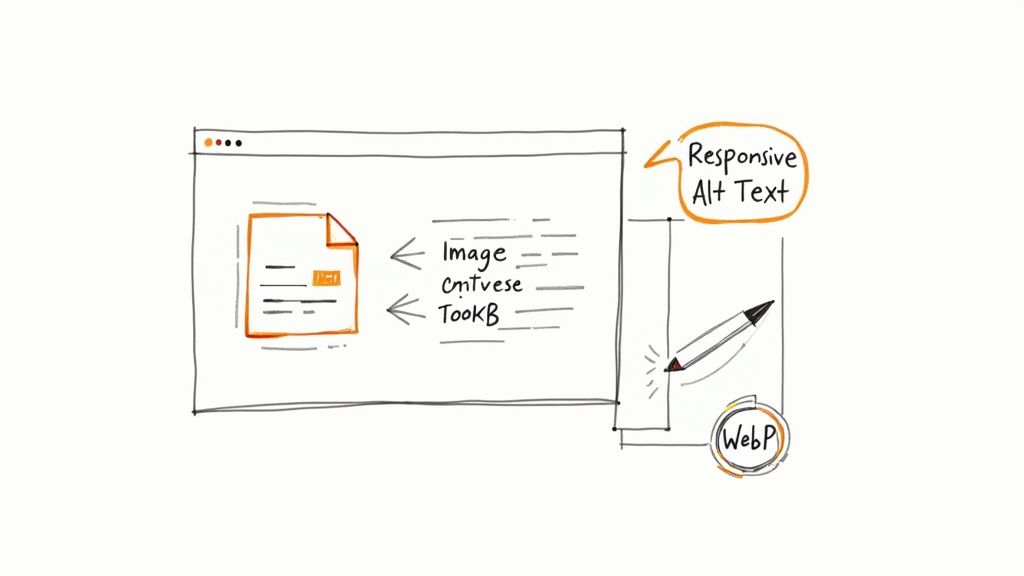
Image Optimization (Alt Text and File Size)

The goal is to make your images both user-friendly and search-engine-friendly. When Google sees descriptive file names and alt text, it can better index your images for relevant queries, driving traffic from Google Images. For instance, Pinterest's success in image search is heavily reliant on its users providing descriptive, keyword-rich text that functions like alt text, making its visual content highly discoverable. This process ensures your visuals actively contribute to your overall SEO performance rather than hindering it.

Actionable Implementation

Start by auditing all images on a page before and after you publish. Ensure every image serves a purpose and is optimized for both performance and search. For further detailed guidance on ensuring your images are perfectly optimized without compromising quality, delve into a practical guide on sizing images for websites.

  • Write Descriptive Alt Text: For every image, write a concise (under 125 characters) and descriptive alt text. For example, instead of "chart," use "bar chart showing on-page SEO ranking factors from 2024 study." This aids accessibility and SEO.

  • Use SEO-Friendly File Names: Before uploading, rename image files from "IMG_1234.jpg" to something descriptive like "on-page-seo-best-practices-checklist.jpg". Use hyphens to separate words.

  • Compress and Resize: Use tools like TinyPNG or ImageOptim to compress images without a noticeable loss in quality. Resize images to the exact dimensions they will be displayed to avoid loading unnecessarily large files.

  • Leverage Modern Formats: Use next-gen image formats like WebP, which offer superior compression and quality compared to traditional JPEGs and PNGs. Always provide fallback options for older browsers. This is a key component of effective on page seo best practices.

9. Page Speed and Core Web Vitals

Page speed and Google's Core Web Vitals are no longer just technical considerations; they are critical components of user experience and, consequently, direct ranking factors. This practice involves optimizing how quickly your page loads, becomes interactive, and maintains visual stability. A faster, smoother experience keeps users engaged and signals quality to search engines, directly impacting your site's performance.
Page Speed and Core Web Vitals

Google's Page Experience algorithm explicitly uses these metrics, which include Largest Contentful Paint (LCP), First Input Delay (FID), and Cumulative Layout Shift (CLS). The impact is tangible; for example, Amazon famously calculated that even a 100-millisecond reduction in load time could increase conversions by 1%. Optimizing these factors is a fundamental part of a modern on page seo best practices strategy, as it satisfies both users and search engine crawlers.

Actionable Implementation

Start by analyzing your site's performance with Google PageSpeed Insights or GTmetrix. These tools provide a detailed report and specific recommendations for improvement. Focus on achieving "good" scores across all Core Web Vitals.

  • Compress and Optimize: Minimize large files by compressing images, CSS, and JavaScript. This reduces the amount of data a browser needs to download.

  • Leverage Browser Caching: Configure browser caching to store parts of your website on a visitor's device. This dramatically speeds up load times for repeat visitors.

  • Use a Content Delivery Network (CDN): A CDN stores copies of your site on servers worldwide, delivering content from the location closest to the user for faster access.

  • Upgrade Your Hosting: A slow server will undermine all your optimization efforts. Invest in quality hosting that provides the speed and resources your site needs.

  • Monitor Regularly: Use the Core Web Vitals report in Google Search Console to track performance over time and identify pages that need attention. Addressing these issues ensures a consistently positive user experience.

10. Schema Markup and Structured Data

Schema markup, or structured data, is a semantic vocabulary you add to your website's HTML to help search engines understand your content more effectively. By providing explicit clues about the meaning of a page, you enable search engines to display your content in more engaging ways in the search results, known as rich snippets. This direct communication with crawlers clarifies context and can significantly improve your SERP appearance.

Implementing structured data gives search engines the confidence to feature your page with enhanced elements like star ratings, review counts, or event details directly in the search results. This makes your listing more visually appealing and informative, which can dramatically increase click-through rates (CTR) without necessarily improving your ranking position. For example, recipe websites use it to show cook times, and e-commerce sites like Amazon use it for product prices and availability, making their listings stand out.

Actionable Implementation

To implement schema, you add code (preferably using the JSON-LD format) to your page's header or body that corresponds to the content on the page. This code, based on the vocabulary from Schema.org, should be a true representation of the visible information.

  • Choose Relevant Schema Types: Select schema that accurately describes your content. Common types include Article, Product, Recipe, FAQPage, and LocalBusiness.

  • Use JSON-LD: Implement structured data using JSON-LD (JavaScript Object Notation for Linked Data), as it is Google's recommended format. It's easier to implement and manage since it can be placed anywhere in the page's HTML.

  • Validate Your Markup: Before and after deploying, use Google's Rich Results Test to ensure your code is error-free and eligible for rich snippets. This is a critical step in mastering on page seo best practices.

  • Monitor Performance: Use Google Search Console's "Enhancements" report to monitor any errors, warnings, or issues with your structured data implementation over time. For businesses serving a specific area, applying LocalBusiness schema is particularly powerful; you can get started with a local SEO checklist to ensure all bases are covered.

On-Page SEO: Top 10 Best Practices Comparison

Technique

Implementation Complexity 🔄

Resource Requirements ⚡

Expected Outcomes 📊⭐

Ideal Use Cases 💡

Key Advantages ⭐

Keyword Research and Optimization

Medium — ongoing analysis & testing 🔄

Low–Medium — tools + time ⚡

Improves organic visibility and qualified traffic 📊 ⭐⭐

New content planning, targeting user intent 💡

Cost-effective, boosts relevance ⭐

Title Tag Optimization

Low — simple edits per page 🔄

Low — minimal time, tools optional ⚡

Higher CTR from SERPs; supports rankings 📊 ⭐

Boosting CTR on existing pages, A/B testing titles 💡

Direct CTR impact; easy to implement ⭐

Meta Description Optimization

Low — short copywriting task 🔄

Low — quick edits, little tooling ⚡

Improved CTR and snippet clarity (not direct rank) 📊

Landing pages, SERP snippet optimization 💡

Fast CTR lift; clarifies value proposition ⭐

Heading Structure and Hierarchy (H1-H6)

Low–Medium — content structuring 🔄

Low — editorial discipline ⚡

Better readability, crawlability, accessibility 📊 ⭐

Long-form content, accessibility-focused pages 💡

Enhances UX and snippet potential ⭐

URL Structure and Optimization

Low–Medium — planning + occasional redirects 🔄

Low–Medium — dev + redirect work ⚡

Clearer indexing and shareable links; improved CTR 📊

Site launches, evergreen content, migrations 💡

Improves UX and indexation; SEO-friendly URLs ⭐

Content Quality and Relevance

High — research, writing, expertise 🔄

High — time, subject-matter experts, promotion ⚡

Earns backlinks, sustained rankings, engagement 📊 ⭐⭐⭐

Pillar pages, competitive keyword targets 💡

Builds topical authority and long-term traffic ⭐

Internal Linking Strategy

Medium — planning and content updates 🔄

Medium — editorial & site audits ⚡

Better crawl distribution and page authority 📊 ⭐

Content clusters, pillar/hub strategies 💡

Guides users; strengthens important pages ⭐

Image Optimization (Alt Text & File Size)

Medium — file prep + alt writing 🔄

Low–Medium — tools for compression ⚡

Faster pages, image search visibility, accessibility 📊 ⭐

Media-heavy sites, e-commerce, galleries 💡

Improves load speed and accessibility ⭐

Page Speed and Core Web Vitals

High — technical optimization & monitoring 🔄

Medium–High — dev, hosting, tooling ⚡

Improved rankings, lower bounce, higher conversions 📊 ⭐⭐⭐

E‑commerce, high-traffic and mobile-first sites 💡

Direct ranking factor; major UX gains ⭐

Schema Markup and Structured Data

Medium–High — correct implementation 🔄

Medium — dev or plugins, validation tools ⚡

Rich snippets and higher CTR potential (not direct rank) 📊 ⭐

Products, recipes, FAQs, events, reviews 💡

Enhances SERP appearance and clickability ⭐

From Theory to Traffic: Putting Your Plan into Action

You have now journeyed through the ten foundational pillars of modern on-page SEO. We've moved beyond surface-level definitions, diving into the specific, actionable mechanics that transform content from a mere digital document into a powerful engine for organic growth. From the strategic selection of keywords to the technical precision of schema markup, each practice serves a dual purpose: enhancing user experience and communicating value clearly to search engines.

The true power of these techniques, however, lies not in their isolated application but in their synergy. A compelling title tag captures attention, but it’s the high-quality content and logical heading structure that keep users engaged. Fast page speed prevents bounces, while a strategic internal linking web guides both users and crawlers deeper into your site, distributing authority and building topical relevance. Mastering these on page seo best practices is about creating a holistic, high-quality experience from the moment a user sees your snippet in the SERPs to the moment they convert.

Synthesizing Your On-Page SEO Strategy

Think of this guide not as a one-time read but as a recurring checklist. The digital landscape is dynamic, and consistent application is what separates fleeting success from sustained authority. The most important takeaway is that on-page SEO is not a "set it and forget it" task; it's an iterative process of creation, optimization, and refinement.

Let’s distill the core principles into a unified action plan:

  • Clarity Above All: Every element, from your URL slug to your image alt text, should be a clear, concise signal of your page’s purpose. Avoid ambiguity and focus on directly answering the user's search intent.

  • User-Centric Optimization: Google’s algorithms are increasingly sophisticated proxies for user satisfaction. Optimizing for Core Web Vitals, creating scannable content with clear headings, and providing genuine value are no longer just "good practices" - they are direct ranking factors.

  • Structure is Signal: A well-organized page with a logical hierarchy of H1-H6 tags, optimized images, and structured data is easier for both humans and machines to understand. This structure builds confidence and reduces friction.

Your Actionable Next Steps

Knowledge without action is just potential. To translate the insights from this article into tangible results, start with a focused approach. Don't try to overhaul your entire website overnight. Instead, create a prioritized plan to gain momentum and see immediate wins.

Here is a simple framework to get started:

  1. Conduct a Content Audit: Identify your top 5-10 most important pages (e.g., those with high business value but low rankings, or pages ranking on the second page of Google).

  2. Benchmark and Diagnose: Run these pages through Google's PageSpeed Insights to check Core Web Vitals. Use a SERP simulator to analyze how your current title tags and meta descriptions appear to searchers.

  3. Implement Quick Wins: Systematically work through the checklist from this article for each target page. Optimize title tags, add descriptive alt text to images, improve internal links, and ensure the heading structure is logical. These small changes can often yield surprisingly fast results.

  4. Measure and Iterate: Track the performance of your optimized pages over the next 30-60 days using Google Search Console. Look for improvements in clicks, impressions, and average position. Use these learnings to refine your approach for the next batch of content.

By consistently applying these on page seo best practices, you are building more than just a collection of web pages. You are constructing a resilient, authoritative digital asset that attracts, engages, and converts your ideal audience, creating a predictable channel for organic growth that will serve your business for years to come.

Ready to streamline your entire on-page optimization process? Viral SEO integrates keyword research, competitor analysis, and content optimization into a single, intuitive workflow, helping you implement these best practices with speed and precision. Stop guessing and start ranking by visiting Viral SEO to see how you can put your content strategy on autopilot.

In the competitive landscape of digital content, simply creating great articles is not enough. To capture organic traffic and climb the search engine rankings, you need a mastery of on-page SEO: the art and science of optimizing individual web pages for both search engines and users. While off-page signals like backlinks build authority, on-page factors are entirely within your control, offering a direct and powerful path to improved visibility.

This guide moves beyond generic advice to provide a detailed roundup of the most critical on page SEO best practices. Each item is a crucial lever you can pull to signal relevance to Google, enhance user experience, and ultimately drive predictable, sustainable growth for your business. Think of this as your technical and strategic blueprint for turning every piece of content into a high-performing asset.

We will break down ten essential components, from foundational keyword optimization and compelling title tags to advanced techniques like schema markup and Core Web Vitals. You will learn not just what to do, but how to implement these strategies with actionable steps and clear examples. Whether you are an indie creator building a blog, a SaaS founder aiming for consistent traffic, or an SEO specialist managing client content, this listicle will equip you with the practical knowledge needed to make every page on your site a powerful ranking tool. By mastering these elements, you can directly influence how search engines perceive and rank your content, laying the groundwork for long-term organic success.

1. Keyword Research and Optimization

Keyword research is the cornerstone of any effective on-page SEO strategy. It involves identifying the specific words and phrases your target audience uses to find solutions, products, or information online. Optimizing for these terms ensures your content directly addresses user search intent, making it more likely to be discovered and ranked by search engines.

Keyword Research and Optimization

The goal is to align your content's language with the language of your potential customers. By strategically placing these keywords in titles, headings, and body content, you send strong relevance signals to Google, demonstrating that your page is a valuable answer to a specific query. This foundational step dictates your entire content direction and is crucial for attracting qualified organic traffic. For example, industry leaders like Backlinko meticulously research and optimize for terms like "on-page SEO" to create definitive guides that dominate search results.

Actionable Implementation

To implement this practice, start by brainstorming a list of core topics relevant to your business. Use SEO tools like Ahrefs or SEMrush to expand this list, uncovering related terms and analyzing metrics like search volume and keyword difficulty.

  • Target One Primary Keyword: Each page should have a single, clear focus. Choose a primary keyword that best represents the page's core topic.

  • Include 5-10 Related Keywords: Support your primary keyword with a set of secondary and long-tail keywords. This helps you rank for a broader range of queries and adds contextual depth. Digging into these longer, more specific phrases can be a powerful tactic. To master this, you can learn more about long-tail keyword research here.

  • Strategic Placement: Integrate your primary keyword naturally within the first 100 words, in your main H1 title, and in at least one subheading.

  • Prioritize Search Intent: Go beyond just keyword volume. Analyze the current top-ranking pages to understand whether users are looking for informational blog posts, product pages, or comparison guides, and tailor your content accordingly. This is a critical aspect of modern on page seo best practices.

2. Title Tag Optimization

The title tag is one of the most critical on-page ranking factors, serving as the first impression a user gets of your page in the search results. It's the clickable blue headline in Google's listings that tells both users and search engines what your content is about. Crafting a compelling, keyword-rich title is essential for attracting clicks and signaling relevance.

Title Tag Optimization

A well-optimized title tag balances keyword placement with user appeal, directly impacting your click-through rate (CTR), a key user engagement signal. Search engines like Google pay close attention to which results get clicked, so an enticing title can lead to higher rankings over time. For example, titles like Backlinko's "On-Page SEO: The Definitive Guide (2024)" are effective because they include the primary keyword, a powerful descriptor ("Definitive Guide"), and a freshness indicator (the year).

Actionable Implementation

To implement this practice, focus on creating unique, descriptive titles for every page on your website. Avoid generic or default titles like "Home" or "New Page," as they offer no SEO value and discourage clicks.

  • Place Keywords First: Position your primary keyword as close to the beginning of the title tag as possible. This gives it more weight in search engine algorithms and captures user attention immediately.

  • Keep it 50-60 Characters: Google typically displays the first 50-60 characters of a title tag. Staying within this limit prevents your title from being truncated in search results, ensuring your full message is seen.

  • Add Modifiers and Power Words: Enhance your titles with words like "guide," "checklist," "ultimate," or "proven" to increase appeal. Including numbers, like Yoast's "SEO Checklist: 101 Actionable Tips," is also highly effective at drawing clicks.

  • Ensure Uniqueness: Every title tag on your site must be unique. Duplicate titles can confuse search engines about which page is more relevant for a query, which is detrimental to your on page seo best practices.

  • Include Your Brand Name: For established authority, consider adding your brand name at the end of the title, separated by a pipe (|) or hyphen (-).

3. Meta Description Optimization

While not a direct ranking factor, the meta description is your sales pitch in the search engine results pages (SERPs). It's a short snippet, typically 150-160 characters, that summarizes a page's content, and its primary job is to convince a user to click your link instead of a competitor's. A compelling description can significantly boost your click-through rate (CTR), which is a crucial user engagement signal for Google.

The goal is to provide a concise, accurate, and enticing preview of what the user will find on the page. By clearly communicating value and aligning with the user's search query, you turn impressions into valuable website traffic. For instance, industry leaders like HubSpot craft descriptions that promise comprehensive knowledge, such as, "Learn the fundamentals of SEO with our comprehensive guide. Discover proven strategies to improve your search rankings and drive organic traffic."

Actionable Implementation

To optimize your meta descriptions, think like a copywriter focused on earning the click. Your description must bridge the gap between a user's search query and the solution your page offers. It’s a key component of on-page SEO because it directly influences user behavior right from the SERP.

  • Keep It Concise and Compelling: Aim for the 150-160 character sweet spot to avoid truncation on desktop searches. Lead with the most important information to capture attention immediately. To ensure you stay within these limits, using a character counter tool is incredibly helpful.

  • Include Your Primary Keyword: Naturally integrate your primary keyword to show relevance. When a user's search term appears in your description, Google often bolds it, making your listing stand out.

  • Add a Clear Call-to-Action (CTA): Encourage users to take the next step with action-oriented words like "Learn," "Discover," "Explore," or "Find out." This creates a sense of purpose and direction.

  • Ensure Uniqueness and Relevance: Every page on your site should have a unique meta description that accurately reflects its specific content. Duplicating descriptions can dilute their effectiveness and confuse search engines. This is a fundamental aspect of executing high-quality on page seo best practices.

4. Heading Structure and Hierarchy (H1-H6 Tags)

A well-organized heading structure is like a table of contents for both your readers and search engines. Implementing proper hierarchical heading tags (H1, H2, H3, etc.) organizes your content logically, improves readability, and sends clear signals about your page's structure and key topics to crawlers like Google. It helps break down complex information into digestible sections, enhancing the user experience.

The primary goal is to create a logical outline. Your H1 tag is the main title of the page, followed by H2 tags for major sections, H3 tags for subsections within those sections, and so on. This hierarchy allows search engines to understand the relationship between different content blocks and the overall subject matter. Websites renowned for their content structure, like Wikipedia and Search Engine Journal, masterfully use headings to guide users through extensive information, a core component of great on page seo best practices.

Actionable Implementation

To implement a strong heading hierarchy, think of your article as an outline before you write. This ensures your headings flow logically and cover the topic comprehensively. A clear structure not only boosts SEO but also makes your content more scannable for readers who are looking for specific information.

  • Use One H1 Tag: Every page must have a single, unique H1 tag that contains your primary keyword. This tag serves as the page's main title and is a powerful relevance signal.

  • Structure with H2s and H3s: Use H2 tags to break your content into its main themes or sections. Use H3 tags to further elaborate on points within each H2 section. This creates a clear, logical flow.

  • Maintain a Logical Order: Never skip heading levels, such as jumping from an H1 directly to an H3. Maintain a sequential order (H1 → H2 → H3 → H4) to avoid confusing search engines and assistive technologies. You can learn more about the importance of semantic structure from the W3C's accessibility tutorials.

  • Keep Headings Keyword-Relevant: Naturally include your primary or secondary keywords in some of your headings. This reinforces the page's topic, but avoid keyword stuffing; headings should always be descriptive and written for the human reader first.

5. URL Structure and Optimization

A well-crafted URL is an underrated but powerful signal for both search engines and users. It serves as a human-readable address for your content, offering a clear preview of the page's topic. Optimizing your URL structure involves creating clean, descriptive, and keyword-rich paths that are easy to understand, share, and remember, reinforcing the page's relevance to its target query.

The goal is to move away from cryptic, dynamically generated URLs and toward logical, static ones. A clean URL like example.com/on-page-seo-best-practices immediately tells search engine crawlers and potential visitors what the page is about. This clarity builds trust and improves click-through rates from search results, as users are more likely to click on a link that makes sense. Leaders in the SEO space, such as Moz, consistently use simple, keyword-focused URLs like moz.com/blog/on-page-seo to enhance user experience and search visibility.

Actionable Implementation

To implement this practice, make URL optimization a standard part of your content publishing workflow. Aim for simplicity and relevance, ensuring every URL accurately reflects its page content and fits logically within your site's overall architecture.

  • Include the Primary Keyword: Your URL slug should contain the page's primary target keyword. This is a direct and effective relevance signal.

  • Keep it Short and Simple: Aim for URLs under 75 characters. Shorter URLs are easier to copy, paste, and share on social media. Remove unnecessary stop words like "a," "an," and "the."

  • Use Hyphens, Not Underscores: Google's official guidelines recommend using hyphens (-) to separate words in URLs. Underscores are not treated as word separators and can cause indexing issues.

  • Maintain a Logical Hierarchy: Structure your URLs to reflect your site's navigation. For example, site.com/services/seo/on-page-seo is much clearer than a flat structure. This is a key part of technical and on page seo best practices.

  • Avoid Parameters and Special Characters: Exclude dynamic parameters (?id=123), session IDs, and other special characters. Stick to lowercase letters, numbers, and hyphens to create clean, static URLs.

6. Content Quality and Relevance

Content quality and relevance are the heart of successful on-page SEO. This practice involves creating comprehensive, original, and deeply valuable content that fully satisfies user search intent. Search engines like Google prioritize content that demonstrates expertise, authoritativeness, and trustworthiness (E-A-T), and high-quality content is the primary vehicle for proving it.

The objective is to become the best possible answer for a user's query. By producing content that is more in-depth, accurate, and useful than competitors, you naturally attract backlinks, reduce bounce rates, and keep users engaged on your site. For instance, industry leaders like Backlinko and Ahrefs create 5,000+ word guides filled with original data and research, which helps them dominate competitive search results and establish significant topical authority.

Actionable Implementation

To implement this practice, shift your focus from simply creating content to creating the definitive resource on a topic. This means going beyond surface-level summaries and providing unique value that cannot be found elsewhere.

  • Write for Users First: Craft your content to be engaging, easy to read, and genuinely helpful for your human audience. Search engines are sophisticated enough to recognize user-friendly content.

  • Cover Topics Comprehensively: Address the primary query and anticipate follow-up questions. Use tools to find "People Also Ask" questions and related searches to build a complete resource.

  • Include Original Data or Insights: Differentiate your content by adding original research, case studies, proprietary data, or a unique expert perspective. This makes your content more valuable and link-worthy.

  • Update Content Regularly: Keep your articles current and accurate. Regularly updating content with new information signals to Google that it remains a fresh and relevant resource.

  • Focus on Depth, Not Just Word Count: While comprehensive content is often long, quality matters more than length. A well-researched 1,500-word article is better than a rambling 4,000-word piece. Building this depth is a key part of on page seo best practices. You can learn more about how to structure this detailed content with our guide to keyword density and placement.

7. Internal Linking Strategy

An internal linking strategy is the practice of connecting pages on your own website to one another. These links act as pathways for both users and search engine crawlers, distributing page authority (or "link equity") throughout your site and establishing a clear information hierarchy. By guiding search engines to your most important content, you help them understand context, relevance, and the relationship between different pages.

A well-executed internal linking plan improves site navigation, keeps users engaged longer, and can significantly boost the ranking potential of key pages. It signals to Google which content is foundational and which is supportive, creating a tightly-knit topical cluster. For example, Wikipedia is a master of this, using an extensive network of internal links to connect related concepts, which helps it dominate search results for millions of informational queries. Similarly, HubSpot's pillar page strategy relies heavily on internal links to connect supporting blog posts to a central, authoritative guide.

Actionable Implementation

To build a powerful internal linking structure, think of your website as a web where the strongest threads connect your most valuable content. This isn't just about adding links randomly; it's a deliberate process of building relationships between your pages.

  • Use Descriptive Anchor Text: The clickable text of your link should be descriptive and, when appropriate, include a variation of the target page's keyword. Avoid generic phrases like "click here." Aim for about 10-15% of your internal links to use relevant keywords in the anchor text.

  • Link to Contextually Relevant Pages: Only link between pages that are topically related. A link from an article about email marketing to a page about SEO is only useful if the context makes sense. This is a core component of effective on page seo best practices.

  • Link From High-Authority to Important Pages: Identify your pages with the most backlinks and authority. Use internal links on these pages to pass link equity to newer or more important pages you want to rank.

  • Create a Logical Site Hierarchy: Structure your content around cornerstone or pillar pages. These main guides should link out to more specific sub-topics, and those sub-topics should link back up to the main pillar page.

  • Update Old Content: Regularly review your older posts and add internal links to newer, relevant articles you've published. This keeps your old content fresh and helps new content get discovered faster.

8. Image Optimization (Alt Text and File Size)

Image optimization is a multifaceted process of reducing image file sizes while maintaining quality and providing descriptive information for search engines. This practice is critical for on-page SEO because it directly impacts page load speed, user experience, and accessibility, while also creating new opportunities to rank in image search results. Properly optimized images help search crawlers understand the visual content on your page, adding another layer of contextual relevance.

Image Optimization (Alt Text and File Size)

The goal is to make your images both user-friendly and search-engine-friendly. When Google sees descriptive file names and alt text, it can better index your images for relevant queries, driving traffic from Google Images. For instance, Pinterest's success in image search is heavily reliant on its users providing descriptive, keyword-rich text that functions like alt text, making its visual content highly discoverable. This process ensures your visuals actively contribute to your overall SEO performance rather than hindering it.

Actionable Implementation

Start by auditing all images on a page before and after you publish. Ensure every image serves a purpose and is optimized for both performance and search. For further detailed guidance on ensuring your images are perfectly optimized without compromising quality, delve into a practical guide on sizing images for websites.

  • Write Descriptive Alt Text: For every image, write a concise (under 125 characters) and descriptive alt text. For example, instead of "chart," use "bar chart showing on-page SEO ranking factors from 2024 study." This aids accessibility and SEO.

  • Use SEO-Friendly File Names: Before uploading, rename image files from "IMG_1234.jpg" to something descriptive like "on-page-seo-best-practices-checklist.jpg". Use hyphens to separate words.

  • Compress and Resize: Use tools like TinyPNG or ImageOptim to compress images without a noticeable loss in quality. Resize images to the exact dimensions they will be displayed to avoid loading unnecessarily large files.

  • Leverage Modern Formats: Use next-gen image formats like WebP, which offer superior compression and quality compared to traditional JPEGs and PNGs. Always provide fallback options for older browsers. This is a key component of effective on page seo best practices.

9. Page Speed and Core Web Vitals

Page speed and Google's Core Web Vitals are no longer just technical considerations; they are critical components of user experience and, consequently, direct ranking factors. This practice involves optimizing how quickly your page loads, becomes interactive, and maintains visual stability. A faster, smoother experience keeps users engaged and signals quality to search engines, directly impacting your site's performance.

Page Speed and Core Web Vitals

Google's Page Experience algorithm explicitly uses these metrics, which include Largest Contentful Paint (LCP), First Input Delay (FID), and Cumulative Layout Shift (CLS). The impact is tangible; for example, Amazon famously calculated that even a 100-millisecond reduction in load time could increase conversions by 1%. Optimizing these factors is a fundamental part of a modern on page seo best practices strategy, as it satisfies both users and search engine crawlers.

Actionable Implementation

Start by analyzing your site's performance with Google PageSpeed Insights or GTmetrix. These tools provide a detailed report and specific recommendations for improvement. Focus on achieving "good" scores across all Core Web Vitals.

  • Compress and Optimize: Minimize large files by compressing images, CSS, and JavaScript. This reduces the amount of data a browser needs to download.

  • Leverage Browser Caching: Configure browser caching to store parts of your website on a visitor's device. This dramatically speeds up load times for repeat visitors.

  • Use a Content Delivery Network (CDN): A CDN stores copies of your site on servers worldwide, delivering content from the location closest to the user for faster access.

  • Upgrade Your Hosting: A slow server will undermine all your optimization efforts. Invest in quality hosting that provides the speed and resources your site needs.

  • Monitor Regularly: Use the Core Web Vitals report in Google Search Console to track performance over time and identify pages that need attention. Addressing these issues ensures a consistently positive user experience.

10. Schema Markup and Structured Data

Schema markup, or structured data, is a semantic vocabulary you add to your website's HTML to help search engines understand your content more effectively. By providing explicit clues about the meaning of a page, you enable search engines to display your content in more engaging ways in the search results, known as rich snippets. This direct communication with crawlers clarifies context and can significantly improve your SERP appearance.

Implementing structured data gives search engines the confidence to feature your page with enhanced elements like star ratings, review counts, or event details directly in the search results. This makes your listing more visually appealing and informative, which can dramatically increase click-through rates (CTR) without necessarily improving your ranking position. For example, recipe websites use it to show cook times, and e-commerce sites like Amazon use it for product prices and availability, making their listings stand out.

Actionable Implementation

To implement schema, you add code (preferably using the JSON-LD format) to your page's header or body that corresponds to the content on the page. This code, based on the vocabulary from Schema.org, should be a true representation of the visible information.

  • Choose Relevant Schema Types: Select schema that accurately describes your content. Common types include Article, Product, Recipe, FAQPage, and LocalBusiness.

  • Use JSON-LD: Implement structured data using JSON-LD (JavaScript Object Notation for Linked Data), as it is Google's recommended format. It's easier to implement and manage since it can be placed anywhere in the page's HTML.

  • Validate Your Markup: Before and after deploying, use Google's Rich Results Test to ensure your code is error-free and eligible for rich snippets. This is a critical step in mastering on page seo best practices.

  • Monitor Performance: Use Google Search Console's "Enhancements" report to monitor any errors, warnings, or issues with your structured data implementation over time. For businesses serving a specific area, applying LocalBusiness schema is particularly powerful; you can get started with a local SEO checklist to ensure all bases are covered.

On-Page SEO: Top 10 Best Practices Comparison

Technique

Implementation Complexity 🔄

Resource Requirements ⚡

Expected Outcomes 📊⭐

Ideal Use Cases 💡

Key Advantages ⭐

Keyword Research and Optimization

Medium — ongoing analysis & testing 🔄

Low–Medium — tools + time ⚡

Improves organic visibility and qualified traffic 📊 ⭐⭐

New content planning, targeting user intent 💡

Cost-effective, boosts relevance ⭐

Title Tag Optimization

Low — simple edits per page 🔄

Low — minimal time, tools optional ⚡

Higher CTR from SERPs; supports rankings 📊 ⭐

Boosting CTR on existing pages, A/B testing titles 💡

Direct CTR impact; easy to implement ⭐

Meta Description Optimization

Low — short copywriting task 🔄

Low — quick edits, little tooling ⚡

Improved CTR and snippet clarity (not direct rank) 📊

Landing pages, SERP snippet optimization 💡

Fast CTR lift; clarifies value proposition ⭐

Heading Structure and Hierarchy (H1-H6)

Low–Medium — content structuring 🔄

Low — editorial discipline ⚡

Better readability, crawlability, accessibility 📊 ⭐

Long-form content, accessibility-focused pages 💡

Enhances UX and snippet potential ⭐

URL Structure and Optimization

Low–Medium — planning + occasional redirects 🔄

Low–Medium — dev + redirect work ⚡

Clearer indexing and shareable links; improved CTR 📊

Site launches, evergreen content, migrations 💡

Improves UX and indexation; SEO-friendly URLs ⭐

Content Quality and Relevance

High — research, writing, expertise 🔄

High — time, subject-matter experts, promotion ⚡

Earns backlinks, sustained rankings, engagement 📊 ⭐⭐⭐

Pillar pages, competitive keyword targets 💡

Builds topical authority and long-term traffic ⭐

Internal Linking Strategy

Medium — planning and content updates 🔄

Medium — editorial & site audits ⚡

Better crawl distribution and page authority 📊 ⭐

Content clusters, pillar/hub strategies 💡

Guides users; strengthens important pages ⭐

Image Optimization (Alt Text & File Size)

Medium — file prep + alt writing 🔄

Low–Medium — tools for compression ⚡

Faster pages, image search visibility, accessibility 📊 ⭐

Media-heavy sites, e-commerce, galleries 💡

Improves load speed and accessibility ⭐

Page Speed and Core Web Vitals

High — technical optimization & monitoring 🔄

Medium–High — dev, hosting, tooling ⚡

Improved rankings, lower bounce, higher conversions 📊 ⭐⭐⭐

E‑commerce, high-traffic and mobile-first sites 💡

Direct ranking factor; major UX gains ⭐

Schema Markup and Structured Data

Medium–High — correct implementation 🔄

Medium — dev or plugins, validation tools ⚡

Rich snippets and higher CTR potential (not direct rank) 📊 ⭐

Products, recipes, FAQs, events, reviews 💡

Enhances SERP appearance and clickability ⭐

From Theory to Traffic: Putting Your Plan into Action

You have now journeyed through the ten foundational pillars of modern on-page SEO. We've moved beyond surface-level definitions, diving into the specific, actionable mechanics that transform content from a mere digital document into a powerful engine for organic growth. From the strategic selection of keywords to the technical precision of schema markup, each practice serves a dual purpose: enhancing user experience and communicating value clearly to search engines.

The true power of these techniques, however, lies not in their isolated application but in their synergy. A compelling title tag captures attention, but it’s the high-quality content and logical heading structure that keep users engaged. Fast page speed prevents bounces, while a strategic internal linking web guides both users and crawlers deeper into your site, distributing authority and building topical relevance. Mastering these on page seo best practices is about creating a holistic, high-quality experience from the moment a user sees your snippet in the SERPs to the moment they convert.

Synthesizing Your On-Page SEO Strategy

Think of this guide not as a one-time read but as a recurring checklist. The digital landscape is dynamic, and consistent application is what separates fleeting success from sustained authority. The most important takeaway is that on-page SEO is not a "set it and forget it" task; it's an iterative process of creation, optimization, and refinement.

Let’s distill the core principles into a unified action plan:

  • Clarity Above All: Every element, from your URL slug to your image alt text, should be a clear, concise signal of your page’s purpose. Avoid ambiguity and focus on directly answering the user's search intent.

  • User-Centric Optimization: Google’s algorithms are increasingly sophisticated proxies for user satisfaction. Optimizing for Core Web Vitals, creating scannable content with clear headings, and providing genuine value are no longer just "good practices" - they are direct ranking factors.

  • Structure is Signal: A well-organized page with a logical hierarchy of H1-H6 tags, optimized images, and structured data is easier for both humans and machines to understand. This structure builds confidence and reduces friction.

Your Actionable Next Steps

Knowledge without action is just potential. To translate the insights from this article into tangible results, start with a focused approach. Don't try to overhaul your entire website overnight. Instead, create a prioritized plan to gain momentum and see immediate wins.

Here is a simple framework to get started:

  1. Conduct a Content Audit: Identify your top 5-10 most important pages (e.g., those with high business value but low rankings, or pages ranking on the second page of Google).

  2. Benchmark and Diagnose: Run these pages through Google's PageSpeed Insights to check Core Web Vitals. Use a SERP simulator to analyze how your current title tags and meta descriptions appear to searchers.

  3. Implement Quick Wins: Systematically work through the checklist from this article for each target page. Optimize title tags, add descriptive alt text to images, improve internal links, and ensure the heading structure is logical. These small changes can often yield surprisingly fast results.

  4. Measure and Iterate: Track the performance of your optimized pages over the next 30-60 days using Google Search Console. Look for improvements in clicks, impressions, and average position. Use these learnings to refine your approach for the next batch of content.

By consistently applying these on page seo best practices, you are building more than just a collection of web pages. You are constructing a resilient, authoritative digital asset that attracts, engages, and converts your ideal audience, creating a predictable channel for organic growth that will serve your business for years to come.

Ready to streamline your entire on-page optimization process? Viral SEO integrates keyword research, competitor analysis, and content optimization into a single, intuitive workflow, helping you implement these best practices with speed and precision. Stop guessing and start ranking by visiting Viral SEO to see how you can put your content strategy on autopilot.