
Blog

Blog

10 Keyword Research Best Practices for 2025

10 Keyword Research Best Practices for 2025

Blog

10 Keyword Research Best Practices for 2025

In the competitive world of SEO, keyword research is far more than just identifying popular search terms. It's the strategic foundation for all successful content, requiring a deep understanding of user intent, competitive landscapes, and the subtle nuances of search behavior. While many marketers stop at finding high-volume keywords, a truly effective strategy is built on a framework of proven keyword research best practices. This approach moves beyond basic tool outputs and transforms data into a predictable roadmap for organic growth.

This guide provides a detailed breakdown of 10 essential practices that distinguish high-impact content from assets that fail to rank. We will explore actionable techniques designed to give your content a decisive advantage, from dissecting competitor strategies and mastering long-tail opportunities to leveraging semantic keyword clustering. Each point is designed to be practical and immediately applicable. By implementing these methods, you will learn to create content that not only attracts the right audience but also converts visitors, builds authority, and delivers sustainable results for your brand. Forget guesswork; it's time to build a content engine powered by data-driven precision and strategic insight.

1. Master Search Intent: Go Beyond the Keyword

The most fundamental of all keyword research best practices is understanding the "why" behind a search query. Simply matching keywords is an outdated approach; modern SEO success hinges on aligning your content with user intent. This means deciphering whether a user is looking to learn something (informational), find a specific website (navigational), compare options before buying (commercial), or make a purchase immediately (transactional).

Misaligning your content with the dominant search intent is a critical error. For example, creating a detailed informational blog post for the transactional keyword "buy sourdough starter kit" will likely fail. Users want product pages, not a history lesson. This mismatch leads to high bounce rates, which signals to Google that your page isn't the right answer for that query, ultimately harming your rankings.

How to Analyze and Match Intent

The best way to determine intent is to analyze the search engine results page (SERP) for your target keyword. Google has already done the heavy lifting by showing you what it believes best satisfies users.

  • Observe Content Types: Are the top results blog posts, product pages, category pages, or videos? This reveals the format that users prefer. For "best CRM software," you'll see comparison articles and reviews, indicating commercial intent.

  • Analyze Titles and Meta Descriptions: Look for modifiers like "how to," "what is," "best," "review," or "buy." These are direct clues. A query like "HubSpot login" is clearly navigational, while "HubSpot vs Salesforce" is commercial.

  • Map to the Funnel: Align keywords to different stages of the customer journey. An informational "what is content marketing" post serves the top of the funnel, while a transactional "content marketing agency pricing" page serves the bottom.

2. Conduct a Thorough Competitor Keyword Analysis

One of the most effective keyword research best practices is to learn from those who are already succeeding. Competitor keyword analysis involves reverse-engineering your rivals' SEO strategies to uncover the keywords they rank for. This intelligence reveals proven, high-value terms you may have overlooked, identifies gaps in your own content plan, and provides a benchmark for your performance.

Ignoring your competitors means you're starting from scratch when a roadmap to success already exists. For instance, if you sell eco-friendly products and find a competitor ranks for "sustainable packaging alternatives," you've just discovered a new content cluster to target. This approach shortcuts the trial-and-error phase, allowing you to focus on keywords that are already driving traffic for others in your niche. To effectively analyze your rivals' online presence and uncover their keyword strategies, a dedicated guide to website competitor analysis can provide a structured framework.

How to Reverse-Engineer Competitor Keywords

Use SEO tools like Ahrefs or Semrush to automate this process and gain actionable insights. The goal is to find their strengths and, more importantly, their weaknesses.

  • Identify Your True SERP Competitors: Don't just look at direct business rivals; identify who consistently ranks for your target keywords. A blog might be your SERP competitor even if they don't sell a similar product. Analyze 5-10 of these domains.

  • Find Keyword Gaps: Use a "Keyword Gap" or "Content Gap" tool to see which keywords your competitors rank for that you don't. Prioritize terms where multiple competitors are ranking, as this indicates high relevance and value in your industry.

  • Look for "Weak" Rankings: Focus on keywords where a competitor ranks on page one but hasn't created highly-optimized content for it. If their page has thin content or a poor user experience, it represents a prime opportunity for you to create a superior resource and steal the ranking.

3. Long-Tail Keyword Targeting

While broad, high-volume "head" terms like "running shoes" seem appealing, they are incredibly competitive and often lack specific intent. A core pillar of modern keyword research best practices is shifting focus to long-tail keywords. These are longer, more specific search phrases, typically three or more words, that attract less search traffic but usually have a much higher conversion value due to their specificity.

Targeting long-tail keywords allows you to connect with users who are further along in their journey and know exactly what they need. For example, a user searching "running shoes" is browsing, while someone searching "best affordable running shoes for flat feet" is close to making a decision. This specificity leads to lower competition, making it easier for newer or smaller sites to rank and attract highly qualified traffic.

Long-Tail Keyword Targeting

How to Find and Use Long-Tail Keywords

Discovering these valuable phrases involves listening to your audience and using tools to uncover their specific questions and needs. The goal is to build content that directly answers these detailed queries.

  • Analyze SERP Features: Use Google’s "People Also Ask" section and autocomplete suggestions to find common questions and phrases related to your head term. These are direct insights into what users are actively searching for.

  • Use Question-Based Tools: Tools like AnswerThePublic are excellent for generating hundreds of long-tail questions (who, what, when, where, why, how) around a single topic, providing a roadmap for your content.

  • Group and Conquer: Don't create a separate page for every minor long-tail variation. Instead, group related long-tail keywords thematically to build a comprehensive pillar page that covers a topic in-depth. For an even deeper dive, learn more about advanced long-tail keyword research.

4. Keyword Clustering and Semantic Grouping

A common pitfall in keyword research best practices is treating each keyword as an isolated target. Keyword clustering, or semantic grouping, shifts this mindset by organizing keywords into tight, topically related groups. This approach allows you to create comprehensive content that can rank for dozens of related queries with a single, authoritative page, preventing issues like keyword cannibalization where multiple pages compete for the same terms.

This method, popularized by HubSpot's pillar-cluster model, involves grouping queries that share a similar underlying intent and topic. For example, instead of creating separate pages for "best email marketing tools," "email automation software," and "marketing automation platforms," you group them to inform one powerful pillar page. This signals to Google that your content is a deep, expert resource on the subject.
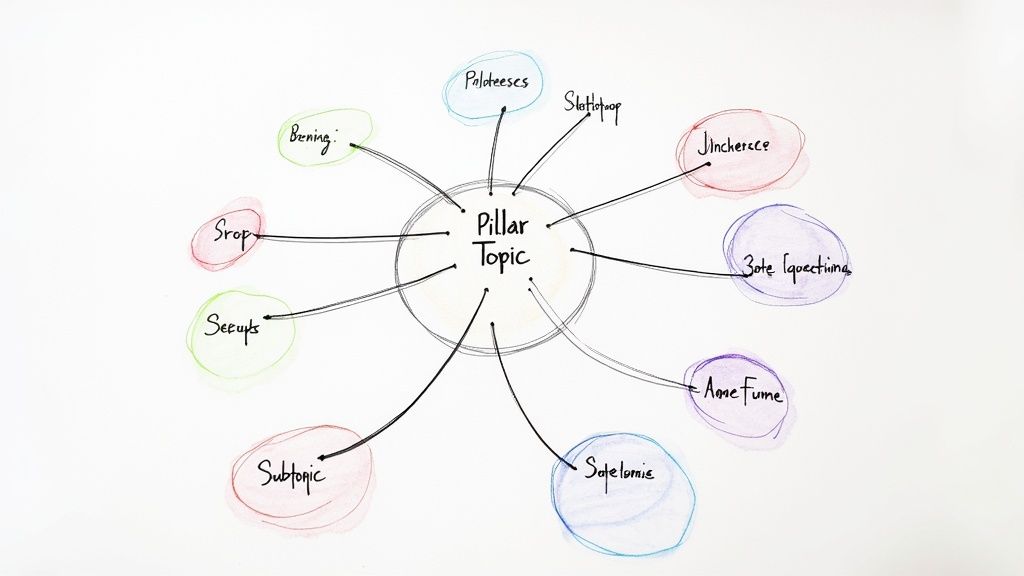
Keyword Clustering and Semantic Grouping

How to Implement Keyword Clusters

Building effective clusters requires organization and a focus on topical authority rather than individual keywords. The goal is to own an entire conversation, not just a single search term.

  • Group by Topic and Intent: Start with a broad "pillar" topic like "dog training." Then, create "cluster" groups around specific subtopics like "leash training puppies," "advanced obedience commands," or "separation anxiety solutions." Each cluster should serve a distinct user need.

  • Map Keywords to Pages: Create a spreadsheet to assign one primary keyword to each planned page and list all semantically related secondary keywords that the page will also target. This prevents accidental content overlap.

  • Analyze SERP Overlap: A practical way to validate a cluster is to check if the same URLs appear in the search results for the different keywords you plan to group. High SERP overlap is a strong signal that Google considers the terms semantically related.

5. Analyze Keyword Difficulty and SERP Landscape

One of the most crucial keyword research best practices is assessing the competitive landscape before committing to a target. Simply chasing high-volume keywords without understanding the effort required to rank is a recipe for wasted resources. Keyword Difficulty (KD) metrics from tools like Ahrefs or Moz provide a numerical score to estimate how hard it will be to rank on the first page of Google.

Analyzing difficulty prevents new or smaller sites from trying to compete for keywords dominated by high-authority behemoths. For instance, a new blog targeting a KD 80+ keyword like "project management software" is unlikely to succeed. Instead, focusing on lower KD terms allows you to build momentum and authority over time. This strategic prioritization is key to achieving sustainable growth.

Analyze Keyword Difficulty and SERP Landscape

How to Evaluate Difficulty and Find Opportunities

A KD score is just the starting point; a true analysis involves manually inspecting the Search Engine Results Page (SERP) to uncover strategic advantages.

  • Align KD with Domain Authority: Your site's authority level directly correlates with the KD scores you can realistically target. A new site should focus on keywords in the 0-30 range, while a more established site can aim higher. Check your Domain Authority to set realistic targets.

  • Analyze Backlink Profiles: Use an SEO tool to inspect the backlink profiles of the top 10 ranking pages. If they all have thousands of high-quality links, the barrier to entry is extremely high. If some have relatively few, you've found a potential opening.

  • Look for SERP Features: The SERP itself reveals opportunities. Are there People Also Ask boxes, featured snippets, or video carousels? Creating content specifically formatted to win these features can allow you to leapfrog stronger competitors for highly visible positions.

6. Incorporate Search Volume and Trend Analysis

A core component of effective keyword research is balancing established demand with future potential. Relying solely on search volume tells you what's popular now, but analyzing search trends reveals where user interest is headed. This dual approach ensures your content strategy captures both current traffic and emerging opportunities, preventing you from investing in topics with declining relevance.

Failing to consider trends is a common mistake that leads to wasted effort. For example, creating extensive content around a keyword with high volume but a steep downward trend means your traffic potential is already shrinking. Conversely, identifying a low-volume keyword with consistent year-over-year growth allows you to establish authority early and ride the wave of increasing interest, a key tenet of forward-thinking keyword research best practices.

How to Analyze Volume and Trends

Combining keyword tool data with trend analysis gives you a more complete picture of a keyword's true value. Use tools like Google Trends and your primary SEO software to make informed decisions.

  • Validate with Google Trends: Before committing to a high-volume keyword, check its trajectory on Google Trends. A query like "sustainable packaging" showing steady growth is a much better long-term bet than "plastic packaging," which may have volume but shows declining interest.

  • Identify Seasonal Peaks: Use trend data to plan your content calendar around predictable seasonal spikes. A retailer selling outdoor gear would analyze trends for "hiking boots" to publish content just before search interest peaks in spring and fall.

  • Look for Consistent Growth: Prioritize keywords that demonstrate stable, long-term growth over several years. This indicates a sustained shift in user behavior, not just a temporary fad, making it a more reliable target for foundational content. For example, the term "remote work setup" saw a massive spike and has now stabilized at a new, higher baseline.

7. Analyze Real User Search Behavior

One of the most powerful keyword research best practices involves moving beyond hypothetical data and analyzing how your actual audience searches. Keyword tools provide excellent estimates, but your own Google Search Console (GSC) data, user surveys, and support logs reveal the exact language people use to find you. This approach uncovers authentic search patterns that tools often miss.

Tapping into this data allows you to bridge the gap between your assumptions and reality. For example, you might target "best CRM software," but GSC could reveal users are actually finding you through more specific, long-tail queries like "CRM with automated lead scoring" or asking natural language questions like "what software can track my sales calls." This insight is crucial for refining content to match user vocabulary and needs precisely.

How to Analyze and Use Search Behavior Data

The goal is to find patterns in how real people look for solutions your content provides. Your own analytics platforms are the best place to start this investigation, offering a direct line into your users' minds.

  • Review GSC Performance Reports: Go to the "Queries" report in Google Search Console. Look for high-impression, low-click-through-rate (CTR) keywords. This often indicates your page appears for a query but the title or meta description doesn't align with the user's specific need, signaling an opportunity to better match their language.

  • Analyze Internal Site Search: If your website has a search bar, analyze the query logs. What are visitors looking for once they're already on your site? This uncovers content gaps and shows you the precise terminology your engaged audience uses.

  • Monitor Support Tickets and Sales Calls: Your customer-facing teams are a goldmine of keyword data. Pay attention to the exact phrases and questions customers use when describing their problems. This language is often highly conversational and perfect for creating FAQ sections or targeting voice search queries.

8. Voice Search and Natural Language Optimization

The rise of digital assistants like Alexa and Google Assistant has fundamentally changed how users search. This keyword research best practice involves optimizing for the conversational queries common in voice search, which are typically longer, more natural, and framed as complete questions. Ignoring this growing traffic source means missing out on a significant segment of your audience.

Adapting your strategy for voice search is crucial because these queries reveal intent with incredible clarity. A typed search might be "best pizza downtown," but a voice search is more likely "Hey Google, what's the best pizza place near me that's open now?" This specificity requires content that directly answers questions. By optimizing for these natural language phrases, you position your content to be the definitive answer, which is exactly what search engines want to provide.

How to Optimize for Voice and Natural Language

The goal is to become the source for Google's spoken answers, often pulled from featured snippets. This requires a shift from targeting short-tail keywords to answering questions comprehensively.

  • Focus on Question Keywords: Build content around queries starting with "Who," "What," "When," "Where," "Why," and "How." Use tools like AnswerThePublic to discover the exact questions people are asking about your topics.

  • Structure for Snippets: Create concise, direct answers to these questions near the top of your page. Aim for answers under 40 words, as this is the ideal length for a featured snippet that a voice assistant can read aloud. An FAQ section is a perfect format for this.

  • Embrace Conversational Language: Write your content as you would speak. This approach naturally aligns with voice queries and improves readability. Understanding the basics of Natural Language Processing can provide valuable insight into how search engines interpret and respond to these conversational searches.

9. Geographic and Localization Keyword Strategy

One of the most powerful keyword research best practices for businesses serving specific areas is to prioritize a geographic and localized strategy. This approach moves beyond generic, national keywords to capture high-intent users searching for products or services in their immediate vicinity. It's the difference between targeting "plumber" and the far more valuable "emergency plumber Chicago."

Failing to localize your keyword strategy means missing out on your most qualified and ready-to-convert customers. For brick-and-mortar stores, service-area businesses, and international brands, this is a non-negotiable step. A user searching for "running shoes" in the UK is looking for "trainers," and your content must reflect that regional dialect and preference to be relevant. This granular focus ensures you connect with local search demand directly.

How to Implement a Local Keyword Strategy

Building a successful local strategy requires creating targeted content and optimizing your digital presence for specific regions. This involves more than just adding a city name to your keywords; it's about understanding and serving the local market. For a comprehensive guide, review this local SEO checklist on getviralseo.com.

  • Create Location-Specific Pages: Develop dedicated landing pages for each key city or service area (e.g., "SEO Services for Dallas" and "SEO Services for Austin"). This allows you to tailor content, testimonials, and case studies to that specific market.

  • Use Geographic Modifiers: Naturally incorporate local modifiers into your keyword mix, such as "near me," "in [city]," or "downtown [city] plumber." These terms signal strong local intent to search engines.

  • Optimize Google Business Profile: Your Google Business Profile is a local SEO powerhouse. Infuse its description, services, and posts with your primary localized keywords to dominate the local map pack.

  • Leverage Hreflang for International SEO: If you operate in multiple countries, use hreflang tags to tell Google which language and regional URL to show users. This prevents you from showing a US-centric page to a UK audience.

10. Regular Monitoring, Auditing, and Keyword Refresh Strategy

One of the most overlooked keyword research best practices is treating it as an ongoing process, not a one-time task. Search landscapes are dynamic; user behavior shifts, competitors evolve, and algorithms change. A continuous cycle of monitoring, auditing, and refreshing ensures your content strategy remains relevant and effective, preventing keyword decay and traffic stagnation.

Failing to audit your keywords is like setting a course and never checking your compass. A term that drove significant traffic six months ago might now be dominated by new SERP features or targeted by aggressive competitors. Regularly revisiting your keyword strategy allows you to adapt to these changes, defend your rankings, and uncover fresh opportunities before your content becomes obsolete.

How to Implement a Continuous Keyword Cycle

Integrating a recurring audit process into your workflow is crucial for sustained organic growth. This isn't about starting from scratch; it's about refining and optimizing what you already have.

  • Establish a Monitoring Cadence: Use rank tracking tools to set up weekly or monthly dashboards for your core keywords. This provides an early warning system for performance drops or competitor gains, allowing for quick intervention.

  • Conduct Quarterly Audits: Every three months, perform a deeper dive. Compare your current rankings and traffic against the previous quarter. Analyze Google Search Console data for new "striking distance" keywords (positions 8-20) that could be targeted with content updates.

  • Refresh and Prune: Identify underperforming content tied to valuable keywords. Refresh these pages by updating information, improving intent match, and incorporating new, relevant secondary keywords. Conversely, prune or consolidate pages that target keywords with consistently low traffic and engagement.

10-Point Keyword Research Best Practices Comparison

Strategy

🔄 Implementation Complexity

⚡ Resource Requirements

⭐ Expected Outcomes

📊 Ideal Use Cases

💡 Key Advantages / Tips

Understand Search Intent

Medium — ongoing SERP & intent analysis

Medium — time + SERP review tools

⭐⭐️⭐️ — better relevance & conversions

Content planning, landing pages, CRO

💡 Analyze top‑10 SERPs; use intent modifiers; map content to journey

Competitor Keyword Analysis

Medium‑High — reverse engineering & gap analysis

High — paid tools (Ahrefs/SEMrush) + analyst time

⭐⭐️⭐ — uncovers missed opportunities fast

Market benchmarking, opportunistic content

💡 Analyze 5–10 competitors; prioritize gaps, avoid blind copying

Long‑Tail Keyword Targeting

Low — straightforward research & content mapping

Low‑Medium — content volume, basic tools

⭐⭐️⭐️ — higher conversion per visit

Niche pages, FAQs, voice queries, product pages

💡 Use question modifiers; group them into pillar content

Keyword Clustering & Semantic Grouping

High — initial mapping and architecture work

Medium‑High — clustering tools + manual review

⭐⭐️⭐️⭐️ — reduces cannibalization, improves structure

Blog architectures, pillar/cluster strategies

💡 Create spreadsheets; one primary keyword per page; internal linking

Analyze Keyword Difficulty & SERP Landscape

Medium — metric interpretation + backlink checks

Medium — keyword tools + backlink analysis

⭐⭐️⭐ — realistic prioritization & resource alignment

Prioritizing targets for new/existing sites

💡 Match KD to domain strength; inspect top‑10 backlink profiles

Search Volume & Trend Analysis

Medium — volume vs trend balancing

Medium — Google Trends + keyword tools

⭐⭐️⭐ — identifies growth and seasonal windows

Seasonal campaigns, emerging topic discovery

💡 Combine volume with YoY growth; use Trends for trajectory

User Search Behavior Analysis

High — log analysis & user research

High — GSC/GA data, heatmaps, surveys

⭐⭐️⭐️⭐️ — reveals real language and behavior

Content rewrites, CTR improvement, UX/CRO

💡 Review GSC regularly; analyze CTR gaps; use session recordings

Voice Search & Natural Language Optimization

Medium — conversational formatting & snippets

Low‑Medium — content edits + schema

⭐⭐ — good for snippets/voice but variable conversions

Local businesses, FAQ pages, short answers for snippets

💡 Target question phrases; optimize for featured snippets; keep answers concise

Geographic & Localization Keyword Strategy

Medium‑High — many localized variants

Medium‑High — localized content + translation

⭐⭐️⭐ — strong local conversions, lower local competition

Multi‑location businesses, international expansion

💡 Build location pages; optimize GBP; use hreflang for locales

Regular Monitoring, Auditing & Keyword Refresh

Medium — recurring processes and audits

High — ongoing tools subscriptions + analyst time

⭐⭐️⭐️⭐️ — sustained ranking health & ROI

Mature sites, competitive niches, long‑term SEO programs

💡 Set monthly dashboards; quarterly audits; refresh underperformers

From Research to Results: Activating Your Keyword Strategy

Mastering keyword research is not a one-time task but an ongoing strategic discipline. Throughout this guide, we've explored the essential pillars that transform a simple list of terms into a powerful roadmap for organic growth. We moved beyond basic metrics like search volume to dissect the crucial, nuanced layers of search intent, competitive analysis, and semantic relationships.

Adopting these keyword research best practices is the difference between casting a wide, hopeful net and fishing with a precision-guided lure. You are no longer just chasing keywords; you are systematically aligning your content with the specific problems, questions, and needs of your target audience. This is the foundation of sustainable SEO success.

Key Takeaways for Immediate Action

To crystallize your new approach, focus on these core principles:

  • Intent is Everything: Before you write a single word, ask yourself why a user is searching for a particular query. Answering this question correctly is more valuable than targeting the highest-volume keyword.

  • Competitors are a Goldmine: Your rivals have already spent time and resources figuring out what works. Analyzing their successes and failures provides you with a blueprint and an invaluable competitive advantage.

  • Go Long-Tail for High-Quality Traffic: Long-tail keywords are less competitive, more specific, and often attract users who are further along in their buying journey. They are your secret weapon for capturing high-intent traffic.

  • Clustering Creates Authority: Building topic clusters instead of targeting isolated keywords signals your expertise to search engines. This practice helps you rank for a wider array of related terms and establishes topical authority.

Your Path Forward: From Data to Dominance

Your next step is to transition from learning to doing. Don't let this knowledge sit idle. Choose one piece of cornerstone content or a key product page and apply these principles. Start by auditing your existing keywords. Are they truly aligned with user intent? Are there long-tail opportunities you've missed?

Then, conduct a fresh round of competitor analysis. Identify a keyword gap your rivals are ignoring and create a piece of content that is ten times better than anything currently ranking. This iterative process of analysis, execution, and refinement is what separates successful SEO strategies from forgotten blogs.

Ultimately, effective keyword research is about deep empathy for your audience. It's about understanding their world so well that you can anticipate their needs and provide solutions before they even fully articulate the problem. By implementing these keyword research best practices, you are not just optimizing for algorithms; you are building a more intelligent, responsive, and profitable connection with your future customers.

Ready to put these best practices into action without the manual busywork? Viral SEO automates the most time-consuming parts of keyword research, from analyzing competitor strategies to identifying high-impact content opportunities. Stop wrestling with spreadsheets and start building your organic growth engine today with Viral SEO.

In the competitive world of SEO, keyword research is far more than just identifying popular search terms. It's the strategic foundation for all successful content, requiring a deep understanding of user intent, competitive landscapes, and the subtle nuances of search behavior. While many marketers stop at finding high-volume keywords, a truly effective strategy is built on a framework of proven keyword research best practices. This approach moves beyond basic tool outputs and transforms data into a predictable roadmap for organic growth.

This guide provides a detailed breakdown of 10 essential practices that distinguish high-impact content from assets that fail to rank. We will explore actionable techniques designed to give your content a decisive advantage, from dissecting competitor strategies and mastering long-tail opportunities to leveraging semantic keyword clustering. Each point is designed to be practical and immediately applicable. By implementing these methods, you will learn to create content that not only attracts the right audience but also converts visitors, builds authority, and delivers sustainable results for your brand. Forget guesswork; it's time to build a content engine powered by data-driven precision and strategic insight.

1. Master Search Intent: Go Beyond the Keyword

The most fundamental of all keyword research best practices is understanding the "why" behind a search query. Simply matching keywords is an outdated approach; modern SEO success hinges on aligning your content with user intent. This means deciphering whether a user is looking to learn something (informational), find a specific website (navigational), compare options before buying (commercial), or make a purchase immediately (transactional).

Misaligning your content with the dominant search intent is a critical error. For example, creating a detailed informational blog post for the transactional keyword "buy sourdough starter kit" will likely fail. Users want product pages, not a history lesson. This mismatch leads to high bounce rates, which signals to Google that your page isn't the right answer for that query, ultimately harming your rankings.

How to Analyze and Match Intent

The best way to determine intent is to analyze the search engine results page (SERP) for your target keyword. Google has already done the heavy lifting by showing you what it believes best satisfies users.

  • Observe Content Types: Are the top results blog posts, product pages, category pages, or videos? This reveals the format that users prefer. For "best CRM software," you'll see comparison articles and reviews, indicating commercial intent.

  • Analyze Titles and Meta Descriptions: Look for modifiers like "how to," "what is," "best," "review," or "buy." These are direct clues. A query like "HubSpot login" is clearly navigational, while "HubSpot vs Salesforce" is commercial.

  • Map to the Funnel: Align keywords to different stages of the customer journey. An informational "what is content marketing" post serves the top of the funnel, while a transactional "content marketing agency pricing" page serves the bottom.

2. Conduct a Thorough Competitor Keyword Analysis

One of the most effective keyword research best practices is to learn from those who are already succeeding. Competitor keyword analysis involves reverse-engineering your rivals' SEO strategies to uncover the keywords they rank for. This intelligence reveals proven, high-value terms you may have overlooked, identifies gaps in your own content plan, and provides a benchmark for your performance.

Ignoring your competitors means you're starting from scratch when a roadmap to success already exists. For instance, if you sell eco-friendly products and find a competitor ranks for "sustainable packaging alternatives," you've just discovered a new content cluster to target. This approach shortcuts the trial-and-error phase, allowing you to focus on keywords that are already driving traffic for others in your niche. To effectively analyze your rivals' online presence and uncover their keyword strategies, a dedicated guide to website competitor analysis can provide a structured framework.

How to Reverse-Engineer Competitor Keywords

Use SEO tools like Ahrefs or Semrush to automate this process and gain actionable insights. The goal is to find their strengths and, more importantly, their weaknesses.

  • Identify Your True SERP Competitors: Don't just look at direct business rivals; identify who consistently ranks for your target keywords. A blog might be your SERP competitor even if they don't sell a similar product. Analyze 5-10 of these domains.

  • Find Keyword Gaps: Use a "Keyword Gap" or "Content Gap" tool to see which keywords your competitors rank for that you don't. Prioritize terms where multiple competitors are ranking, as this indicates high relevance and value in your industry.

  • Look for "Weak" Rankings: Focus on keywords where a competitor ranks on page one but hasn't created highly-optimized content for it. If their page has thin content or a poor user experience, it represents a prime opportunity for you to create a superior resource and steal the ranking.

3. Long-Tail Keyword Targeting

While broad, high-volume "head" terms like "running shoes" seem appealing, they are incredibly competitive and often lack specific intent. A core pillar of modern keyword research best practices is shifting focus to long-tail keywords. These are longer, more specific search phrases, typically three or more words, that attract less search traffic but usually have a much higher conversion value due to their specificity.

Targeting long-tail keywords allows you to connect with users who are further along in their journey and know exactly what they need. For example, a user searching "running shoes" is browsing, while someone searching "best affordable running shoes for flat feet" is close to making a decision. This specificity leads to lower competition, making it easier for newer or smaller sites to rank and attract highly qualified traffic.

Long-Tail Keyword Targeting

How to Find and Use Long-Tail Keywords

Discovering these valuable phrases involves listening to your audience and using tools to uncover their specific questions and needs. The goal is to build content that directly answers these detailed queries.

  • Analyze SERP Features: Use Google’s "People Also Ask" section and autocomplete suggestions to find common questions and phrases related to your head term. These are direct insights into what users are actively searching for.

  • Use Question-Based Tools: Tools like AnswerThePublic are excellent for generating hundreds of long-tail questions (who, what, when, where, why, how) around a single topic, providing a roadmap for your content.

  • Group and Conquer: Don't create a separate page for every minor long-tail variation. Instead, group related long-tail keywords thematically to build a comprehensive pillar page that covers a topic in-depth. For an even deeper dive, learn more about advanced long-tail keyword research.

4. Keyword Clustering and Semantic Grouping

A common pitfall in keyword research best practices is treating each keyword as an isolated target. Keyword clustering, or semantic grouping, shifts this mindset by organizing keywords into tight, topically related groups. This approach allows you to create comprehensive content that can rank for dozens of related queries with a single, authoritative page, preventing issues like keyword cannibalization where multiple pages compete for the same terms.

This method, popularized by HubSpot's pillar-cluster model, involves grouping queries that share a similar underlying intent and topic. For example, instead of creating separate pages for "best email marketing tools," "email automation software," and "marketing automation platforms," you group them to inform one powerful pillar page. This signals to Google that your content is a deep, expert resource on the subject.

Keyword Clustering and Semantic Grouping

How to Implement Keyword Clusters

Building effective clusters requires organization and a focus on topical authority rather than individual keywords. The goal is to own an entire conversation, not just a single search term.

  • Group by Topic and Intent: Start with a broad "pillar" topic like "dog training." Then, create "cluster" groups around specific subtopics like "leash training puppies," "advanced obedience commands," or "separation anxiety solutions." Each cluster should serve a distinct user need.

  • Map Keywords to Pages: Create a spreadsheet to assign one primary keyword to each planned page and list all semantically related secondary keywords that the page will also target. This prevents accidental content overlap.

  • Analyze SERP Overlap: A practical way to validate a cluster is to check if the same URLs appear in the search results for the different keywords you plan to group. High SERP overlap is a strong signal that Google considers the terms semantically related.

5. Analyze Keyword Difficulty and SERP Landscape

One of the most crucial keyword research best practices is assessing the competitive landscape before committing to a target. Simply chasing high-volume keywords without understanding the effort required to rank is a recipe for wasted resources. Keyword Difficulty (KD) metrics from tools like Ahrefs or Moz provide a numerical score to estimate how hard it will be to rank on the first page of Google.

Analyzing difficulty prevents new or smaller sites from trying to compete for keywords dominated by high-authority behemoths. For instance, a new blog targeting a KD 80+ keyword like "project management software" is unlikely to succeed. Instead, focusing on lower KD terms allows you to build momentum and authority over time. This strategic prioritization is key to achieving sustainable growth.

Analyze Keyword Difficulty and SERP Landscape

How to Evaluate Difficulty and Find Opportunities

A KD score is just the starting point; a true analysis involves manually inspecting the Search Engine Results Page (SERP) to uncover strategic advantages.

  • Align KD with Domain Authority: Your site's authority level directly correlates with the KD scores you can realistically target. A new site should focus on keywords in the 0-30 range, while a more established site can aim higher. Check your Domain Authority to set realistic targets.

  • Analyze Backlink Profiles: Use an SEO tool to inspect the backlink profiles of the top 10 ranking pages. If they all have thousands of high-quality links, the barrier to entry is extremely high. If some have relatively few, you've found a potential opening.

  • Look for SERP Features: The SERP itself reveals opportunities. Are there People Also Ask boxes, featured snippets, or video carousels? Creating content specifically formatted to win these features can allow you to leapfrog stronger competitors for highly visible positions.

6. Incorporate Search Volume and Trend Analysis

A core component of effective keyword research is balancing established demand with future potential. Relying solely on search volume tells you what's popular now, but analyzing search trends reveals where user interest is headed. This dual approach ensures your content strategy captures both current traffic and emerging opportunities, preventing you from investing in topics with declining relevance.

Failing to consider trends is a common mistake that leads to wasted effort. For example, creating extensive content around a keyword with high volume but a steep downward trend means your traffic potential is already shrinking. Conversely, identifying a low-volume keyword with consistent year-over-year growth allows you to establish authority early and ride the wave of increasing interest, a key tenet of forward-thinking keyword research best practices.

How to Analyze Volume and Trends

Combining keyword tool data with trend analysis gives you a more complete picture of a keyword's true value. Use tools like Google Trends and your primary SEO software to make informed decisions.

  • Validate with Google Trends: Before committing to a high-volume keyword, check its trajectory on Google Trends. A query like "sustainable packaging" showing steady growth is a much better long-term bet than "plastic packaging," which may have volume but shows declining interest.

  • Identify Seasonal Peaks: Use trend data to plan your content calendar around predictable seasonal spikes. A retailer selling outdoor gear would analyze trends for "hiking boots" to publish content just before search interest peaks in spring and fall.

  • Look for Consistent Growth: Prioritize keywords that demonstrate stable, long-term growth over several years. This indicates a sustained shift in user behavior, not just a temporary fad, making it a more reliable target for foundational content. For example, the term "remote work setup" saw a massive spike and has now stabilized at a new, higher baseline.

7. Analyze Real User Search Behavior

One of the most powerful keyword research best practices involves moving beyond hypothetical data and analyzing how your actual audience searches. Keyword tools provide excellent estimates, but your own Google Search Console (GSC) data, user surveys, and support logs reveal the exact language people use to find you. This approach uncovers authentic search patterns that tools often miss.

Tapping into this data allows you to bridge the gap between your assumptions and reality. For example, you might target "best CRM software," but GSC could reveal users are actually finding you through more specific, long-tail queries like "CRM with automated lead scoring" or asking natural language questions like "what software can track my sales calls." This insight is crucial for refining content to match user vocabulary and needs precisely.

How to Analyze and Use Search Behavior Data

The goal is to find patterns in how real people look for solutions your content provides. Your own analytics platforms are the best place to start this investigation, offering a direct line into your users' minds.

  • Review GSC Performance Reports: Go to the "Queries" report in Google Search Console. Look for high-impression, low-click-through-rate (CTR) keywords. This often indicates your page appears for a query but the title or meta description doesn't align with the user's specific need, signaling an opportunity to better match their language.

  • Analyze Internal Site Search: If your website has a search bar, analyze the query logs. What are visitors looking for once they're already on your site? This uncovers content gaps and shows you the precise terminology your engaged audience uses.

  • Monitor Support Tickets and Sales Calls: Your customer-facing teams are a goldmine of keyword data. Pay attention to the exact phrases and questions customers use when describing their problems. This language is often highly conversational and perfect for creating FAQ sections or targeting voice search queries.

8. Voice Search and Natural Language Optimization

The rise of digital assistants like Alexa and Google Assistant has fundamentally changed how users search. This keyword research best practice involves optimizing for the conversational queries common in voice search, which are typically longer, more natural, and framed as complete questions. Ignoring this growing traffic source means missing out on a significant segment of your audience.

Adapting your strategy for voice search is crucial because these queries reveal intent with incredible clarity. A typed search might be "best pizza downtown," but a voice search is more likely "Hey Google, what's the best pizza place near me that's open now?" This specificity requires content that directly answers questions. By optimizing for these natural language phrases, you position your content to be the definitive answer, which is exactly what search engines want to provide.

How to Optimize for Voice and Natural Language

The goal is to become the source for Google's spoken answers, often pulled from featured snippets. This requires a shift from targeting short-tail keywords to answering questions comprehensively.

  • Focus on Question Keywords: Build content around queries starting with "Who," "What," "When," "Where," "Why," and "How." Use tools like AnswerThePublic to discover the exact questions people are asking about your topics.

  • Structure for Snippets: Create concise, direct answers to these questions near the top of your page. Aim for answers under 40 words, as this is the ideal length for a featured snippet that a voice assistant can read aloud. An FAQ section is a perfect format for this.

  • Embrace Conversational Language: Write your content as you would speak. This approach naturally aligns with voice queries and improves readability. Understanding the basics of Natural Language Processing can provide valuable insight into how search engines interpret and respond to these conversational searches.

9. Geographic and Localization Keyword Strategy

One of the most powerful keyword research best practices for businesses serving specific areas is to prioritize a geographic and localized strategy. This approach moves beyond generic, national keywords to capture high-intent users searching for products or services in their immediate vicinity. It's the difference between targeting "plumber" and the far more valuable "emergency plumber Chicago."

Failing to localize your keyword strategy means missing out on your most qualified and ready-to-convert customers. For brick-and-mortar stores, service-area businesses, and international brands, this is a non-negotiable step. A user searching for "running shoes" in the UK is looking for "trainers," and your content must reflect that regional dialect and preference to be relevant. This granular focus ensures you connect with local search demand directly.

How to Implement a Local Keyword Strategy

Building a successful local strategy requires creating targeted content and optimizing your digital presence for specific regions. This involves more than just adding a city name to your keywords; it's about understanding and serving the local market. For a comprehensive guide, review this local SEO checklist on getviralseo.com.

  • Create Location-Specific Pages: Develop dedicated landing pages for each key city or service area (e.g., "SEO Services for Dallas" and "SEO Services for Austin"). This allows you to tailor content, testimonials, and case studies to that specific market.

  • Use Geographic Modifiers: Naturally incorporate local modifiers into your keyword mix, such as "near me," "in [city]," or "downtown [city] plumber." These terms signal strong local intent to search engines.

  • Optimize Google Business Profile: Your Google Business Profile is a local SEO powerhouse. Infuse its description, services, and posts with your primary localized keywords to dominate the local map pack.

  • Leverage Hreflang for International SEO: If you operate in multiple countries, use hreflang tags to tell Google which language and regional URL to show users. This prevents you from showing a US-centric page to a UK audience.

10. Regular Monitoring, Auditing, and Keyword Refresh Strategy

One of the most overlooked keyword research best practices is treating it as an ongoing process, not a one-time task. Search landscapes are dynamic; user behavior shifts, competitors evolve, and algorithms change. A continuous cycle of monitoring, auditing, and refreshing ensures your content strategy remains relevant and effective, preventing keyword decay and traffic stagnation.

Failing to audit your keywords is like setting a course and never checking your compass. A term that drove significant traffic six months ago might now be dominated by new SERP features or targeted by aggressive competitors. Regularly revisiting your keyword strategy allows you to adapt to these changes, defend your rankings, and uncover fresh opportunities before your content becomes obsolete.

How to Implement a Continuous Keyword Cycle

Integrating a recurring audit process into your workflow is crucial for sustained organic growth. This isn't about starting from scratch; it's about refining and optimizing what you already have.

  • Establish a Monitoring Cadence: Use rank tracking tools to set up weekly or monthly dashboards for your core keywords. This provides an early warning system for performance drops or competitor gains, allowing for quick intervention.

  • Conduct Quarterly Audits: Every three months, perform a deeper dive. Compare your current rankings and traffic against the previous quarter. Analyze Google Search Console data for new "striking distance" keywords (positions 8-20) that could be targeted with content updates.

  • Refresh and Prune: Identify underperforming content tied to valuable keywords. Refresh these pages by updating information, improving intent match, and incorporating new, relevant secondary keywords. Conversely, prune or consolidate pages that target keywords with consistently low traffic and engagement.

10-Point Keyword Research Best Practices Comparison

Strategy

🔄 Implementation Complexity

⚡ Resource Requirements

⭐ Expected Outcomes

📊 Ideal Use Cases

💡 Key Advantages / Tips

Understand Search Intent

Medium — ongoing SERP & intent analysis

Medium — time + SERP review tools

⭐⭐️⭐️ — better relevance & conversions

Content planning, landing pages, CRO

💡 Analyze top‑10 SERPs; use intent modifiers; map content to journey

Competitor Keyword Analysis

Medium‑High — reverse engineering & gap analysis

High — paid tools (Ahrefs/SEMrush) + analyst time

⭐⭐️⭐ — uncovers missed opportunities fast

Market benchmarking, opportunistic content

💡 Analyze 5–10 competitors; prioritize gaps, avoid blind copying

Long‑Tail Keyword Targeting

Low — straightforward research & content mapping

Low‑Medium — content volume, basic tools

⭐⭐️⭐️ — higher conversion per visit

Niche pages, FAQs, voice queries, product pages

💡 Use question modifiers; group them into pillar content

Keyword Clustering & Semantic Grouping

High — initial mapping and architecture work

Medium‑High — clustering tools + manual review

⭐⭐️⭐️⭐️ — reduces cannibalization, improves structure

Blog architectures, pillar/cluster strategies

💡 Create spreadsheets; one primary keyword per page; internal linking

Analyze Keyword Difficulty & SERP Landscape

Medium — metric interpretation + backlink checks

Medium — keyword tools + backlink analysis

⭐⭐️⭐ — realistic prioritization & resource alignment

Prioritizing targets for new/existing sites

💡 Match KD to domain strength; inspect top‑10 backlink profiles

Search Volume & Trend Analysis

Medium — volume vs trend balancing

Medium — Google Trends + keyword tools

⭐⭐️⭐ — identifies growth and seasonal windows

Seasonal campaigns, emerging topic discovery

💡 Combine volume with YoY growth; use Trends for trajectory

User Search Behavior Analysis

High — log analysis & user research

High — GSC/GA data, heatmaps, surveys

⭐⭐️⭐️⭐️ — reveals real language and behavior

Content rewrites, CTR improvement, UX/CRO

💡 Review GSC regularly; analyze CTR gaps; use session recordings

Voice Search & Natural Language Optimization

Medium — conversational formatting & snippets

Low‑Medium — content edits + schema

⭐⭐ — good for snippets/voice but variable conversions

Local businesses, FAQ pages, short answers for snippets

💡 Target question phrases; optimize for featured snippets; keep answers concise

Geographic & Localization Keyword Strategy

Medium‑High — many localized variants

Medium‑High — localized content + translation

⭐⭐️⭐ — strong local conversions, lower local competition

Multi‑location businesses, international expansion

💡 Build location pages; optimize GBP; use hreflang for locales

Regular Monitoring, Auditing & Keyword Refresh

Medium — recurring processes and audits

High — ongoing tools subscriptions + analyst time

⭐⭐️⭐️⭐️ — sustained ranking health & ROI

Mature sites, competitive niches, long‑term SEO programs

💡 Set monthly dashboards; quarterly audits; refresh underperformers

From Research to Results: Activating Your Keyword Strategy

Mastering keyword research is not a one-time task but an ongoing strategic discipline. Throughout this guide, we've explored the essential pillars that transform a simple list of terms into a powerful roadmap for organic growth. We moved beyond basic metrics like search volume to dissect the crucial, nuanced layers of search intent, competitive analysis, and semantic relationships.

Adopting these keyword research best practices is the difference between casting a wide, hopeful net and fishing with a precision-guided lure. You are no longer just chasing keywords; you are systematically aligning your content with the specific problems, questions, and needs of your target audience. This is the foundation of sustainable SEO success.

Key Takeaways for Immediate Action

To crystallize your new approach, focus on these core principles:

  • Intent is Everything: Before you write a single word, ask yourself why a user is searching for a particular query. Answering this question correctly is more valuable than targeting the highest-volume keyword.

  • Competitors are a Goldmine: Your rivals have already spent time and resources figuring out what works. Analyzing their successes and failures provides you with a blueprint and an invaluable competitive advantage.

  • Go Long-Tail for High-Quality Traffic: Long-tail keywords are less competitive, more specific, and often attract users who are further along in their buying journey. They are your secret weapon for capturing high-intent traffic.

  • Clustering Creates Authority: Building topic clusters instead of targeting isolated keywords signals your expertise to search engines. This practice helps you rank for a wider array of related terms and establishes topical authority.

Your Path Forward: From Data to Dominance

Your next step is to transition from learning to doing. Don't let this knowledge sit idle. Choose one piece of cornerstone content or a key product page and apply these principles. Start by auditing your existing keywords. Are they truly aligned with user intent? Are there long-tail opportunities you've missed?

Then, conduct a fresh round of competitor analysis. Identify a keyword gap your rivals are ignoring and create a piece of content that is ten times better than anything currently ranking. This iterative process of analysis, execution, and refinement is what separates successful SEO strategies from forgotten blogs.

Ultimately, effective keyword research is about deep empathy for your audience. It's about understanding their world so well that you can anticipate their needs and provide solutions before they even fully articulate the problem. By implementing these keyword research best practices, you are not just optimizing for algorithms; you are building a more intelligent, responsive, and profitable connection with your future customers.

Ready to put these best practices into action without the manual busywork? Viral SEO automates the most time-consuming parts of keyword research, from analyzing competitor strategies to identifying high-impact content opportunities. Stop wrestling with spreadsheets and start building your organic growth engine today with Viral SEO.