TL;DR
Inbound marketing attracts customers with helpful content instead of interrupting them with ads and cold calls. The data gap is enormous: inbound leads convert at 14.6% vs 1.7% for outbound, cost 62% less per lead, and become 80% cheaper after five months of consistency.
The methodology, three stages:
Attract: Draw the right audience with SEO-optimized blogs, videos, and social content that answer what they already search for. SEO is the backbone; it delivers the cheapest leads AND highest close rates of any channel. Video is now the top-rated content type (58% of B2B marketers)
Engage: Convert visitors into leads with gated content, then nurture by email. The machinery pays: nurturing produces sales-qualified leads at 33% less cost, automation lifts revenue 10% within 9 months, and CRM users are 128% more likely to succeed
Delight: Turn customers into advocates with onboarding, education, and community. The cheapest growth channel most businesses skip
The honest caveats: Inbound takes 6-12 months and real upfront investment before payback; the famous cost comparisons exclude the buildout. And outbound still wins on speed, precision targeting, and deal size (3x larger for smaller companies). The best 2026 teams run hybrid: outbound creates the spark, inbound nurtures the close. Integrated strategies deliver 3x higher ROI than pure-play.
The 6-step build: Define your buyer's real questions → map content to journey stages (awareness, consideration, decision) → build the SEO foundation → add conversion points (gated offers, email capture) → automate the nurture → measure the full funnel, not just traffic.
The killers: quitting before month five, publishing without search intent (the industry's top frustrations: ranking at 77.6%, matching intent at 70.6%), attracting traffic with no capture mechanism, and stopping at the sale.
The 30-day launch: Week 1, research your buyer's top 10 questions and set up free tools. Week 2, publish your first two intent-matched pieces. Week 3, build one gated offer and a 3-email welcome sequence. Week 4, review data and map 12 more pieces. Then hold the pace six months and watch the cost lines cross outbound around month five.
——————————————————————————————————————————-
Inbound Marketing: The Complete Practical Guide for 2026
There are two ways to get customers.
You can chase them: cold calls, cold emails, interruption ads, direct mail. Push your message at people who never asked for it and hope a fraction respond.
Or you can attract them: create genuinely useful content, show up when they search for answers, earn their trust, and let them come to you.
The first is outbound marketing. The second is inbound. And the data comparing them is not close.
Inbound leads convert to customers at an average rate of 14.6%, compared to 1.7% for outbound leads. That is an 8.6 times difference. Inbound costs 62% less per lead. It generates 54% more leads than outbound tactics. And after five months of consistent effort, inbound leads become 80% less expensive than outbound ones.
This guide covers what inbound marketing actually is, the methodology behind it, why the numbers favor it so heavily, where it honestly falls short, and exactly how to build an inbound engine for your business.
What Inbound Marketing Is
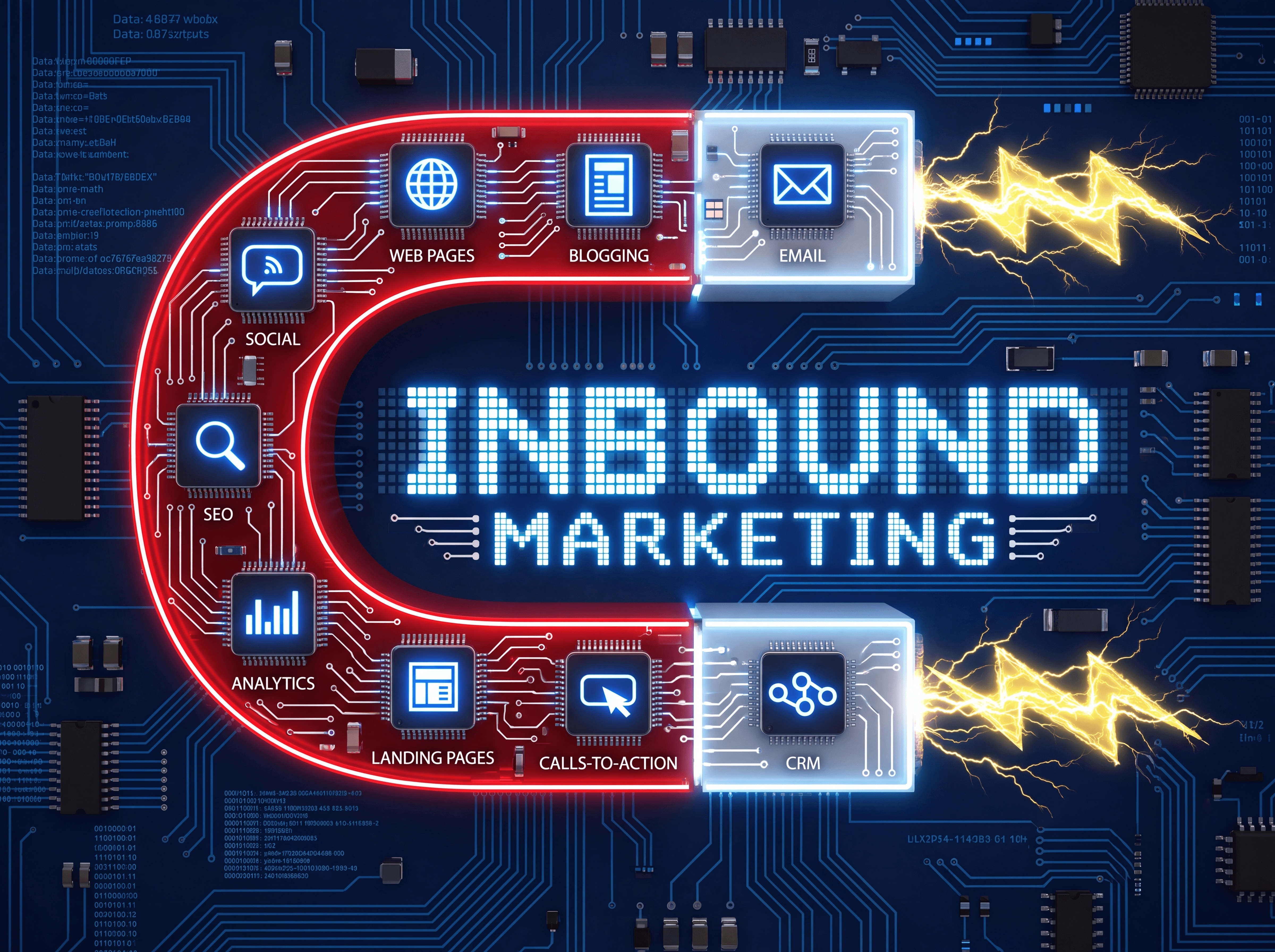
Inbound marketing is a pull-based strategy that attracts prospects by providing valuable, relevant content that addresses their needs, questions, and pain points. Instead of interrupting potential customers, inbound earns their attention through helpful resources.
The flip is simple to describe: create valuable content, optimize it for search, distribute it through the right channels, and let customers come to you.
Compare the two models directly:
Outbound pushes messages at audiences through ads, cold calls, cold emails, and direct mail. You choose who hears from you. Most of them did not ask.
Inbound attracts prospects through SEO, blogs, videos, social content, and email people opted into. They choose to hear from you, usually at the exact moment they have the problem you solve.
That timing difference explains almost everything about the performance gap. An outbound message reaches people whether or not they care right now. An inbound asset gets found by people precisely because they care right now. Intent is built into the channel.
The term was popularized by HubSpot's founders around 2006, and the approach has since become the dominant marketing philosophy: 74% of organizations worldwide now rely on an inbound approach, and 75% of marketers say inbound marketing is effective.
The Numbers That Make the Case
Before the methodology, the evidence. Here is what a decade of data says about inbound versus outbound.
Conversion: Inbound leads convert at 14.6% versus 1.7% for outbound. A properly planned inbound strategy is ten times more effective than outbound strategies in terms of lead conversions.
Cost: Inbound costs 62% less per lead than outbound methods, and inbound leads are 61% more cost-effective. Companies focusing on inbound save $14 per customer versus traditional marketing. After five months of consistent inbound work, leads become 80% less expensive than outbound ones. The average company saves 12,000 British pounds per year by shifting focus from outbound to inbound.
Volume: Inbound tactics generate 54% more leads than outbound and paid marketing.
Quality: 59% of marketers say inbound delivers higher-quality leads, compared to just 16% who say the same for outbound. Sales teams strongly prefer inbound leads because those people already researched the problem and often the solution.
The engine behind it: SEO delivers both the cheapest leads and the highest close rates of any marketing channel, a rare combination. More than 70% of search engine users are only interested in organic results, skipping ads entirely. And 79% of companies with a blog report positive ROI from inbound marketing.
The operational multipliers: Companies that automate lead nurturing see a 10% revenue increase within 6 to 9 months. Businesses with a lead nurturing process generate more sales-qualified leads at 33% less cost. Marketing teams using a CRM are 128% more likely to build an effective inbound strategy.
One honest caveat the cheerleaders skip, which we will return to: the inbound cost calculations usually exclude the upfront investment. Building the SEO foundation, content library, and conversion infrastructure takes real money and 6 to 12 months before payback. Inbound is cheaper per lead at maturity, not on day one.
The Inbound Methodology: Attract, Engage, Delight
Modern inbound follows a three-stage framework. Each stage has its own job, its own tools, and its own metrics.
Stage 1: Attract
The job: Draw in the right audience, not just any audience, with content that answers what they are already searching for.
The tools: SEO-optimized blog posts, social media content, videos, webinars, and podcasts.
How it works in practice: Your potential customer has a problem. They search for it, scroll for it, or ask an AI about it. If your content is the helpful answer they find, you have earned attention without paying for an ad impression. Search engine optimization is the backbone of any inbound strategy: when a prospect searches for a solution and finds your content at the top of the results, the relationship starts on their initiative, which is the strongest possible footing.
What to create first: Answer the questions your customers ask before buying. Every question your sales team hears repeatedly is a piece of attract-stage content waiting to be written. Video deserves priority in the mix: video content is now rated the most effective content type by 58% of B2B marketers, overtaking case studies.
Stage 2: Engage
The job: Convert visitors into leads and leads into customers by continuing the helpfulness, now with a relationship attached.
The tools: Gated content (guides and templates worth trading an email for), email nurturing sequences, chatbots, and personalized experiences.
How it works in practice: A visitor reads your article and finds it useful. You offer something deeper (a checklist, a template, a webinar) in exchange for their email. Now the conversation continues on a channel you own. Automated nurture sequences educate them over weeks, building trust at scale while your team sleeps.
Why the machinery matters: This is where the automation statistics earn their place. Nurturing produces more sales-qualified leads at 33% less cost, automation lifts revenue 10% within 9 months, and a CRM makes your whole system 128% more likely to work. The engage stage is where inbound stops being a content project and becomes a revenue system.
Stage 3: Delight
The job: Turn customers into advocates who bring you the next customers.
The tools: Ongoing education, support content, community building, and proactive customer success.
How it works in practice: The relationship does not end at purchase. Onboarding content helps customers succeed with what they bought. Continued education keeps them engaged. Communities give them a place to belong. Happy, successful customers leave reviews, refer friends, and create the word-of-mouth that no budget can buy.
Why this stage is underrated: Delighted customers are the cheapest growth channel that exists. Retention costs a fraction of acquisition, and advocacy compounds. The businesses that treat inbound as ending at the sale leave the most profitable stage on the table.
Inbound vs Outbound: The Honest Comparison
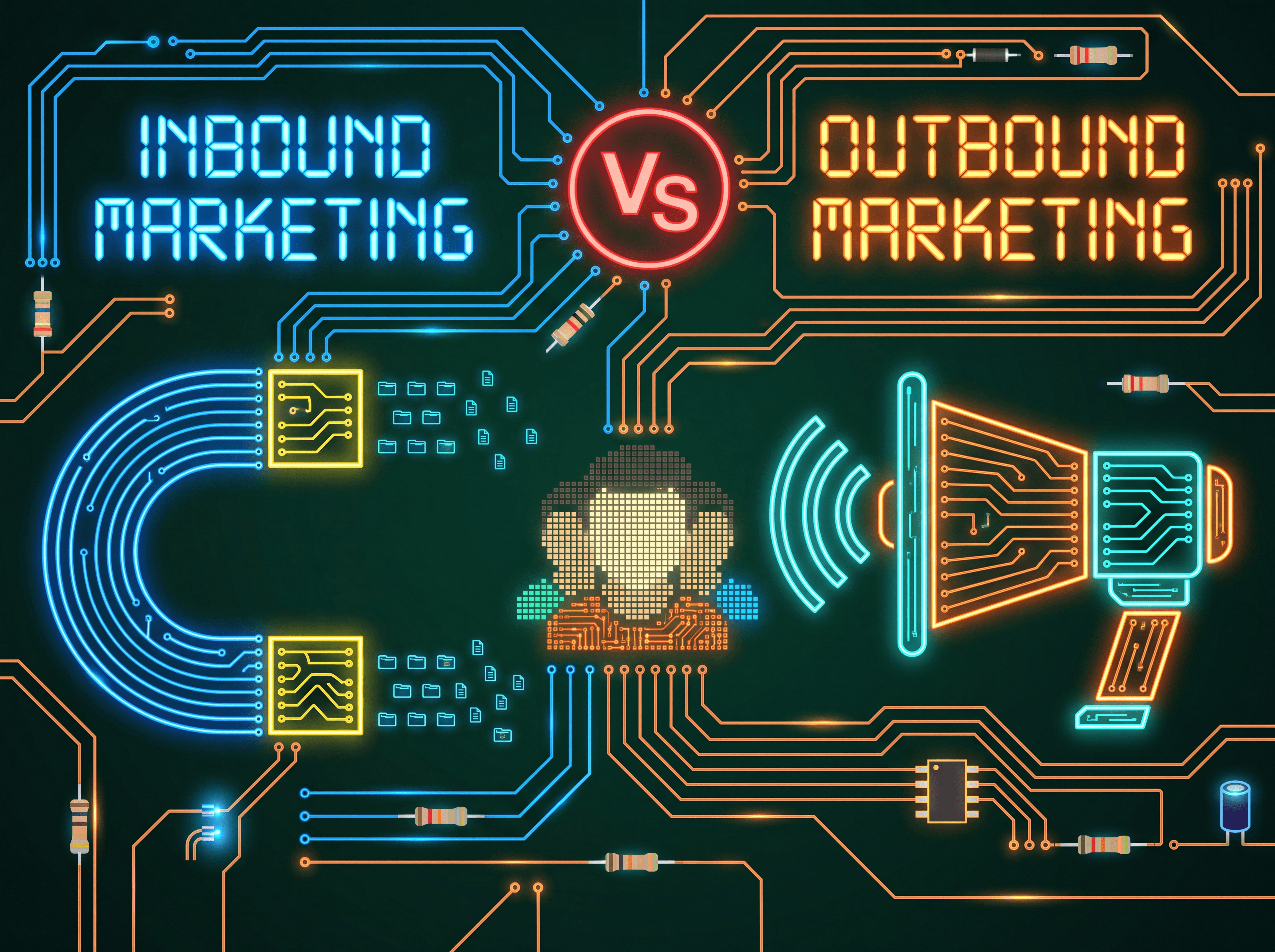
The data favors inbound heavily, but the honest answer for 2026 is more nuanced than "inbound won." Here is the complete picture.
Where inbound wins:
Cost per lead (62% less), conversion rate (14.6% vs 1.7%), lead quality (59% vs 16% of marketers rating it higher), trust building, and long-term compounding. Content created once keeps attracting for years.
Where outbound wins:
Speed and control. Inbound requires upfront SEO and content investment that takes 6 to 12 months to pay back. Outbound delivers pipeline this month. Outbound also wins on precision targeting: when you want to reach a specific list of high-value accounts, waiting for them to find your blog is not a strategy. And for smaller companies, outbound delivers 3 times larger average deal sizes, because you choose exactly who to pursue.
The verdict the best teams reached:
Hybrid is the winning play. The best 2026 teams blend both, with outbound creating the spark and inbound nurturing the path to close. B2B teams typically see 3 times higher ROI from integrated strategies versus single-channel approaches. Pure-play strategies usually leave revenue on the table.
The practical sequencing: use outbound for immediate reach and pipeline while your inbound engine builds. Feed everything outbound touches into inbound nurture. As organic traffic and conversion infrastructure mature, inbound gradually carries more of the load at a fraction of the cost.
The choice of mix depends on factors most of the debate ignores: your company stage, average deal size, how concentrated your ideal customers are, and how much time you have before you need pipeline. Early-stage with urgent revenue needs: weight outbound. Established with patience and content capacity: weight inbound. Most businesses: both, deliberately sequenced.
Building Your Inbound Engine: The 6-Step Build
Here is the practical construction plan, in order.
Step 1: Define Who You Are Attracting
Inbound only works when the content matches a specific person's real questions. Define your ideal customer with behavioral precision: what they search for when the problem appears, what words they use, what they distrust, and what convinces them.
The fastest research shortcut: interview your sales team and read your customer reviews. Every recurring question and objection is a content assignment.
Step 2: Map Content to the Buyer's Journey
Different content serves different stages.
Awareness stage: They know the symptom, not the solution. Content: educational posts and videos answering "why is X happening" and "how do I fix Y."
Consideration stage: They know the solution category and are comparing options. Content: comparison guides, buyer's guides, webinars, case studies.
Decision stage: They are choosing a provider. Content: product pages, demos, trials, pricing transparency, customer stories.
Most businesses overproduce awareness content and underproduce decision content. Cover the whole journey. Note the industry's two biggest frustrations here as a warning: getting content to rank (77.6% of content marketers) and meeting search intent (70.6%). Both are solved the same way: match each piece to one specific search intent and answer it better than anything currently ranking.
Step 3: Build the SEO Foundation
SEO is the backbone of inbound. The essentials: keyword research to find what your audience actually searches (Google Keyword Planner is free), content structured around search intent, technical health (speed, mobile, crawlability), and internal linking that builds topical authority.
Remember the payoff profile: this is the part that takes 6 to 12 months and then delivers the cheapest leads with the highest close rates of any channel.
Step 4: Create Conversion Points
Traffic without capture is a leaky bucket. Add conversion offers to every significant piece of content: a relevant template, checklist, deeper guide, or webinar in exchange for an email. Place calls to action where intent peaks: within the content, not just at the bottom.
This is the bridge from attract to engage, and it is the most commonly missing piece in failed inbound programs. Plenty of traffic, no mechanism to continue the relationship.
Step 5: Automate the Nurture
Build the email sequences that do the engaging at scale: a welcome sequence for new subscribers, educational nurture streams by topic of interest, and sales-ready handoffs when behavior signals buying intent (pricing page visits, demo content consumption).
The data says this step pays specifically: lead nurturing produces 33% cheaper sales-qualified leads, and automating lead management lifts revenue 10% within 6 to 9 months. A CRM to track it all makes the whole system 128% more likely to succeed. Free tiers of major CRMs are enough to start.
Step 6: Close the Loop With Measurement
Track the full funnel, not just traffic: organic sessions, conversion rate to lead, lead-to-customer rate, cost per lead versus your outbound channels, and revenue attributed to inbound sources.
The five-month marker matters: that is when inbound leads historically become dramatically cheaper than outbound ones. Set expectations accordingly, measure monthly, and rebalance quarterly.
What Changed in 2026: Inbound in the AI Era
The inbound philosophy is stable. The mechanics shifted in three important ways.
AI became the new front door. Prospects increasingly ask AI assistants and see AI-generated summaries before clicking anything. This does not kill inbound. It extends it: the content that AI systems cite is overwhelmingly the authoritative, well-structured content that strong inbound programs already produce. Being helpful and present where your buyers research now includes being citable by the AI tools they ask.
AI became the production engine. 61% of marketers plan to increase AI use for personalization and efficiency, and 25% of marketing professionals say lead generation and qualification are the most effective AI applications in marketing automation. AI now drafts content, personalizes nurture, and scores leads. The winning posture: use AI for scale and speed, keep humans on strategy, positioning, and the genuine expertise that makes content worth citing.
Video took the crown. Video is now rated the most effective content type by 58% of B2B marketers, overtaking case studies and customer stories. Digital video is projected to reach $268 billion globally by 2029. An inbound content plan without video is fighting with one hand tied.
The through-line: the sales world is becoming fully digital this decade, which makes inbound more effective and profitable each passing year. The buyers moved online. Inbound is simply marketing built for where they went.
The Mistakes That Sink Inbound Programs
Quitting before the compounding starts. Inbound judged at month three looks like failure. The 6 to 12 month payback window is real, and the 80% cost advantage arrives after month five. Commit to the timeline or do not start.
Ignoring the upfront investment in the math. The famous cost-per-lead advantages exclude the cost of building the foundation. Budget honestly for the content, SEO, and infrastructure buildout, then amortize it. The economics still win. They just win honestly.
Creating content without search intent. Publishing what you want to say instead of what buyers search for produces a well-written library nobody visits. The two top frustrations in the industry (ranking and matching intent) are both self-inflicted by skipping keyword and intent research.
Attracting without converting. Traffic with no gated offers, no email capture, and no nurture is inbound theater. Build the conversion machinery in step four before scaling the content in step three.
Abandoning outbound entirely. The data supports hybrid, not purity. 32% of companies are shifting budget from outbound to inbound, which is directionally right, but the best teams keep outbound for speed, precision targeting, and big-deal pursuit while inbound compounds underneath.
Stopping at the sale. Skipping the delight stage forfeits reviews, referrals, and retention, the cheapest revenue in the entire system.
Your 30-Day Inbound Launch Plan
Week 1: Research and foundation. Define your ideal customer's top ten questions (interview sales, read reviews, check the "People Also Ask" boxes on Google). Set up Google Search Console, Google Analytics 4, and a free CRM. Pick your primary content format: written, video, or both.
Week 2: First content. Create your first two pieces answering the two most commonly asked, most search-validated questions. Structure each around one clear search intent. Publish and submit to Search Console.
Week 3: Conversion machinery. Build one genuinely valuable gated offer (a template or checklist related to your content). Add capture forms to your content. Write a three-email welcome sequence that delivers the offer and continues the helpfulness.
Week 4: Measure and plan the engine. Review early data: impressions, clicks, signups. Map your next twelve pieces of content across all three journey stages (awareness, consideration, decision). Schedule them at a sustainable weekly or biweekly pace.
Then hold the pace for six months. That is the honest minimum. Somewhere around month five, check your cost per inbound lead against whatever outbound you run. Watch the lines cross. That crossing point is where inbound stops being a project and becomes your cheapest, highest-converting acquisition channel, permanently.
The Bottom Line
Inbound marketing flips the oldest model in the business: instead of interrupting people who did not ask, you help people who are actively looking.
The decade of data is unambiguous. Inbound converts at 14.6% versus outbound's 1.7%. It costs 62% less per lead, generates 54% more leads, and becomes 80% cheaper than outbound after five months of consistency. Nearly three-quarters of organizations worldwide have adopted it, because helping simply outperforms interrupting.
The honest caveats: it takes 6 to 12 months and real upfront investment, and the smartest teams pair it with outbound rather than replacing it, using outbound for speed while inbound compounds.
Build it in order: know your buyer, map content to their journey, lay the SEO foundation, install the conversion points, automate the nurture, and measure the full funnel. Keep going past the point where impatience quits.
Attract. Engage. Delight. Then let the compounding do what compounding does.
Blogs
More Blogs
From keyword goldmines to AI-driven content hacks—expert insights to help your blog posts dominate the first page.