Blog

Blog

content marketing strategy example: 5 Playbooks for 2025

content marketing strategy example: 5 Playbooks for 2025

Blog

content marketing strategy example: 5 Playbooks for 2025

Welcome to your go-to library of actionable content marketing playbooks. Tired of vague advice and generic success stories? So are we. This guide moves past theory and breaks down 10 proven, real-world content marketing strategy examples you can actually replicate. We’re not just showing you what works; we're showing you how it works.

For each example, we'll dissect the critical components that drive predictable growth, including:

  • Strategic Goals: The specific business objectives behind the content.

  • Target Audience: A detailed look at the ideal customer profile.

  • Content & Distribution: The exact formats and channels used to reach the audience.

  • Key Performance Indicators (KPIs): The metrics used to measure success.

At the heart of any effective content marketing strategy lies compelling storytelling. To inspire your own approach, consider these powerful business storytelling examples that connect with audiences on a deeper level. Integrating these narrative techniques can transform a good strategy into an unforgettable one.

This article is designed as a practical resource. Each strategy comes with a mini-checklist and template ideas to help you implement these frameworks immediately. Whether you're a SaaS founder aiming for organic growth, a solo blogger building a newsletter, or an agency marketer juggling clients, you'll find a detailed blueprint here. Let's build a content engine that delivers tangible results.

1. Blog Content Marketing

Blog content marketing is a foundational strategy centered on creating and publishing articles on a company website. This approach aims to attract organic search traffic, build brand authority, and convert readers into customers. It serves as the primary engine for search engine optimization (SEO) and thought leadership.

A prime content marketing strategy example of this is HubSpot's blog. By consistently publishing high-value content on marketing, sales, and service, they attract millions of monthly visitors, generating a massive pipeline of qualified leads for their software products.

Laptop screen displaying blog keyword search bar with magnifying glass and marketing icons illustration

Why This Strategy Works

This method is effective because it directly answers the questions your target audience is searching for on Google. By creating content that solves their problems, you build trust and position your brand as a go-to resource. It's a long-term asset that compounds over time, driving sustainable organic traffic and leads without continuous ad spend. It's ideal for businesses wanting to establish expertise and build a strong top-of-funnel presence.

Actionable Takeaways for Your Strategy

To implement a successful blog content strategy, focus on these key actions:

  • Target Long-Tail Keywords: Focus on highly specific, multi-word phrases that indicate user intent. These keywords have less competition and often convert better. You can discover more about this in our guide to long-tail keyword research on getviralseo.com.

  • Create Cornerstone Content: Develop comprehensive, in-depth guides on your core topics. These pillar pages act as central hubs that you can link to from smaller, related blog posts, strengthening your site's topical authority.

  • Refresh and Update: Regularly update your older posts with new information, data, and examples. Google prioritizes fresh, relevant content, and this practice can significantly boost the rankings of existing articles.

  • Optimize for Snippets: Structure your content with clear headings, lists, and tables to increase your chances of capturing Google's featured snippets, which can dramatically improve click-through rates.

2. Video Content Marketing

Video content marketing is a powerful strategy that uses video to engage, entertain, and educate an audience across various platforms like YouTube, TikTok, and LinkedIn. The goal is to build brand awareness, foster a community, and drive traffic and conversions through a highly shareable and digestible format.

A classic content marketing strategy example is Dollar Shave Club's viral launch video. It used humor and a direct-to-camera style to explain its value proposition in 90 seconds, catapulting the unknown brand into the mainstream and generating 12,000 orders in the first 48 hours.

Why This Strategy Works

This method is incredibly effective because video combines visuals, sound, and storytelling to create a strong emotional connection with viewers. It's excellent for demonstrating complex products, showcasing brand personality, and capturing attention quickly on crowded social feeds. It's ideal for brands wanting to build a loyal community, increase engagement, and communicate their message in a dynamic way that static text or images cannot match.

Actionable Takeaways for Your Strategy

To build an impactful video content marketing plan, integrate these key actions:

  • Focus on Story, Not Sales: Create content that tells a compelling story or solves a specific problem. People share videos that entertain or educate, not overt advertisements. GoPro excels at this by featuring user-generated adventure content.

  • Optimize for Each Platform: Tailor your video's length, orientation (vertical vs. horizontal), and style to the platform. A 10-minute YouTube deep-dive won't work as a 30-second TikTok or Instagram Reel.

  • Include Clear Calls-to-Action (CTAs): Tell your viewers exactly what you want them to do next, whether it's subscribing, visiting your website, or downloading a resource. Place CTAs verbally and within the video description.

  • Prioritize the First 3 Seconds: With short attention spans, the opening of your video is critical. Hook your audience immediately with a question, a bold statement, or intriguing visuals to prevent them from scrolling past. For an in-depth look at developing an effective video plan, refer to this video content marketing strategy guide.

3. Infographic Content Marketing

Infographic content marketing is a visual-first strategy that distills complex data, statistics, and information into engaging, easily shareable graphics. This approach leverages the power of visual storytelling to capture attention, simplify dense topics, and increase content virality across multiple platforms.

A leading content marketing strategy example is Visual Capitalist. They have built an entire media brand by transforming economic and financial data into compelling infographics. Their visualizations make intricate market trends accessible to a broad audience, establishing them as an authoritative source for data-driven insights and attracting millions of visitors.

Why This Strategy Works

This method is highly effective because humans process visual information significantly faster than text. Infographics break down complex subjects into digestible, memorable formats, making them perfect for social media sharing and generating high-quality backlinks from other websites that embed them. It is an ideal strategy for brands in data-heavy industries looking to simplify their message, boost engagement, and earn authoritative links for SEO.

Actionable Takeaways for Your Strategy

To integrate infographics into your content marketing, apply these key actions:

  • Focus on a Compelling Narrative: Don't just present data; tell a story. Structure your infographic with a clear beginning, middle, and end to guide the viewer through the information logically.

  • Prioritize Strong Design and Branding: Use a clean layout, your brand's color palette, and legible fonts. A professional design not only builds credibility but also reinforces brand recognition as the infographic gets shared.

  • Cite Sources for Credibility: Always include your data sources at the bottom of the infographic. This simple step validates your information and positions your brand as a trustworthy and transparent resource.

  • Optimize for Vertical Scrolling: Design your infographics with a vertical orientation to ensure they are easily viewable on mobile devices, which is where most social media consumption happens.

4. Email Marketing Content

Email marketing content is a strategy focused on delivering valuable, personalized messages directly to an audience's inbox. This approach builds a direct line of communication, nurturing leads and fostering customer loyalty away from the noise of social media and search algorithms. It's a high-ROI channel for driving conversions and engagement.

A powerful content marketing strategy example is Morning Brew. They transformed a complex topic, business news, into a witty, digestible daily email. This content-first approach attracted millions of subscribers, creating a highly valuable, monetizable audience through advertising and premium products.
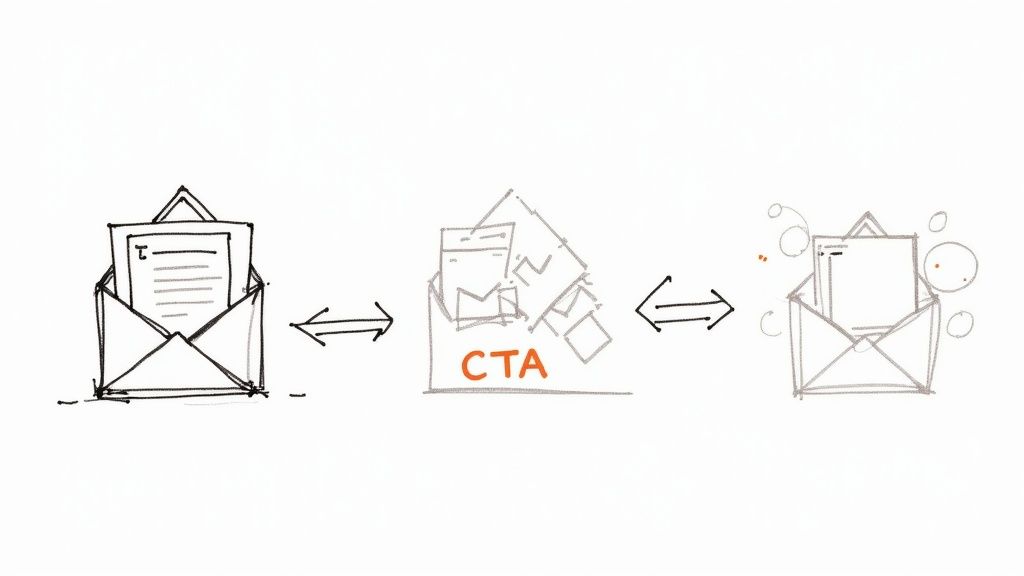
Email marketing workflow diagram showing envelope with document, CTA elements, and conversion process illustration

Why This Strategy Works

This method is uniquely effective because you own the audience. Unlike social media followers or search traffic, your email list is a direct asset that isn't subject to algorithmic changes. By consistently providing value, you build a relationship based on trust, making subscribers more receptive to promotional messages and turning them into loyal brand advocates. It's perfect for nurturing leads, driving repeat purchases, and building a community.

Actionable Takeaways for Your Strategy

To build a successful email content strategy, integrate these key actions:

  • Segment Your Audience: Don't send the same message to everyone. Group subscribers based on their interests, purchase history, or engagement level to deliver highly relevant content that resonates.

  • Write Compelling Subject Lines: Your subject line is the gatekeeper to your content. Keep it short (30-50 characters), create curiosity, and clearly communicate the value inside to boost open rates.

  • Use Clear Call-to-Actions (CTAs): Every email should have a purpose. Use distinct, action-oriented buttons like "Read the Guide" or "Shop the Sale" to guide subscribers toward the desired next step.

  • Automate Welcome Sequences: Create an automated series of emails for new subscribers. This is your best opportunity to introduce your brand, set expectations, and deliver initial value to build a strong foundation.

5. Podcast Content Marketing

Podcast content marketing is an audio-first strategy focused on creating and distributing episodic content. This approach builds deep, intimate connections with an audience by delivering value directly through interviews, storytelling, or expert analysis. It's a powerful tool for establishing brand personality and thought leadership in a rapidly growing, on-demand format.

A standout content marketing strategy example is Marketing Against the Grain by HubSpot. The show features co-founders Kipp Bodnar and Kieran Flanagan discussing unconventional marketing tactics, attracting a dedicated audience of senior marketers and generating high-quality brand affinity for HubSpot's suite of products.

Why This Strategy Works

This method is effective because it captures audience attention during moments when visual content cannot, such as commuting or exercising. Audio fosters a strong sense of personal connection, making listeners feel like they are part of a conversation. It's an excellent strategy for B2B brands wanting to build authority and for any business aiming to cultivate a loyal community around shared interests and values.

Actionable Takeaways for Your Strategy

To implement a successful podcast content strategy, focus on these key actions:

  • Define Your Niche and Format: Settle on a specific topic you can own and choose a consistent format, whether it's interviews, solo commentary, or narrative storytelling. This focus attracts a dedicated, relevant audience.

  • Invest in Quality Audio: Clear, professional-sounding audio is non-negotiable. A good microphone and basic editing software are essential investments to ensure a positive listening experience and maintain credibility.

  • Repurpose Audio into Multiple Assets: Maximize your efforts by turning each episode into multiple content pieces. Transcribe it for a blog post, pull key quotes for social media graphics, and create short video clips for platforms like YouTube Shorts and TikTok.

  • Promote Across All Channels: Don't just publish and pray. Actively promote new episodes to your email list, on social media, and in relevant online communities. Encourage guests to share the episode with their network to expand your reach.

6. Social Media Content Marketing

Social media content marketing is a dynamic strategy that involves creating and sharing tailored content on platforms like Instagram, TikTok, LinkedIn, and Twitter. The primary goals are to build a loyal community, enhance brand awareness, drive user engagement, and funnel traffic to a website or product.

A standout content marketing strategy example is Wendy's legendary Twitter presence. By adopting a witty, humorous, and sometimes sassy brand voice, they transformed their account from a simple promotional tool into an entertainment hub, generating massive organic reach and brand loyalty.

Why This Strategy Works

This approach is effective because it meets audiences where they spend a significant amount of their time. It allows brands to build direct relationships, gather real-time feedback, and showcase their personality. Unlike more formal channels, social media thrives on authenticity and entertainment, enabling companies to connect with customers on a human level. It's ideal for B2C brands seeking to build a strong community and for B2B companies aiming to establish thought leadership on platforms like LinkedIn.

Actionable Takeaways for Your Strategy

To build a powerful social media content strategy, concentrate on these key actions:

  • Tailor Content for Each Platform: Don't just cross-post the same content everywhere. Adapt your message, tone, and format to fit the unique audience and algorithm of each platform. A professional article on LinkedIn should be a quick, engaging video on TikTok.

  • Prioritize Authentic Engagement: Go beyond just broadcasting your message. Respond to comments, ask questions, run polls, and feature user-generated content (UGC). Building a community requires a two-way conversation, not a monologue.

  • Leverage Video and Visuals: Video content, especially short-form videos on platforms like Instagram Reels and TikTok, consistently drives higher engagement. Invest in high-quality visuals and compelling video storytelling to capture attention quickly.

  • Establish a Consistent Brand Voice: Whether you’re humorous like Wendy's or inspirational like Nike, define your brand voice and stick to it. Consistency builds brand recognition and helps you attract the right followers who resonate with your personality.

7. Case Study Content Marketing

Case study content marketing is a powerful, conversion-focused strategy that uses customer success stories to demonstrate a product's real-world value. This approach builds trust and provides social proof by showcasing how actual customers solved a specific problem and achieved measurable results with a company's solution. It is a cornerstone for bottom-of-the-funnel marketing.

A stellar content marketing strategy example is Salesforce's extensive library of customer stories. They detail how companies across various industries, from Adidas to NBCUniversal, use their CRM to drive growth. These stories provide tangible proof of their product's impact, helping prospects visualize success and justify their investment.

Why This Strategy Works

This method is highly effective because it moves beyond product features and focuses on tangible outcomes. Prospects, especially in B2B, want to see evidence that a solution works for businesses like theirs. Case studies offer that proof, addressing specific pain points and demonstrating a clear return on investment. It's ideal for businesses with a proven product looking to accelerate sales cycles and convince decision-makers who are close to making a purchase.

Actionable Takeaways for Your Strategy

To leverage case studies effectively in your content plan, implement these key actions:

  • Follow the "Problem-Solution-Result" Framework: Structure your case studies clearly. Start with the customer's challenge, explain how your product provided the solution, and end with specific, quantifiable results like "increased revenue by 40%" or "saved 20 hours per week."

  • Showcase Diverse Customer Profiles: Feature customers from different industries and company sizes to appeal to a broader segment of your target market. This allows prospects to find a story that directly resonates with their own situation.

  • Repurpose Case Studies into Multiple Formats: Don't just publish a PDF. Turn a single success story into a blog post, a short video testimonial, a social media graphic with a compelling quote, and a slide for your sales deck to maximize its reach and impact.

  • Highlight Your Customer's Success: Position the customer as the hero of the story. This makes the content more authentic and relatable, while also strengthening your relationship with that customer, potentially boosting their own brand authority. You can even track the impact of these high-authority mentions with our guide to understanding domain authority on getviralseo.com.

8. Webinar and Live Event Content Marketing

Webinar and live event content marketing is an interactive strategy that uses live or pre-recorded online presentations to engage an audience in real time. This approach is powerful for lead generation, product demonstrations, and establishing thought leadership by offering deep, specialized knowledge directly to attendees.

A strong content marketing strategy example is the webinar series from SEMrush. They host frequent live events with industry experts on niche SEO and marketing topics, capturing thousands of registrants who are highly qualified leads for their advanced analytics software.

Why This Strategy Works

This method is highly effective because it creates a sense of urgency and exclusivity, encouraging immediate sign-ups. The interactive format, with live Q&A sessions and polls, fosters a direct connection between the brand and its audience, building trust and accelerating the sales cycle. Webinars are ideal for mid-funnel engagement, nurturing leads who are already aware of your brand and are seeking more in-depth solutions. The content can also be repurposed into blog posts, video clips, and social media updates, extending its value long after the live event.

Actionable Takeaways for Your Strategy

To implement a successful webinar and live event content strategy, focus on these key actions:

  • Promote Extensively: Begin promoting your webinar at least two to three weeks in advance across email, social media, and partner channels to maximize registration numbers.

  • Create a High-Converting Landing Page: Your registration page must clearly state the value proposition, what attendees will learn, and who the speakers are. Keep the sign-up form simple to reduce friction.

  • Engineer Engagement: Plan interactive elements like polls, quizzes, and dedicated Q&A segments to keep your audience actively involved and prevent drop-offs.

  • Follow Up Immediately: Send a follow-up email within 24 hours to all registrants, providing a link to the recording, presentation slides, and any other promised resources. This nurtures leads and provides value even to those who couldn't attend live.

9. E-book and Lead Magnet Content

E-book and lead magnet content is a strategy centered on creating high-value, downloadable resources like guides, whitepapers, or checklists. These assets are offered to users in exchange for their contact information, typically an email address, serving as a powerful tool for lead generation and email list building.

A classic content marketing strategy example is Marketo's extensive library of marketing automation playbooks. By offering deep, expert-level guides, they capture leads who are already highly interested in their core product, effectively moving them from casual readers into the sales funnel.

Sketch diagram showing content workflow with arrows and checkmark icons indicating approval process stages

Why This Strategy Works

This method thrives on the principle of value exchange. You provide a tangible solution to a specific problem, and in return, the user grants you permission to market to them. It's incredibly effective for capturing qualified leads because the act of downloading an in-depth resource signals strong interest and intent. This strategy is ideal for B2B companies with longer sales cycles or any business wanting to build a robust email list for nurturing campaigns.

Actionable Takeaways for Your Strategy

To implement a successful lead magnet strategy, focus on these key actions:

  • Solve a Hyper-Specific Problem: Don't create a generic guide. Your e-book or checklist should offer a clear, actionable solution to a pressing pain point your target audience faces.

  • Optimize Your Landing Page: The landing page for your lead magnet is critical. Use a compelling headline, clear bullet points outlining the benefits, and a simple form to maximize conversion rates.

  • Create Content Upgrades: Offer resource-specific lead magnets within your blog posts. For instance, a post about keyword research could offer a downloadable keyword tracking template. Find out more about optimizing content with our guide on how many keywords per page on getviralseo.com.

  • Design for Professionalism: Invest in a professional cover design and clean PDF formatting. A polished appearance significantly increases the perceived value of your resource and reflects well on your brand.

10. User-Generated Content (UGC) Marketing

User-Generated Content (UGC) marketing is a strategy that leverages content created and shared by customers, fans, and followers. This approach shifts the role of content creator from the brand to the community, fostering authenticity, building social proof, and providing a constant stream of relatable marketing material.

A fantastic content marketing strategy example is GoPro's marketing engine. The brand built its empire by featuring breathtaking videos and photos captured exclusively by its users. Campaigns like the "GoPro Awards" incentivize customers to submit their best footage, turning their adventures into powerful, authentic advertisements that showcase the product in real-world scenarios.

Why This Strategy Works

This method is incredibly effective because it taps into the power of social proof and authenticity. Consumers trust recommendations from peers far more than they trust branded advertising. UGC serves as a genuine testimonial that showcases how real people use and love your product. It builds a vibrant community, increases engagement, and provides a scalable content source without high production costs. It's ideal for consumer-facing brands with a strong visual or experiential component.

Actionable Takeaways for Your Strategy

To build a successful UGC campaign, focus on these key actions:

  • Launch a Branded Hashtag: Create a unique, memorable hashtag and encourage customers to use it when posting about your products. Starbucks' #RedCupContest is a classic example that generates massive seasonal buzz.

  • Offer Clear Incentives: Motivate your community to participate by offering rewards. This can range from a simple feature on your official social media channels to discounts, free products, or cash prizes.

  • Establish a Submission Hub: Make it easy for users to share their content. Create a dedicated landing page, a clear submission portal, or a simple hashtag system to streamline the process and gather permissions.

  • Amplify and Engage: Actively feature the best UGC across your marketing channels, from social media feeds to product pages and email newsletters. Always credit the original creator to show appreciation and encourage more submissions.

10-Channel Content Strategy Comparison

Content Type

🔄 Implementation Complexity

⚡ Resource Requirements

📊 Expected Outcomes

💡 Ideal Use Cases

⭐ Key Advantages

Blog Content Marketing

Moderate — ongoing writing + SEO processes

Low–Medium: writers, CMS, SEO tools

Steady organic traffic, improved rankings, qualified leads

SEO-driven growth, thought leadership, evergreen topics

Cost-effective, scalable, strong SEO impact (⭐⭐⭐)

Video Content Marketing

High — production, editing, platform optimization

High: cameras, editors, scripts, distribution budgets

High engagement, brand awareness, longer site time, shares

Product demos, storytelling, social ads, tutorials

Very engaging and memorable (⭐⭐⭐)

Infographic Content Marketing

Moderate — research, design, data visualization

Medium: designers, data sources, design tools

Shareability, backlinks, quick comprehension of complex data

Explaining statistics, social sharing, thought leadership

Visual clarity and shareability (⭐⭐)

Email Marketing Content

Moderate — segmentation, automation, testing

Low–Medium: ESP, copywriter, list management tools

High ROI, direct conversions, measurable metrics

Nurture flows, promotions, retention, re-engagement

Highly personalized and measurable ROI (⭐⭐⭐)

Podcast Content Marketing

Moderate–High — planning, recording, editing

Medium: microphone, editor, hosting, guests

Loyal audience, deep engagement, long-form authority

Thought leadership, interviews, niche audiences

Builds deep listener relationships (⭐⭐)

Social Media Content Marketing

High — frequent posting, community management

Medium: creators, schedulers, creative assets

Brand awareness, real-time engagement, audience insights

Brand building, campaigns, UGC amplification

Community growth and amplification (⭐⭐⭐)

Case Study Content Marketing

High — research, customer coordination, design

Medium–High: interviews, analytics, designers

Persuasive proof, sales support, trust-building

B2B sales enablement, enterprise deals, ROI demonstrations

Highly credible and persuasive for buyers (⭐⭐⭐)

Webinar & Live Event Content Marketing

High — live coordination, promotion, tech setup

Medium–High: webinar platform, presenters, marketing

Qualified leads, real-time interaction, content repurposing

Product demos, training, lead generation events

Interactive lead capture and authority building (⭐⭐⭐)

E-book & Lead Magnet Content

Moderate — in-depth content + design + gating

Medium: writers, designers, landing pages, CTAs

Email list growth, lead quality, perceived expertise

Top-of-funnel lead gen, gated resources, downloadable guides

Effective lead generation and evergreen asset (⭐⭐⭐)

User-Generated Content (UGC) Marketing

Low–Medium — campaign design + moderation

Low–Medium: incentives, moderation, community tools

Authentic engagement, social proof, diverse content

Brand advocacy, community campaigns, product social proof

Authentic, cost-effective content with high trust (⭐⭐⭐)

From Example to Execution: Build Your Strategy

The journey through these diverse content marketing strategy examples reveals a powerful, unifying truth: there is no single magic bullet for success. From the high-engagement world of video and social media to the authority-building power of case studies and ebooks, effective strategies are not about choosing one "best" channel. Instead, they are about building a cohesive, integrated system where each piece of content serves a specific purpose for a specific audience.

We saw how a blogger might use a potent combination of SEO-driven blog posts (Example #1) and a nurturing email newsletter (Example #4) to create a loyal following. We explored how a B2B SaaS company could leverage technical webinars (Example #8) to generate qualified leads, then use detailed case studies (Example #7) to close deals. Each strategy is a unique tapestry woven from different content threads.

The common thread is not the tactic, but the strategic thinking behind it. The most successful brands don't just create content; they build strategic frameworks.

Synthesizing the Core Principles for Your Business

Your task now is not to perfectly replicate any single example we've covered. Trying to copy HubSpot’s blog strategy or Red Bull’s social media approach without their resources is a recipe for frustration. The real value lies in deconstructing their principles and applying them to your unique context.

Think of it as building with strategic LEGOs. Every example provides a different set of bricks and a blueprint. Your job is to select the right bricks for the business you are building.

Here are the universal principles to guide you:

  • Start with the End in Mind: Every successful strategy began with a clear goal. Was it brand awareness (like many podcast and social media campaigns)? Lead generation (ebooks and webinars)? Or customer retention (user-generated content and email marketing)? Define your primary objective before you write a single word.

  • Audience Obsession is Non-Negotiable: The difference between content that gets ignored and content that builds a community is a deep understanding of the target audience. Their pain points, questions, preferred formats, and online hangouts should dictate your entire approach.

  • Distribution is Not an Afterthought: A brilliant ebook no one reads is a failure. A groundbreaking podcast no one hears is just a recording. As demonstrated in each content marketing strategy example, the plan for distributing and promoting the content is just as critical as the plan for creating it.

  • Consistency Compounding: Sporadic bursts of activity rarely yield long-term results. Whether it’s a weekly newsletter, a monthly webinar, or a daily social media post, consistency builds trust, trains your audience to expect value from you, and creates compounding returns over time.

Your Action Plan: Moving from Insight to Implementation

Feeling inspired is good; taking action is better. To prevent analysis paralysis, here is a simple, three-step process to build your own foundational content marketing strategy based on the examples in this article.

  1. Define Your Strategic Foundation:

    • Primary Goal: Choose one core objective for the next quarter (e.g., "Increase qualified demo requests by 20%").

    • Target Persona: Get hyper-specific. Who is the one person you are trying to reach? What are their biggest challenges related to your product or service?

    • Core Content Pillar: Based on your team's strengths and your persona's preferences, choose one primary content format to master first (e.g., long-form blog posts, a podcast series, or video tutorials).

  2. Map Your Content Ecosystem:

    • Top-of-Funnel (TOFU): How will you attract new audiences? (e.g., SEO-optimized blog posts, social media infographics).

    • Middle-of-Funnel (MOFU): How will you capture leads and nurture interest? (e.g., a lead magnet ebook, a case study, an email mini-course).

    • Bottom-of-Funnel (BOFU): How will you convert leads into customers? (e.g., a compelling webinar, a detailed case study).

  3. Commit and Measure:

    • Create a Simple Calendar: Plan your first four weeks of content. What will you publish and when?

    • Select 2-3 Key KPIs: Don't get lost in vanity metrics. Track what matters for your goal (e.g., organic traffic, newsletter sign-ups, demo requests).

    • Review and Iterate: After one month, review your KPIs. What worked? What didn't? Adjust your plan for the next month based on real data, not assumptions.

By following this structured approach, you can transform the inspiration from a great content marketing strategy example into a tangible, measurable, and effective plan for your own business.

Ready to stop guessing and start building a data-driven content strategy? The most successful examples you saw today are built on understanding what already resonates with their audience. Viral SEO provides the competitive intelligence you need, analyzing your rivals' top-performing content so you can build a strategy focused on proven topics from day one. See how it works at Viral SEO.

Welcome to your go-to library of actionable content marketing playbooks. Tired of vague advice and generic success stories? So are we. This guide moves past theory and breaks down 10 proven, real-world content marketing strategy examples you can actually replicate. We’re not just showing you what works; we're showing you how it works.

For each example, we'll dissect the critical components that drive predictable growth, including:

  • Strategic Goals: The specific business objectives behind the content.

  • Target Audience: A detailed look at the ideal customer profile.

  • Content & Distribution: The exact formats and channels used to reach the audience.

  • Key Performance Indicators (KPIs): The metrics used to measure success.

At the heart of any effective content marketing strategy lies compelling storytelling. To inspire your own approach, consider these powerful business storytelling examples that connect with audiences on a deeper level. Integrating these narrative techniques can transform a good strategy into an unforgettable one.

This article is designed as a practical resource. Each strategy comes with a mini-checklist and template ideas to help you implement these frameworks immediately. Whether you're a SaaS founder aiming for organic growth, a solo blogger building a newsletter, or an agency marketer juggling clients, you'll find a detailed blueprint here. Let's build a content engine that delivers tangible results.

1. Blog Content Marketing

Blog content marketing is a foundational strategy centered on creating and publishing articles on a company website. This approach aims to attract organic search traffic, build brand authority, and convert readers into customers. It serves as the primary engine for search engine optimization (SEO) and thought leadership.

A prime content marketing strategy example of this is HubSpot's blog. By consistently publishing high-value content on marketing, sales, and service, they attract millions of monthly visitors, generating a massive pipeline of qualified leads for their software products.

Laptop screen displaying blog keyword search bar with magnifying glass and marketing icons illustration

Why This Strategy Works

This method is effective because it directly answers the questions your target audience is searching for on Google. By creating content that solves their problems, you build trust and position your brand as a go-to resource. It's a long-term asset that compounds over time, driving sustainable organic traffic and leads without continuous ad spend. It's ideal for businesses wanting to establish expertise and build a strong top-of-funnel presence.

Actionable Takeaways for Your Strategy

To implement a successful blog content strategy, focus on these key actions:

  • Target Long-Tail Keywords: Focus on highly specific, multi-word phrases that indicate user intent. These keywords have less competition and often convert better. You can discover more about this in our guide to long-tail keyword research on getviralseo.com.

  • Create Cornerstone Content: Develop comprehensive, in-depth guides on your core topics. These pillar pages act as central hubs that you can link to from smaller, related blog posts, strengthening your site's topical authority.

  • Refresh and Update: Regularly update your older posts with new information, data, and examples. Google prioritizes fresh, relevant content, and this practice can significantly boost the rankings of existing articles.

  • Optimize for Snippets: Structure your content with clear headings, lists, and tables to increase your chances of capturing Google's featured snippets, which can dramatically improve click-through rates.

2. Video Content Marketing

Video content marketing is a powerful strategy that uses video to engage, entertain, and educate an audience across various platforms like YouTube, TikTok, and LinkedIn. The goal is to build brand awareness, foster a community, and drive traffic and conversions through a highly shareable and digestible format.

A classic content marketing strategy example is Dollar Shave Club's viral launch video. It used humor and a direct-to-camera style to explain its value proposition in 90 seconds, catapulting the unknown brand into the mainstream and generating 12,000 orders in the first 48 hours.

Why This Strategy Works

This method is incredibly effective because video combines visuals, sound, and storytelling to create a strong emotional connection with viewers. It's excellent for demonstrating complex products, showcasing brand personality, and capturing attention quickly on crowded social feeds. It's ideal for brands wanting to build a loyal community, increase engagement, and communicate their message in a dynamic way that static text or images cannot match.

Actionable Takeaways for Your Strategy

To build an impactful video content marketing plan, integrate these key actions:

  • Focus on Story, Not Sales: Create content that tells a compelling story or solves a specific problem. People share videos that entertain or educate, not overt advertisements. GoPro excels at this by featuring user-generated adventure content.

  • Optimize for Each Platform: Tailor your video's length, orientation (vertical vs. horizontal), and style to the platform. A 10-minute YouTube deep-dive won't work as a 30-second TikTok or Instagram Reel.

  • Include Clear Calls-to-Action (CTAs): Tell your viewers exactly what you want them to do next, whether it's subscribing, visiting your website, or downloading a resource. Place CTAs verbally and within the video description.

  • Prioritize the First 3 Seconds: With short attention spans, the opening of your video is critical. Hook your audience immediately with a question, a bold statement, or intriguing visuals to prevent them from scrolling past. For an in-depth look at developing an effective video plan, refer to this video content marketing strategy guide.

3. Infographic Content Marketing

Infographic content marketing is a visual-first strategy that distills complex data, statistics, and information into engaging, easily shareable graphics. This approach leverages the power of visual storytelling to capture attention, simplify dense topics, and increase content virality across multiple platforms.

A leading content marketing strategy example is Visual Capitalist. They have built an entire media brand by transforming economic and financial data into compelling infographics. Their visualizations make intricate market trends accessible to a broad audience, establishing them as an authoritative source for data-driven insights and attracting millions of visitors.

Why This Strategy Works

This method is highly effective because humans process visual information significantly faster than text. Infographics break down complex subjects into digestible, memorable formats, making them perfect for social media sharing and generating high-quality backlinks from other websites that embed them. It is an ideal strategy for brands in data-heavy industries looking to simplify their message, boost engagement, and earn authoritative links for SEO.

Actionable Takeaways for Your Strategy

To integrate infographics into your content marketing, apply these key actions:

  • Focus on a Compelling Narrative: Don't just present data; tell a story. Structure your infographic with a clear beginning, middle, and end to guide the viewer through the information logically.

  • Prioritize Strong Design and Branding: Use a clean layout, your brand's color palette, and legible fonts. A professional design not only builds credibility but also reinforces brand recognition as the infographic gets shared.

  • Cite Sources for Credibility: Always include your data sources at the bottom of the infographic. This simple step validates your information and positions your brand as a trustworthy and transparent resource.

  • Optimize for Vertical Scrolling: Design your infographics with a vertical orientation to ensure they are easily viewable on mobile devices, which is where most social media consumption happens.

4. Email Marketing Content

Email marketing content is a strategy focused on delivering valuable, personalized messages directly to an audience's inbox. This approach builds a direct line of communication, nurturing leads and fostering customer loyalty away from the noise of social media and search algorithms. It's a high-ROI channel for driving conversions and engagement.

A powerful content marketing strategy example is Morning Brew. They transformed a complex topic, business news, into a witty, digestible daily email. This content-first approach attracted millions of subscribers, creating a highly valuable, monetizable audience through advertising and premium products.

Email marketing workflow diagram showing envelope with document, CTA elements, and conversion process illustration

Why This Strategy Works

This method is uniquely effective because you own the audience. Unlike social media followers or search traffic, your email list is a direct asset that isn't subject to algorithmic changes. By consistently providing value, you build a relationship based on trust, making subscribers more receptive to promotional messages and turning them into loyal brand advocates. It's perfect for nurturing leads, driving repeat purchases, and building a community.

Actionable Takeaways for Your Strategy

To build a successful email content strategy, integrate these key actions:

  • Segment Your Audience: Don't send the same message to everyone. Group subscribers based on their interests, purchase history, or engagement level to deliver highly relevant content that resonates.

  • Write Compelling Subject Lines: Your subject line is the gatekeeper to your content. Keep it short (30-50 characters), create curiosity, and clearly communicate the value inside to boost open rates.

  • Use Clear Call-to-Actions (CTAs): Every email should have a purpose. Use distinct, action-oriented buttons like "Read the Guide" or "Shop the Sale" to guide subscribers toward the desired next step.

  • Automate Welcome Sequences: Create an automated series of emails for new subscribers. This is your best opportunity to introduce your brand, set expectations, and deliver initial value to build a strong foundation.

5. Podcast Content Marketing

Podcast content marketing is an audio-first strategy focused on creating and distributing episodic content. This approach builds deep, intimate connections with an audience by delivering value directly through interviews, storytelling, or expert analysis. It's a powerful tool for establishing brand personality and thought leadership in a rapidly growing, on-demand format.

A standout content marketing strategy example is Marketing Against the Grain by HubSpot. The show features co-founders Kipp Bodnar and Kieran Flanagan discussing unconventional marketing tactics, attracting a dedicated audience of senior marketers and generating high-quality brand affinity for HubSpot's suite of products.

Why This Strategy Works

This method is effective because it captures audience attention during moments when visual content cannot, such as commuting or exercising. Audio fosters a strong sense of personal connection, making listeners feel like they are part of a conversation. It's an excellent strategy for B2B brands wanting to build authority and for any business aiming to cultivate a loyal community around shared interests and values.

Actionable Takeaways for Your Strategy

To implement a successful podcast content strategy, focus on these key actions:

  • Define Your Niche and Format: Settle on a specific topic you can own and choose a consistent format, whether it's interviews, solo commentary, or narrative storytelling. This focus attracts a dedicated, relevant audience.

  • Invest in Quality Audio: Clear, professional-sounding audio is non-negotiable. A good microphone and basic editing software are essential investments to ensure a positive listening experience and maintain credibility.

  • Repurpose Audio into Multiple Assets: Maximize your efforts by turning each episode into multiple content pieces. Transcribe it for a blog post, pull key quotes for social media graphics, and create short video clips for platforms like YouTube Shorts and TikTok.

  • Promote Across All Channels: Don't just publish and pray. Actively promote new episodes to your email list, on social media, and in relevant online communities. Encourage guests to share the episode with their network to expand your reach.

6. Social Media Content Marketing

Social media content marketing is a dynamic strategy that involves creating and sharing tailored content on platforms like Instagram, TikTok, LinkedIn, and Twitter. The primary goals are to build a loyal community, enhance brand awareness, drive user engagement, and funnel traffic to a website or product.

A standout content marketing strategy example is Wendy's legendary Twitter presence. By adopting a witty, humorous, and sometimes sassy brand voice, they transformed their account from a simple promotional tool into an entertainment hub, generating massive organic reach and brand loyalty.

Why This Strategy Works

This approach is effective because it meets audiences where they spend a significant amount of their time. It allows brands to build direct relationships, gather real-time feedback, and showcase their personality. Unlike more formal channels, social media thrives on authenticity and entertainment, enabling companies to connect with customers on a human level. It's ideal for B2C brands seeking to build a strong community and for B2B companies aiming to establish thought leadership on platforms like LinkedIn.

Actionable Takeaways for Your Strategy

To build a powerful social media content strategy, concentrate on these key actions:

  • Tailor Content for Each Platform: Don't just cross-post the same content everywhere. Adapt your message, tone, and format to fit the unique audience and algorithm of each platform. A professional article on LinkedIn should be a quick, engaging video on TikTok.

  • Prioritize Authentic Engagement: Go beyond just broadcasting your message. Respond to comments, ask questions, run polls, and feature user-generated content (UGC). Building a community requires a two-way conversation, not a monologue.

  • Leverage Video and Visuals: Video content, especially short-form videos on platforms like Instagram Reels and TikTok, consistently drives higher engagement. Invest in high-quality visuals and compelling video storytelling to capture attention quickly.

  • Establish a Consistent Brand Voice: Whether you’re humorous like Wendy's or inspirational like Nike, define your brand voice and stick to it. Consistency builds brand recognition and helps you attract the right followers who resonate with your personality.

7. Case Study Content Marketing

Case study content marketing is a powerful, conversion-focused strategy that uses customer success stories to demonstrate a product's real-world value. This approach builds trust and provides social proof by showcasing how actual customers solved a specific problem and achieved measurable results with a company's solution. It is a cornerstone for bottom-of-the-funnel marketing.

A stellar content marketing strategy example is Salesforce's extensive library of customer stories. They detail how companies across various industries, from Adidas to NBCUniversal, use their CRM to drive growth. These stories provide tangible proof of their product's impact, helping prospects visualize success and justify their investment.

Why This Strategy Works

This method is highly effective because it moves beyond product features and focuses on tangible outcomes. Prospects, especially in B2B, want to see evidence that a solution works for businesses like theirs. Case studies offer that proof, addressing specific pain points and demonstrating a clear return on investment. It's ideal for businesses with a proven product looking to accelerate sales cycles and convince decision-makers who are close to making a purchase.

Actionable Takeaways for Your Strategy

To leverage case studies effectively in your content plan, implement these key actions:

  • Follow the "Problem-Solution-Result" Framework: Structure your case studies clearly. Start with the customer's challenge, explain how your product provided the solution, and end with specific, quantifiable results like "increased revenue by 40%" or "saved 20 hours per week."

  • Showcase Diverse Customer Profiles: Feature customers from different industries and company sizes to appeal to a broader segment of your target market. This allows prospects to find a story that directly resonates with their own situation.

  • Repurpose Case Studies into Multiple Formats: Don't just publish a PDF. Turn a single success story into a blog post, a short video testimonial, a social media graphic with a compelling quote, and a slide for your sales deck to maximize its reach and impact.

  • Highlight Your Customer's Success: Position the customer as the hero of the story. This makes the content more authentic and relatable, while also strengthening your relationship with that customer, potentially boosting their own brand authority. You can even track the impact of these high-authority mentions with our guide to understanding domain authority on getviralseo.com.

8. Webinar and Live Event Content Marketing

Webinar and live event content marketing is an interactive strategy that uses live or pre-recorded online presentations to engage an audience in real time. This approach is powerful for lead generation, product demonstrations, and establishing thought leadership by offering deep, specialized knowledge directly to attendees.

A strong content marketing strategy example is the webinar series from SEMrush. They host frequent live events with industry experts on niche SEO and marketing topics, capturing thousands of registrants who are highly qualified leads for their advanced analytics software.

Why This Strategy Works

This method is highly effective because it creates a sense of urgency and exclusivity, encouraging immediate sign-ups. The interactive format, with live Q&A sessions and polls, fosters a direct connection between the brand and its audience, building trust and accelerating the sales cycle. Webinars are ideal for mid-funnel engagement, nurturing leads who are already aware of your brand and are seeking more in-depth solutions. The content can also be repurposed into blog posts, video clips, and social media updates, extending its value long after the live event.

Actionable Takeaways for Your Strategy

To implement a successful webinar and live event content strategy, focus on these key actions:

  • Promote Extensively: Begin promoting your webinar at least two to three weeks in advance across email, social media, and partner channels to maximize registration numbers.

  • Create a High-Converting Landing Page: Your registration page must clearly state the value proposition, what attendees will learn, and who the speakers are. Keep the sign-up form simple to reduce friction.

  • Engineer Engagement: Plan interactive elements like polls, quizzes, and dedicated Q&A segments to keep your audience actively involved and prevent drop-offs.

  • Follow Up Immediately: Send a follow-up email within 24 hours to all registrants, providing a link to the recording, presentation slides, and any other promised resources. This nurtures leads and provides value even to those who couldn't attend live.

9. E-book and Lead Magnet Content

E-book and lead magnet content is a strategy centered on creating high-value, downloadable resources like guides, whitepapers, or checklists. These assets are offered to users in exchange for their contact information, typically an email address, serving as a powerful tool for lead generation and email list building.

A classic content marketing strategy example is Marketo's extensive library of marketing automation playbooks. By offering deep, expert-level guides, they capture leads who are already highly interested in their core product, effectively moving them from casual readers into the sales funnel.

Sketch diagram showing content workflow with arrows and checkmark icons indicating approval process stages

Why This Strategy Works

This method thrives on the principle of value exchange. You provide a tangible solution to a specific problem, and in return, the user grants you permission to market to them. It's incredibly effective for capturing qualified leads because the act of downloading an in-depth resource signals strong interest and intent. This strategy is ideal for B2B companies with longer sales cycles or any business wanting to build a robust email list for nurturing campaigns.

Actionable Takeaways for Your Strategy

To implement a successful lead magnet strategy, focus on these key actions:

  • Solve a Hyper-Specific Problem: Don't create a generic guide. Your e-book or checklist should offer a clear, actionable solution to a pressing pain point your target audience faces.

  • Optimize Your Landing Page: The landing page for your lead magnet is critical. Use a compelling headline, clear bullet points outlining the benefits, and a simple form to maximize conversion rates.

  • Create Content Upgrades: Offer resource-specific lead magnets within your blog posts. For instance, a post about keyword research could offer a downloadable keyword tracking template. Find out more about optimizing content with our guide on how many keywords per page on getviralseo.com.

  • Design for Professionalism: Invest in a professional cover design and clean PDF formatting. A polished appearance significantly increases the perceived value of your resource and reflects well on your brand.

10. User-Generated Content (UGC) Marketing

User-Generated Content (UGC) marketing is a strategy that leverages content created and shared by customers, fans, and followers. This approach shifts the role of content creator from the brand to the community, fostering authenticity, building social proof, and providing a constant stream of relatable marketing material.

A fantastic content marketing strategy example is GoPro's marketing engine. The brand built its empire by featuring breathtaking videos and photos captured exclusively by its users. Campaigns like the "GoPro Awards" incentivize customers to submit their best footage, turning their adventures into powerful, authentic advertisements that showcase the product in real-world scenarios.

Why This Strategy Works

This method is incredibly effective because it taps into the power of social proof and authenticity. Consumers trust recommendations from peers far more than they trust branded advertising. UGC serves as a genuine testimonial that showcases how real people use and love your product. It builds a vibrant community, increases engagement, and provides a scalable content source without high production costs. It's ideal for consumer-facing brands with a strong visual or experiential component.

Actionable Takeaways for Your Strategy

To build a successful UGC campaign, focus on these key actions:

  • Launch a Branded Hashtag: Create a unique, memorable hashtag and encourage customers to use it when posting about your products. Starbucks' #RedCupContest is a classic example that generates massive seasonal buzz.

  • Offer Clear Incentives: Motivate your community to participate by offering rewards. This can range from a simple feature on your official social media channels to discounts, free products, or cash prizes.

  • Establish a Submission Hub: Make it easy for users to share their content. Create a dedicated landing page, a clear submission portal, or a simple hashtag system to streamline the process and gather permissions.

  • Amplify and Engage: Actively feature the best UGC across your marketing channels, from social media feeds to product pages and email newsletters. Always credit the original creator to show appreciation and encourage more submissions.

10-Channel Content Strategy Comparison

Content Type

🔄 Implementation Complexity

⚡ Resource Requirements

📊 Expected Outcomes

💡 Ideal Use Cases

⭐ Key Advantages

Blog Content Marketing

Moderate — ongoing writing + SEO processes

Low–Medium: writers, CMS, SEO tools

Steady organic traffic, improved rankings, qualified leads

SEO-driven growth, thought leadership, evergreen topics

Cost-effective, scalable, strong SEO impact (⭐⭐⭐)

Video Content Marketing

High — production, editing, platform optimization

High: cameras, editors, scripts, distribution budgets

High engagement, brand awareness, longer site time, shares

Product demos, storytelling, social ads, tutorials

Very engaging and memorable (⭐⭐⭐)

Infographic Content Marketing

Moderate — research, design, data visualization

Medium: designers, data sources, design tools

Shareability, backlinks, quick comprehension of complex data

Explaining statistics, social sharing, thought leadership

Visual clarity and shareability (⭐⭐)

Email Marketing Content

Moderate — segmentation, automation, testing

Low–Medium: ESP, copywriter, list management tools

High ROI, direct conversions, measurable metrics

Nurture flows, promotions, retention, re-engagement

Highly personalized and measurable ROI (⭐⭐⭐)

Podcast Content Marketing

Moderate–High — planning, recording, editing

Medium: microphone, editor, hosting, guests

Loyal audience, deep engagement, long-form authority

Thought leadership, interviews, niche audiences

Builds deep listener relationships (⭐⭐)

Social Media Content Marketing

High — frequent posting, community management

Medium: creators, schedulers, creative assets

Brand awareness, real-time engagement, audience insights

Brand building, campaigns, UGC amplification

Community growth and amplification (⭐⭐⭐)

Case Study Content Marketing

High — research, customer coordination, design

Medium–High: interviews, analytics, designers

Persuasive proof, sales support, trust-building

B2B sales enablement, enterprise deals, ROI demonstrations

Highly credible and persuasive for buyers (⭐⭐⭐)

Webinar & Live Event Content Marketing

High — live coordination, promotion, tech setup

Medium–High: webinar platform, presenters, marketing

Qualified leads, real-time interaction, content repurposing

Product demos, training, lead generation events

Interactive lead capture and authority building (⭐⭐⭐)

E-book & Lead Magnet Content

Moderate — in-depth content + design + gating

Medium: writers, designers, landing pages, CTAs

Email list growth, lead quality, perceived expertise

Top-of-funnel lead gen, gated resources, downloadable guides

Effective lead generation and evergreen asset (⭐⭐⭐)

User-Generated Content (UGC) Marketing

Low–Medium — campaign design + moderation

Low–Medium: incentives, moderation, community tools

Authentic engagement, social proof, diverse content

Brand advocacy, community campaigns, product social proof

Authentic, cost-effective content with high trust (⭐⭐⭐)

From Example to Execution: Build Your Strategy

The journey through these diverse content marketing strategy examples reveals a powerful, unifying truth: there is no single magic bullet for success. From the high-engagement world of video and social media to the authority-building power of case studies and ebooks, effective strategies are not about choosing one "best" channel. Instead, they are about building a cohesive, integrated system where each piece of content serves a specific purpose for a specific audience.

We saw how a blogger might use a potent combination of SEO-driven blog posts (Example #1) and a nurturing email newsletter (Example #4) to create a loyal following. We explored how a B2B SaaS company could leverage technical webinars (Example #8) to generate qualified leads, then use detailed case studies (Example #7) to close deals. Each strategy is a unique tapestry woven from different content threads.

The common thread is not the tactic, but the strategic thinking behind it. The most successful brands don't just create content; they build strategic frameworks.

Synthesizing the Core Principles for Your Business

Your task now is not to perfectly replicate any single example we've covered. Trying to copy HubSpot’s blog strategy or Red Bull’s social media approach without their resources is a recipe for frustration. The real value lies in deconstructing their principles and applying them to your unique context.

Think of it as building with strategic LEGOs. Every example provides a different set of bricks and a blueprint. Your job is to select the right bricks for the business you are building.

Here are the universal principles to guide you:

  • Start with the End in Mind: Every successful strategy began with a clear goal. Was it brand awareness (like many podcast and social media campaigns)? Lead generation (ebooks and webinars)? Or customer retention (user-generated content and email marketing)? Define your primary objective before you write a single word.

  • Audience Obsession is Non-Negotiable: The difference between content that gets ignored and content that builds a community is a deep understanding of the target audience. Their pain points, questions, preferred formats, and online hangouts should dictate your entire approach.

  • Distribution is Not an Afterthought: A brilliant ebook no one reads is a failure. A groundbreaking podcast no one hears is just a recording. As demonstrated in each content marketing strategy example, the plan for distributing and promoting the content is just as critical as the plan for creating it.

  • Consistency Compounding: Sporadic bursts of activity rarely yield long-term results. Whether it’s a weekly newsletter, a monthly webinar, or a daily social media post, consistency builds trust, trains your audience to expect value from you, and creates compounding returns over time.

Your Action Plan: Moving from Insight to Implementation

Feeling inspired is good; taking action is better. To prevent analysis paralysis, here is a simple, three-step process to build your own foundational content marketing strategy based on the examples in this article.

  1. Define Your Strategic Foundation:

    • Primary Goal: Choose one core objective for the next quarter (e.g., "Increase qualified demo requests by 20%").

    • Target Persona: Get hyper-specific. Who is the one person you are trying to reach? What are their biggest challenges related to your product or service?

    • Core Content Pillar: Based on your team's strengths and your persona's preferences, choose one primary content format to master first (e.g., long-form blog posts, a podcast series, or video tutorials).

  2. Map Your Content Ecosystem:

    • Top-of-Funnel (TOFU): How will you attract new audiences? (e.g., SEO-optimized blog posts, social media infographics).

    • Middle-of-Funnel (MOFU): How will you capture leads and nurture interest? (e.g., a lead magnet ebook, a case study, an email mini-course).

    • Bottom-of-Funnel (BOFU): How will you convert leads into customers? (e.g., a compelling webinar, a detailed case study).

  3. Commit and Measure:

    • Create a Simple Calendar: Plan your first four weeks of content. What will you publish and when?

    • Select 2-3 Key KPIs: Don't get lost in vanity metrics. Track what matters for your goal (e.g., organic traffic, newsletter sign-ups, demo requests).

    • Review and Iterate: After one month, review your KPIs. What worked? What didn't? Adjust your plan for the next month based on real data, not assumptions.

By following this structured approach, you can transform the inspiration from a great content marketing strategy example into a tangible, measurable, and effective plan for your own business.

Ready to stop guessing and start building a data-driven content strategy? The most successful examples you saw today are built on understanding what already resonates with their audience. Viral SEO provides the competitive intelligence you need, analyzing your rivals' top-performing content so you can build a strategy focused on proven topics from day one. See how it works at Viral SEO.