Blog

Blog

10 Content Marketing Best Practices for 2025

10 Content Marketing Best Practices for 2025

Blog

10 Content Marketing Best Practices for 2025

In a crowded market, creating content is no longer enough. Your audience is inundated with information, and only the most strategic, well-executed content breaks through the noise to drive predictable growth. Simply publishing a blog post or a social media update without a clear plan is a recipe for wasted resources and missed opportunities. The difference between content that languishes and content that converts lies in the application of proven, actionable frameworks.

This guide moves beyond generic advice to provide a comprehensive roundup of content marketing best practices that deliver tangible results. We will dissect the essential pillars of a successful content engine, from initial planning to final optimization. You will not find vague theories here. Instead, you'll get a detailed playbook designed for SaaS startups, small marketing teams, and solo creators who need to make every piece of content count.

Expect to learn how to:

  • Plan with Precision: Master audience research, build detailed buyer personas, and develop an SEO-driven strategy that targets high-intent keywords.

  • Create with Impact: Leverage storytelling, craft long-form pillar content, and integrate video to engage and retain your audience.

  • Distribute Effectively: Implement a multi-channel distribution plan and build a powerful email marketing and newsletter strategy to nurture leads.

  • Optimize for Growth: Use data to make informed decisions, build a thriving community with user-generated content, and maintain consistency with strategic content calendars.

These practices are not just isolated tips; they are interconnected components of a holistic system. By implementing them, you can build a sustainable content marketing program that attracts, engages, and converts your ideal customers, establishing your brand as a trusted authority in its niche. Let's dive into the specifics.

1. Audience Research and Buyer Personas

Creating content without a deep understanding of your audience is like navigating without a map. This is why thorough audience research and the development of detailed buyer personas are foundational content marketing best practices. This process involves moving beyond basic demographics to uncover the nuanced pain points, motivations, behaviors, and goals of your ideal customers. It ensures that every piece of content you create is precisely tailored to resonate with a specific segment, transforming generic messaging into a targeted, effective communication tool.

Audience Research and Buyer Personas

A buyer persona is a semi-fictional representation of your ideal customer based on real data and market research. Companies like HubSpot have perfected this by providing detailed persona templates that guide marketers to think about their audience's job titles, daily challenges, and information sources. Similarly, Slack excels by creating distinct content streams for different user roles, such as IT administrators concerned with security and team managers focused on productivity. This segmentation allows them to address specific needs effectively.

How to Implement This Practice

To build effective buyer personas, you need to gather both qualitative and quantitative data. This multi-faceted approach provides a comprehensive view of who your customers are and what they need from you.

  • Conduct Research: Start by interviewing existing customers and prospects. Use surveys, analyze your website analytics (e.g., Google Analytics), and leverage social listening tools to understand conversations happening in your industry.

  • Identify Patterns: Sift through the data to find common themes related to challenges, goals, and demographic information. Group these patterns to form the basis of your primary personas.

  • Create Persona Profiles: Aim to create 3-5 primary personas, as developing too many can dilute your focus. Give each persona a name, a job title, and include specific details like their primary goals, budget constraints, and the typical timeline for their decision-making process.

  • Update Regularly: Markets and customer needs evolve. Revisit and update your personas at least quarterly to ensure they remain accurate and relevant, incorporating new data and insights as they become available.

2. SEO-Optimized Content Strategy

Creating content without considering search engines is like writing a brilliant book and leaving it in a locked room. An SEO-optimized content strategy ensures your work is discoverable, connecting you with an audience actively searching for your solutions. This approach involves integrating search engine optimization principles directly into the content creation process, from keyword research and on-page optimization to technical health and authority building. It transforms your content from a simple asset into a powerful engine for driving consistent, qualified organic traffic.

An SEO-first mindset means you are creating content for both users and search algorithms. Industry leaders like Backlinko exemplify this by creating comprehensive guides that rank #1 for hyper-competitive terms. Similarly, Neil Patel’s long-form blog posts are meticulously crafted around high-intent keywords, capturing massive search traffic. These examples prove that a strategic fusion of high-quality content and technical SEO is a winning formula for discoverability and authority.

How to Implement This Practice

Integrating SEO is a continuous process that begins before you write a single word. A systematic approach ensures your content has the best possible chance to rank and attract your target audience.

  • Perform In-Depth Keyword Research: Use tools like Ahrefs or SEMrush to identify relevant keywords. Focus on long-tail keywords (phrases of three or more words) to attract highly qualified traffic and gain traction faster. Consider the ideal number of keywords to target by learning more about keyword density best practices on getviralseo.com.

  • Structure Content for Search: Create comprehensive pillar pages on broad topics and support them with detailed "topic cluster" articles that link back to the main page. This structure signals expertise to search engines.

  • Optimize On-Page Elements: Ensure your primary keyword appears in the title tag, meta description, URL, and within the first 100 words of your content. Use H2 and H3 subheadings to improve readability and structure. To truly optimize for modern search, consider exploring advanced strategies with a a guide to Answer Engine Optimization.

  • Prioritize E-E-A-T: Focus on demonstrating Experience, Expertise, Authoritativeness, and Trustworthiness. Build high-quality backlinks, cite reputable sources, and showcase author credentials to align with Google's quality standards.

3. Storytelling and Emotional Connection

Facts and data can inform, but stories are what create lasting impact and connection. This is why weaving compelling narratives into your content is one of the most powerful content marketing best practices. Storytelling moves beyond product features and company accolades to engage audiences on a human level, using emotional appeals to build brand loyalty and create memorable experiences. It transforms your brand from a faceless entity into a relatable character your audience can root for.
Storytelling and Emotional Connection

This approach has been mastered by brands that understand people connect with purpose, not just products. TOMS Shoes built its entire brand around the story of its One-for-One mission, making every purchase feel like a contribution to a greater cause. Similarly, Airbnb's "Belong Anywhere" campaign doesn't just sell accommodations; it sells the story of unique travel experiences and human connection through powerful guest narratives. These companies prove that a well-told story can become the very foundation of a brand's identity and market position.

How to Implement This Practice

Integrating storytelling isn't just for large-scale campaigns; it can be applied to blog posts, social media updates, and even email newsletters. The key is to shift your focus from selling to connecting through authentic narratives.

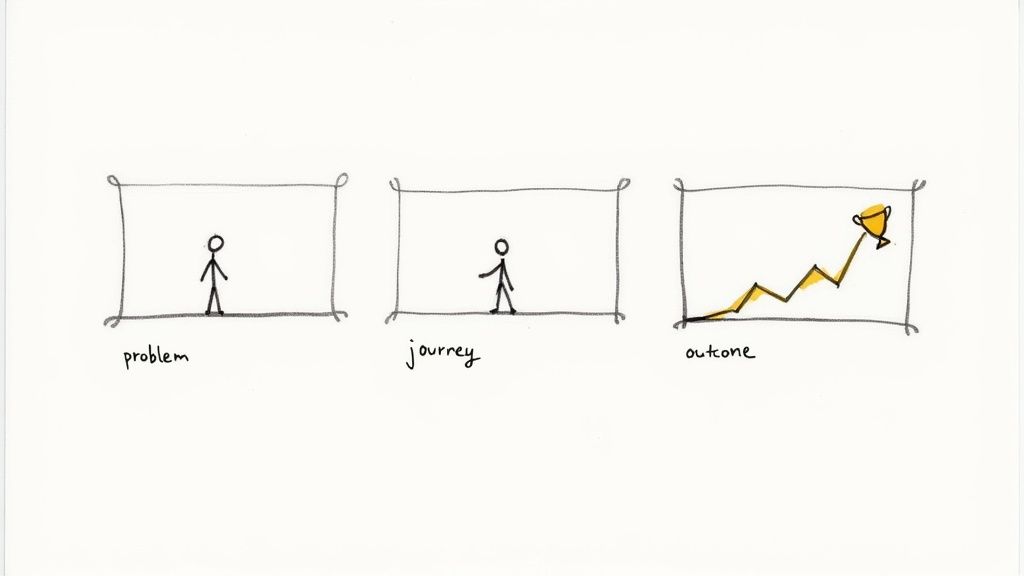
  • Follow a Narrative Arc: Structure your content with a clear beginning (the setup or problem), a middle (the conflict or journey), and an end (the resolution or transformation). This classic structure is instinctively engaging.

  • Make the Customer the Hero: Instead of positioning your brand as the hero, feature your customers in that role. Your brand or product should act as the guide that helps them overcome their challenges, a principle popularized by Donald Miller's StoryBrand framework.

  • Use Specific, Sensory Details: Bring your stories to life with vivid details. Describe the setting, the emotions, and the specific challenges faced. This makes the narrative more immersive and relatable for the reader.

  • Encourage User-Generated Stories: Invite your audience to share their own experiences with your brand. GoPro has built a content empire almost entirely on user-generated adventure stories, creating an authentic and highly engaging content stream that continuously reinforces its brand values.

4. Content Distribution and Multi-Channel Strategy

Creating exceptional content is only half the battle; ensuring it reaches the right audience is the other critical half. A multi-channel content distribution strategy involves publishing and promoting your content across various platforms instead of relying on a single channel. This approach maximizes reach, engages audiences where they are most active, and allows you to tailor your message to the unique format and user expectations of each platform, forming a core part of modern content marketing best practices.

This strategy is about working smarter, not harder, by repurposing a core piece of content for different channels. For example, Shopify excels at this by distributing its expertise across a blog, a wildly successful YouTube channel, podcasts, and various social media platforms. Similarly, the Huberman Lab podcast breaks down long-form episodes into short, digestible video clips for platforms like YouTube Shorts and Instagram, while also using a detailed email newsletter to reach subscribers directly. This ensures the core message is consumed in multiple formats, multiplying its impact.

How to Implement This Practice

A successful multi-channel strategy requires careful planning and adaptation. You cannot simply copy and paste content across platforms; you must reformat and reframe it for each specific audience and context.

  • Create a Pillar Piece: Start with a substantial piece of content, like a long-form blog post, a webinar, or a detailed video. This will serve as the "pillar" from which all other content is derived.

  • Adapt and Repurpose: Break down the pillar content into smaller, platform-specific assets. A blog post can become an infographic for Pinterest, a series of tweets, a short video for TikTok, or a discussion topic for a podcast episode.

  • Tailor the Message: Adjust the tone, language, and call-to-action for each channel. A professional tone on LinkedIn might become more conversational and visual on Instagram.

  • Use a Content Calendar: Plan your distribution schedule with a content calendar. This helps you coordinate posts across channels, avoid audience fatigue, and ensure a consistent flow of information.

  • Measure Channel Performance: Track key metrics like engagement, traffic, and conversions for each channel. Use this data to understand which platforms deliver the best results and refine your distribution focus accordingly.

5. Data-Driven Content Decisions

Relying on intuition alone can leave your content strategy floating in the dark. Data-driven content decisions use analytics, A/B testing, and performance metrics to illuminate which topics, formats, and channels truly move the needle.

By tracking engagement, conversions, and ROI, you continuously refine your approach instead of guessing what will resonate. This practice ensures resources are focused on high-impact topics and tactics that align with business goals.

Successful implementations range from Buzzfeed’s rigorous testing of quiz formats to The New York Times’ personalization engine that adapts headlines based on reader behavior. Spotify leverages listening data to shape podcast content, while LinkedIn’s recommendation algorithm boosts posts with proven engagement metrics. These examples show how real-world brands use hard numbers to steer content toward growth.

When to Use This Approach
Adopt data-driven decisions at every stage of your content lifecycle—from ideation and creation to distribution and optimization. This method is essential when you need predictable organic growth, want to prove ROI to stakeholders, or aim to personalize experiences at scale.

How to Implement This Practice

  • Set Clear KPIs: Define 3–5 metrics (traffic, time on page, lead volume) aligned with your business objectives before you draft content.

  • Track Multiple Metrics: Monitor at least 5–7 data points per asset, including dwell time, scroll depth, and domain authority (Learn more about improving domain authority with data-driven insights).

  • Implement UTM Parameters: Tag links in emails, social posts, and paid ads to attribute conversions accurately.

  • Use Heat Mapping Tools: Visualize where users click, scroll, and hover to optimize layout and calls to action.

  • Run A/B Tests: Experiment with headlines, CTAs, images, and content length to identify top performers.

  • Create Monthly Reports: Share insights on high- and low-performing content with your team to guide future planning.

  • Analyze Patterns: Look for recurring themes across topics, formats, and channels that drive engagement.

This systematic approach transforms marketing from art into a measurable science, helping SaaS startups, agencies, and indie creators build strategies that scale predictably.

6. Long-Form, Pillar Content and Topic Clusters

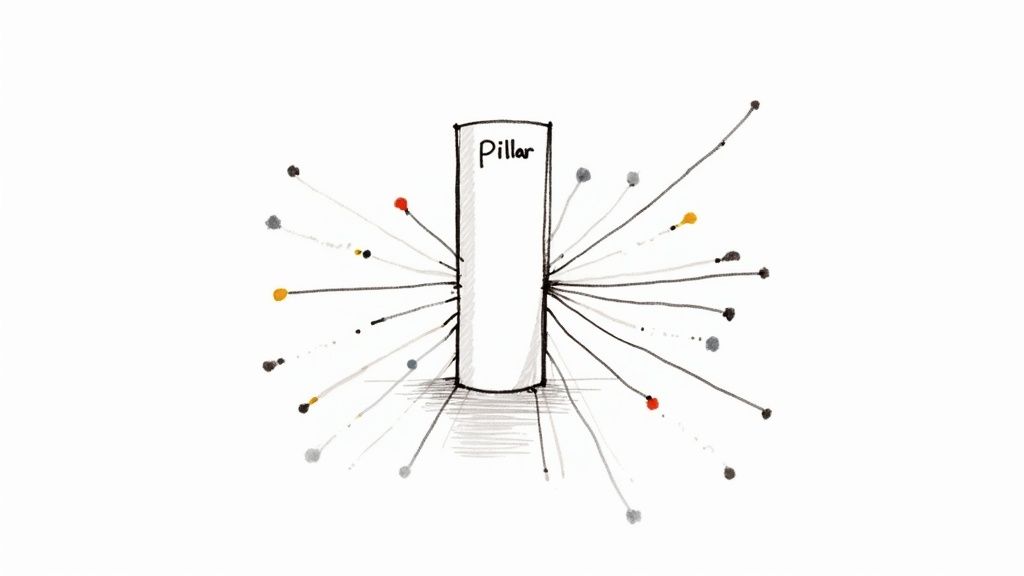
Moving beyond single, disconnected blog posts to a more organized content architecture is a critical step in establishing authority. This is where the pillar content and topic cluster model comes into play, one of the most effective content marketing best practices for SEO and user engagement. This strategy involves creating a comprehensive, long-form "pillar" page on a broad topic, which then acts as a central hub for multiple, more detailed "cluster" articles that explore related subtopics. This interconnected structure signals to search engines that you have deep expertise on the subject.
Long-Form, Pillar Content and Topic Clusters

This model was popularized by HubSpot, which uses it extensively for topics like "Email Marketing," linking out to dozens of specific cluster articles. Another prime example is Backlinko, whose definitive guides consistently rank for highly competitive terms by covering every conceivable angle of a subject. Similarly, Moz’s "The Beginner’s Guide to SEO" serves as a foundational pillar that has educated millions, solidifying their industry leadership. This approach organizes content logically for users and builds a powerful network of internal links that boosts SEO performance.

How to Implement This Practice

Building a successful topic cluster model requires strategic planning and consistent execution. The goal is to own the conversation around your core business topics by providing unmatched depth and value.

  • Select Pillar Topics: Identify 5-10 core subjects that are central to your business and have significant search volume. These should be broad enough to generate numerous subtopics.

  • Research Subtopics: For each pillar, conduct in-depth research to find 15-20 related subtopics and long-tail keywords. Understanding the nuances of long-tail keyword research is essential for this step.

  • Create Pillar and Cluster Content: Develop the pillar page first (typically 2,000+ words) to act as the authoritative guide. Then, create individual cluster articles (1,500+ words) for each subtopic you identified.

  • Establish a Linking Structure: The linking strategy is crucial. Every cluster article must link back to its corresponding pillar page using relevant anchor text. The pillar page should also link out to the cluster articles where appropriate.

  • Maintain and Update: Keep your content ecosystem fresh. Regularly update both pillar and cluster content to reflect new information and data, which helps maintain and improve search rankings over time.

7. Email Marketing and Newsletter Strategy

Building and nurturing an email list lets you deliver targeted, personalized content directly to an engaged audience. Email remains one of the highest-ROI marketing channels and serves as a foundation for your content distribution strategy. By collecting subscriber preferences and behaviors, you can tailor each message to resonate with specific segments and drive predictable organic growth.

Morning Brew’s daily newsletter scaled to a $75 million acquisition by blending concise business news with sharp personality. The Skimm built a loyal female readership through relatable tone and clear lifestyle hooks. Substack creators monetize direct subscriber relationships by offering premium posts and community features. ConvertKit fosters creator-focused email communities with educational content and monetization tips, proving email strategy works for both B2C and B2B audiences.

How to Implement This Practice

  • Offer valuable lead magnets such as templates, guides, checklists, or tools

  • Segment your email list by engagement level, interests, or buyer stage

  • Personalize subject lines and body content using merge tags and behavioral data

  • Craft a compelling welcome email that highlights your unique value proposition

  • Test send times and days to identify when your audience is most active

  • Optimize every email for mobile viewing since 60%+ of opens happen on phones

  • Include clear, single-focused CTAs aligned with your content and conversion goals

  • Monitor open rates, click-through rates, unsubscribe rates, and spam complaints

  • Regularly clean your list by removing inactive subscribers to boost deliverability

  • Leverage platforms like Mailchimp, ActiveCampaign, or HubSpot for automation and analytics

Implementing a robust email marketing and newsletter strategy ensures you maintain direct control over your audience, drive higher engagement, and unlock one of the most cost-effective channels in your content marketing best practices toolkit.

8. Video Content and YouTube Strategy

In an era where visual media dominates, overlooking video is a significant missed opportunity. Integrating a robust video content and YouTube strategy into your content marketing best practices is no longer optional; it’s essential for engagement and visibility. Video has consistently higher engagement rates than static text, and platforms like YouTube are powerful search engines in their own right, making video a critical tool for reaching audiences where they spend a significant amount of their time.

Brands and creators who master this format see immense returns. For instance, Huberman Lab has amassed over 10 million subscribers by creating deep-dive scientific podcasts on YouTube, proving that long-form, educational content can thrive. Similarly, WIRED's various interview series, like their "Autocomplete Interview," use a recognizable format to generate millions of views by leveraging celebrity interest. These examples show that a consistent, high-value video strategy can build a massive, loyal following.

How to Implement This Practice

A successful YouTube strategy requires more than just uploading videos; it demands a structured approach to creation, optimization, and promotion. Focusing on viewer retention and discoverability is key to growth.

  • Develop a Consistent Format: Create a recognizable series or show format. This builds viewer expectations and encourages binge-watching, which the YouTube algorithm favors.

  • Optimize for Clicks and Watch Time: Craft compelling thumbnails and titles that spark curiosity. Hook viewers within the first three seconds to prevent them from clicking away, and use pattern interrupts (e.g., changing camera angles, adding graphics) to maintain engagement.

  • Maximize Reach and Accessibility: Upload on a consistent schedule to train your audience. To maximize the reach and SEO potential of your video content, utilizing YouTube transcript services is a key best practice for accessibility and repurposing. Write comprehensive descriptions with keywords and relevant links.

  • Repurpose and Promote: Don't let your content live only on YouTube. Repurpose long-form videos into short clips for platforms like TikTok, Instagram Reels, and YouTube Shorts to drive traffic back to your main channel.

9. Community Building and User-Generated Content

Content marketing shouldn’t be a one-way street where brands simply broadcast messages. One of the most powerful content marketing best practices is to build an engaged community where your audience becomes an active participant. This strategy involves creating a space for customers to connect, share experiences, and even generate their own content. This approach builds deep loyalty, creates authentic social proof, and can significantly reduce your content creation burden.

A vibrant community transforms customers into advocates. GoPro has mastered this by building its brand around thrilling, user-generated adventure videos. Similarly, Peloton fosters an intensely loyal user base by creating a community where members share workout milestones and encourage one another. This user-created content is not only more authentic and relatable but also serves as a powerful, self-sustaining marketing engine that drives both engagement and new customer acquisition.

How to Implement This Practice

Building a thriving community requires a strategic and intentional effort. You must provide the platform, set the tone, and empower members to contribute, turning passive consumers into active participants.

  • Establish Your Platform: Choose a dedicated space for your community, such as a Slack channel, a Discord server, or platforms like Circle.so or Mighty Networks. Define a clear mission and establish moderation guidelines to ensure a safe and productive environment.

  • Encourage User-Generated Content (UGC): Actively solicit content from your members. Run contests, create specific hashtags, or launch campaigns that prompt users to share their stories, photos, or videos related to your brand.

  • Feature and Reward Members: Regularly highlight and celebrate member contributions. Feature top user-generated content on your official social media channels, blog, or newsletter. Offer exclusive perks, such as early access to products or special discounts, to reward active community members.

  • Measure Community Health: Track metrics beyond just size. Monitor engagement rates, the volume of user-generated content, and member sentiment to gauge the health of your community. Use this feedback to refine your community management strategy continuously.

10. Content Calendars and Strategic Planning

Publishing content reactively or without a plan leads to inconsistency and missed opportunities. This is why implementing a content calendar and engaging in strategic planning are essential content marketing best practices. This approach involves methodically organizing your content creation and distribution in advance, aligning every piece with specific business objectives, seasonal trends, and audience needs. It transforms your content efforts from a series of disconnected tactics into a cohesive, goal-oriented strategy.

A content calendar is a detailed schedule of when and where you plan to publish upcoming content. Industry leaders like HubSpot exemplify this by using multi-month calendars that coordinate their blog posts, social media updates, and premium content launches around key marketing campaigns. Similarly, Buffer famously maintained a transparent public content calendar, demonstrating their commitment to consistency and providing value to their audience. This level of planning ensures content supports broader goals, from lead generation to brand awareness, rather than just filling a slot.

How to Implement This Practice

To build an effective content calendar, you must balance long-term strategic vision with the flexibility to adapt to new opportunities. This ensures your content remains relevant and impactful.

  • Plan Strategically: Map out your content 3-6 months in advance. Organize it by strategic themes or content pillars that directly support your core business objectives. Include key dates like seasonal events, holidays, and industry conferences.

  • Structure for Flexibility: A rigid plan can stifle creativity. Allocate your calendar with a model like 40% planned content, 30% reactive content (responding to trends or news), and 30% experimental content (testing new formats or topics).

  • Assign Ownership and Deadlines: Use project management tools like Asana, Notion, or Monday.com to assign clear ownership for each content piece. Set realistic deadlines for drafting, revision, and approval, building in buffer time to avoid last-minute rushes.

  • Review and Adapt: Your content plan is a living document. Conduct monthly reviews to assess performance, identify what’s working, and adjust the upcoming schedule based on data and emerging trends.

Content Marketing Best Practices — 10-Point Comparison

Approach

🔄 Implementation Complexity

⚡ Resource Requirements

⭐ Expected Outcomes

💡 Ideal Use Cases

📊 Key Advantages

Audience Research and Buyer Personas

High 🔄 (qual + quant research)

Medium–High ⚡ (tools, interviews)

High ⭐⭐⭐ — better targeting & conversions

Product launches, personalization, segmentation

📊 Targeted content; reduces wasted effort

SEO-Optimized Content Strategy

Medium–High 🔄 (keyword & technical work)

Medium ⚡ (SEO tools, ongoing effort)

High ⭐⭐⭐ — sustainable organic traffic

Evergreen content, acquisition, lead gen

📊 Long-term ROI; improved discoverability

Storytelling and Emotional Connection

Medium 🔄 (creative development)

Low–Medium ⚡ (writers, production time)

High ⭐⭐⭐ — engagement & loyalty

Brand building, campaigns, hero content

📊 Strong shareability; deeper brand affinity

Content Distribution and Multi-Channel Strategy

High 🔄 (coordination across channels)

High ⚡ (team, platform costs)

High ⭐⭐⭐ — wider reach & touchpoints

Launch amplification, repurposing core assets

📊 Maximizes reach; reduces single-channel risk

Data-Driven Content Decisions

Medium–High 🔄 (tracking & testing setup)

Medium–High ⚡ (analytics tools, analysts)

High ⭐⭐⭐ — optimized ROI & performance

CRO, scaling content programs, hypothesis testing

📊 Evidence-based improvements; reduces guesswork

Long-Form, Pillar Content and Topic Clusters

High 🔄 (planning + sustained creation)

High ⚡ (research, long-form writing)

High ⭐⭐⭐ — authority & SEO gains

Thought leadership, topical authority, SEO hubs

📊 Builds domain authority; reduces cannibalization

Email Marketing and Newsletter Strategy

Medium 🔄 (segmentation & automation)

Low–Medium ⚡ (ESP, creative resources)

High ⭐⭐⭐ — retention & direct conversions

Retention, repeat engagement, monetization

📊 Highest ROI; owned audience control

Video Content and YouTube Strategy

High 🔄 (production + optimization)

High ⚡ (equipment, editing, talent)

High ⭐⭐⭐ — engagement & discoverability

Educational series, product demos, brand personality

📊 Strong engagement; YouTube search advantage

Community Building and User-Generated Content

High 🔄 (ongoing moderation & culture)

Medium–High ⚡ (management, incentives)

High ⭐⭐⭐ — advocacy & retention

Loyalty programs, product communities, UGC campaigns

📊 Authentic advocacy; continuous content stream

Content Calendars and Strategic Planning

Medium 🔄 (planning & governance)

Low–Medium ⚡ (tools, coordination)

Medium–High ⭐⭐ — consistency & alignment

Cross-team publishing, seasonal planning, scaling

📊 Consistency; reduces last-minute production risk

Putting Best Practices into Action

The journey through the essential content marketing best practices we've detailed is not just about accumulating knowledge; it's about initiating a fundamental shift in how you approach, create, and leverage content. Moving from theory to execution is where true growth happens. You now have a strategic blueprint covering everything from foundational audience research and SEO-driven planning to advanced tactics like community building and multi-channel distribution. The common thread weaving through all these practices is a commitment to providing genuine, data-informed value to a specific audience.

Merely publishing content is no longer a viable strategy. The digital landscape is saturated with noise, and only the most strategic, insightful, and well-executed content can cut through it. The difference between a content program that sputters and one that scales predictably lies in the deliberate application of these proven principles.

Synthesizing Your Strategy: From List to Action Plan

As we conclude, let's distill the core principles from this guide into a cohesive, actionable mindset. Think of these best practices not as isolated tactics on a checklist, but as interconnected components of a single, powerful growth engine.

Your audience personas (Practice #1) are not static documents; they are the living, breathing guides for your storytelling (Practice #3). The SEO strategy (Practice #2) you build provides the structural blueprint for your pillar content and topic clusters (Practice #6), ensuring every piece has a purpose and a place. Your content calendar (Practice #10) then becomes the operational heartbeat, orchestrating how and when you deploy assets across your chosen channels, from your email newsletter (Practice #7) to your YouTube channel (Practice #8).

Finally, your commitment to data-driven decisions (Practice #5) acts as the central nervous system for the entire operation. It processes feedback, measures performance, and sends signals that dictate how you refine your distribution, optimize existing content, and ideate future topics.

Your Immediate Next Steps for Implementation

Feeling overwhelmed by the sheer number of ideas is natural. The key is to start small, build momentum, and iterate. Here is a practical, step-by-step plan to begin implementing these content marketing best practices today:

  1. Conduct a Content Audit (The Next 7 Days): Before creating anything new, analyze what you already have. Use the lens of these best practices. Which articles can be updated and optimized? Where are your biggest SEO gaps? Which pieces could be repurposed into video scripts or newsletter segments?

  2. Choose One Pillar Topic (The Next 14 Days): Don't try to build ten topic clusters at once. Select one core area of expertise that is vital to your audience and business. Commit to creating one comprehensive pillar page and three to five supporting cluster posts around it. This focused effort will yield measurable results and provide a template for future clusters.

  3. Establish a Single Distribution Channel (The Next 30 Days): Master one distribution channel before diversifying. If you've identified that your audience is highly engaged on LinkedIn, focus all your promotional energy there. If it's a niche subreddit, become an active, valued member. Once you build a repeatable process for one channel, you can expand to others.

  4. Set Up Your Measurement Framework (Now): You cannot improve what you do not measure. Ensure Google Analytics 4 (or your preferred analytics tool) is properly configured with specific conversion goals. Track key metrics like organic traffic to key pages, keyword rankings for your target clusters, and email sign-ups from your blog posts.

Mastering these content marketing best practices is an ongoing process of learning, testing, and refining. It’s a commitment to excellence that transforms your content from a simple marketing expense into your company's most valuable, scalable asset. By consistently delivering exceptional value, you build more than just an audience; you build a loyal community of advocates who trust your brand and champion your success.

Ready to put these best practices into action with a tool built for predictable organic growth? Viral SEO provides the strategic framework and AI-powered insights you need to build topic clusters, optimize content, and rank higher, faster. Turn your content strategy into a scalable growth engine at Viral SEO.

In a crowded market, creating content is no longer enough. Your audience is inundated with information, and only the most strategic, well-executed content breaks through the noise to drive predictable growth. Simply publishing a blog post or a social media update without a clear plan is a recipe for wasted resources and missed opportunities. The difference between content that languishes and content that converts lies in the application of proven, actionable frameworks.

This guide moves beyond generic advice to provide a comprehensive roundup of content marketing best practices that deliver tangible results. We will dissect the essential pillars of a successful content engine, from initial planning to final optimization. You will not find vague theories here. Instead, you'll get a detailed playbook designed for SaaS startups, small marketing teams, and solo creators who need to make every piece of content count.

Expect to learn how to:

  • Plan with Precision: Master audience research, build detailed buyer personas, and develop an SEO-driven strategy that targets high-intent keywords.

  • Create with Impact: Leverage storytelling, craft long-form pillar content, and integrate video to engage and retain your audience.

  • Distribute Effectively: Implement a multi-channel distribution plan and build a powerful email marketing and newsletter strategy to nurture leads.

  • Optimize for Growth: Use data to make informed decisions, build a thriving community with user-generated content, and maintain consistency with strategic content calendars.

These practices are not just isolated tips; they are interconnected components of a holistic system. By implementing them, you can build a sustainable content marketing program that attracts, engages, and converts your ideal customers, establishing your brand as a trusted authority in its niche. Let's dive into the specifics.

1. Audience Research and Buyer Personas

Creating content without a deep understanding of your audience is like navigating without a map. This is why thorough audience research and the development of detailed buyer personas are foundational content marketing best practices. This process involves moving beyond basic demographics to uncover the nuanced pain points, motivations, behaviors, and goals of your ideal customers. It ensures that every piece of content you create is precisely tailored to resonate with a specific segment, transforming generic messaging into a targeted, effective communication tool.

Audience Research and Buyer Personas

A buyer persona is a semi-fictional representation of your ideal customer based on real data and market research. Companies like HubSpot have perfected this by providing detailed persona templates that guide marketers to think about their audience's job titles, daily challenges, and information sources. Similarly, Slack excels by creating distinct content streams for different user roles, such as IT administrators concerned with security and team managers focused on productivity. This segmentation allows them to address specific needs effectively.

How to Implement This Practice

To build effective buyer personas, you need to gather both qualitative and quantitative data. This multi-faceted approach provides a comprehensive view of who your customers are and what they need from you.

  • Conduct Research: Start by interviewing existing customers and prospects. Use surveys, analyze your website analytics (e.g., Google Analytics), and leverage social listening tools to understand conversations happening in your industry.

  • Identify Patterns: Sift through the data to find common themes related to challenges, goals, and demographic information. Group these patterns to form the basis of your primary personas.

  • Create Persona Profiles: Aim to create 3-5 primary personas, as developing too many can dilute your focus. Give each persona a name, a job title, and include specific details like their primary goals, budget constraints, and the typical timeline for their decision-making process.

  • Update Regularly: Markets and customer needs evolve. Revisit and update your personas at least quarterly to ensure they remain accurate and relevant, incorporating new data and insights as they become available.

2. SEO-Optimized Content Strategy

Creating content without considering search engines is like writing a brilliant book and leaving it in a locked room. An SEO-optimized content strategy ensures your work is discoverable, connecting you with an audience actively searching for your solutions. This approach involves integrating search engine optimization principles directly into the content creation process, from keyword research and on-page optimization to technical health and authority building. It transforms your content from a simple asset into a powerful engine for driving consistent, qualified organic traffic.

An SEO-first mindset means you are creating content for both users and search algorithms. Industry leaders like Backlinko exemplify this by creating comprehensive guides that rank #1 for hyper-competitive terms. Similarly, Neil Patel’s long-form blog posts are meticulously crafted around high-intent keywords, capturing massive search traffic. These examples prove that a strategic fusion of high-quality content and technical SEO is a winning formula for discoverability and authority.

How to Implement This Practice

Integrating SEO is a continuous process that begins before you write a single word. A systematic approach ensures your content has the best possible chance to rank and attract your target audience.

  • Perform In-Depth Keyword Research: Use tools like Ahrefs or SEMrush to identify relevant keywords. Focus on long-tail keywords (phrases of three or more words) to attract highly qualified traffic and gain traction faster. Consider the ideal number of keywords to target by learning more about keyword density best practices on getviralseo.com.

  • Structure Content for Search: Create comprehensive pillar pages on broad topics and support them with detailed "topic cluster" articles that link back to the main page. This structure signals expertise to search engines.

  • Optimize On-Page Elements: Ensure your primary keyword appears in the title tag, meta description, URL, and within the first 100 words of your content. Use H2 and H3 subheadings to improve readability and structure. To truly optimize for modern search, consider exploring advanced strategies with a a guide to Answer Engine Optimization.

  • Prioritize E-E-A-T: Focus on demonstrating Experience, Expertise, Authoritativeness, and Trustworthiness. Build high-quality backlinks, cite reputable sources, and showcase author credentials to align with Google's quality standards.

3. Storytelling and Emotional Connection

Facts and data can inform, but stories are what create lasting impact and connection. This is why weaving compelling narratives into your content is one of the most powerful content marketing best practices. Storytelling moves beyond product features and company accolades to engage audiences on a human level, using emotional appeals to build brand loyalty and create memorable experiences. It transforms your brand from a faceless entity into a relatable character your audience can root for.

Storytelling and Emotional Connection

This approach has been mastered by brands that understand people connect with purpose, not just products. TOMS Shoes built its entire brand around the story of its One-for-One mission, making every purchase feel like a contribution to a greater cause. Similarly, Airbnb's "Belong Anywhere" campaign doesn't just sell accommodations; it sells the story of unique travel experiences and human connection through powerful guest narratives. These companies prove that a well-told story can become the very foundation of a brand's identity and market position.

How to Implement This Practice

Integrating storytelling isn't just for large-scale campaigns; it can be applied to blog posts, social media updates, and even email newsletters. The key is to shift your focus from selling to connecting through authentic narratives.

  • Follow a Narrative Arc: Structure your content with a clear beginning (the setup or problem), a middle (the conflict or journey), and an end (the resolution or transformation). This classic structure is instinctively engaging.

  • Make the Customer the Hero: Instead of positioning your brand as the hero, feature your customers in that role. Your brand or product should act as the guide that helps them overcome their challenges, a principle popularized by Donald Miller's StoryBrand framework.

  • Use Specific, Sensory Details: Bring your stories to life with vivid details. Describe the setting, the emotions, and the specific challenges faced. This makes the narrative more immersive and relatable for the reader.

  • Encourage User-Generated Stories: Invite your audience to share their own experiences with your brand. GoPro has built a content empire almost entirely on user-generated adventure stories, creating an authentic and highly engaging content stream that continuously reinforces its brand values.

4. Content Distribution and Multi-Channel Strategy

Creating exceptional content is only half the battle; ensuring it reaches the right audience is the other critical half. A multi-channel content distribution strategy involves publishing and promoting your content across various platforms instead of relying on a single channel. This approach maximizes reach, engages audiences where they are most active, and allows you to tailor your message to the unique format and user expectations of each platform, forming a core part of modern content marketing best practices.

This strategy is about working smarter, not harder, by repurposing a core piece of content for different channels. For example, Shopify excels at this by distributing its expertise across a blog, a wildly successful YouTube channel, podcasts, and various social media platforms. Similarly, the Huberman Lab podcast breaks down long-form episodes into short, digestible video clips for platforms like YouTube Shorts and Instagram, while also using a detailed email newsletter to reach subscribers directly. This ensures the core message is consumed in multiple formats, multiplying its impact.

How to Implement This Practice

A successful multi-channel strategy requires careful planning and adaptation. You cannot simply copy and paste content across platforms; you must reformat and reframe it for each specific audience and context.

  • Create a Pillar Piece: Start with a substantial piece of content, like a long-form blog post, a webinar, or a detailed video. This will serve as the "pillar" from which all other content is derived.

  • Adapt and Repurpose: Break down the pillar content into smaller, platform-specific assets. A blog post can become an infographic for Pinterest, a series of tweets, a short video for TikTok, or a discussion topic for a podcast episode.

  • Tailor the Message: Adjust the tone, language, and call-to-action for each channel. A professional tone on LinkedIn might become more conversational and visual on Instagram.

  • Use a Content Calendar: Plan your distribution schedule with a content calendar. This helps you coordinate posts across channels, avoid audience fatigue, and ensure a consistent flow of information.

  • Measure Channel Performance: Track key metrics like engagement, traffic, and conversions for each channel. Use this data to understand which platforms deliver the best results and refine your distribution focus accordingly.

5. Data-Driven Content Decisions

Relying on intuition alone can leave your content strategy floating in the dark. Data-driven content decisions use analytics, A/B testing, and performance metrics to illuminate which topics, formats, and channels truly move the needle.

By tracking engagement, conversions, and ROI, you continuously refine your approach instead of guessing what will resonate. This practice ensures resources are focused on high-impact topics and tactics that align with business goals.

Successful implementations range from Buzzfeed’s rigorous testing of quiz formats to The New York Times’ personalization engine that adapts headlines based on reader behavior. Spotify leverages listening data to shape podcast content, while LinkedIn’s recommendation algorithm boosts posts with proven engagement metrics. These examples show how real-world brands use hard numbers to steer content toward growth.

When to Use This Approach
Adopt data-driven decisions at every stage of your content lifecycle—from ideation and creation to distribution and optimization. This method is essential when you need predictable organic growth, want to prove ROI to stakeholders, or aim to personalize experiences at scale.

How to Implement This Practice

  • Set Clear KPIs: Define 3–5 metrics (traffic, time on page, lead volume) aligned with your business objectives before you draft content.

  • Track Multiple Metrics: Monitor at least 5–7 data points per asset, including dwell time, scroll depth, and domain authority (Learn more about improving domain authority with data-driven insights).

  • Implement UTM Parameters: Tag links in emails, social posts, and paid ads to attribute conversions accurately.

  • Use Heat Mapping Tools: Visualize where users click, scroll, and hover to optimize layout and calls to action.

  • Run A/B Tests: Experiment with headlines, CTAs, images, and content length to identify top performers.

  • Create Monthly Reports: Share insights on high- and low-performing content with your team to guide future planning.

  • Analyze Patterns: Look for recurring themes across topics, formats, and channels that drive engagement.

This systematic approach transforms marketing from art into a measurable science, helping SaaS startups, agencies, and indie creators build strategies that scale predictably.

6. Long-Form, Pillar Content and Topic Clusters

Moving beyond single, disconnected blog posts to a more organized content architecture is a critical step in establishing authority. This is where the pillar content and topic cluster model comes into play, one of the most effective content marketing best practices for SEO and user engagement. This strategy involves creating a comprehensive, long-form "pillar" page on a broad topic, which then acts as a central hub for multiple, more detailed "cluster" articles that explore related subtopics. This interconnected structure signals to search engines that you have deep expertise on the subject.

Long-Form, Pillar Content and Topic Clusters

This model was popularized by HubSpot, which uses it extensively for topics like "Email Marketing," linking out to dozens of specific cluster articles. Another prime example is Backlinko, whose definitive guides consistently rank for highly competitive terms by covering every conceivable angle of a subject. Similarly, Moz’s "The Beginner’s Guide to SEO" serves as a foundational pillar that has educated millions, solidifying their industry leadership. This approach organizes content logically for users and builds a powerful network of internal links that boosts SEO performance.

How to Implement This Practice

Building a successful topic cluster model requires strategic planning and consistent execution. The goal is to own the conversation around your core business topics by providing unmatched depth and value.

  • Select Pillar Topics: Identify 5-10 core subjects that are central to your business and have significant search volume. These should be broad enough to generate numerous subtopics.

  • Research Subtopics: For each pillar, conduct in-depth research to find 15-20 related subtopics and long-tail keywords. Understanding the nuances of long-tail keyword research is essential for this step.

  • Create Pillar and Cluster Content: Develop the pillar page first (typically 2,000+ words) to act as the authoritative guide. Then, create individual cluster articles (1,500+ words) for each subtopic you identified.

  • Establish a Linking Structure: The linking strategy is crucial. Every cluster article must link back to its corresponding pillar page using relevant anchor text. The pillar page should also link out to the cluster articles where appropriate.

  • Maintain and Update: Keep your content ecosystem fresh. Regularly update both pillar and cluster content to reflect new information and data, which helps maintain and improve search rankings over time.

7. Email Marketing and Newsletter Strategy

Building and nurturing an email list lets you deliver targeted, personalized content directly to an engaged audience. Email remains one of the highest-ROI marketing channels and serves as a foundation for your content distribution strategy. By collecting subscriber preferences and behaviors, you can tailor each message to resonate with specific segments and drive predictable organic growth.

Morning Brew’s daily newsletter scaled to a $75 million acquisition by blending concise business news with sharp personality. The Skimm built a loyal female readership through relatable tone and clear lifestyle hooks. Substack creators monetize direct subscriber relationships by offering premium posts and community features. ConvertKit fosters creator-focused email communities with educational content and monetization tips, proving email strategy works for both B2C and B2B audiences.

How to Implement This Practice

  • Offer valuable lead magnets such as templates, guides, checklists, or tools

  • Segment your email list by engagement level, interests, or buyer stage

  • Personalize subject lines and body content using merge tags and behavioral data

  • Craft a compelling welcome email that highlights your unique value proposition

  • Test send times and days to identify when your audience is most active

  • Optimize every email for mobile viewing since 60%+ of opens happen on phones

  • Include clear, single-focused CTAs aligned with your content and conversion goals

  • Monitor open rates, click-through rates, unsubscribe rates, and spam complaints

  • Regularly clean your list by removing inactive subscribers to boost deliverability

  • Leverage platforms like Mailchimp, ActiveCampaign, or HubSpot for automation and analytics

Implementing a robust email marketing and newsletter strategy ensures you maintain direct control over your audience, drive higher engagement, and unlock one of the most cost-effective channels in your content marketing best practices toolkit.

8. Video Content and YouTube Strategy

In an era where visual media dominates, overlooking video is a significant missed opportunity. Integrating a robust video content and YouTube strategy into your content marketing best practices is no longer optional; it’s essential for engagement and visibility. Video has consistently higher engagement rates than static text, and platforms like YouTube are powerful search engines in their own right, making video a critical tool for reaching audiences where they spend a significant amount of their time.

Brands and creators who master this format see immense returns. For instance, Huberman Lab has amassed over 10 million subscribers by creating deep-dive scientific podcasts on YouTube, proving that long-form, educational content can thrive. Similarly, WIRED's various interview series, like their "Autocomplete Interview," use a recognizable format to generate millions of views by leveraging celebrity interest. These examples show that a consistent, high-value video strategy can build a massive, loyal following.

How to Implement This Practice

A successful YouTube strategy requires more than just uploading videos; it demands a structured approach to creation, optimization, and promotion. Focusing on viewer retention and discoverability is key to growth.

  • Develop a Consistent Format: Create a recognizable series or show format. This builds viewer expectations and encourages binge-watching, which the YouTube algorithm favors.

  • Optimize for Clicks and Watch Time: Craft compelling thumbnails and titles that spark curiosity. Hook viewers within the first three seconds to prevent them from clicking away, and use pattern interrupts (e.g., changing camera angles, adding graphics) to maintain engagement.

  • Maximize Reach and Accessibility: Upload on a consistent schedule to train your audience. To maximize the reach and SEO potential of your video content, utilizing YouTube transcript services is a key best practice for accessibility and repurposing. Write comprehensive descriptions with keywords and relevant links.

  • Repurpose and Promote: Don't let your content live only on YouTube. Repurpose long-form videos into short clips for platforms like TikTok, Instagram Reels, and YouTube Shorts to drive traffic back to your main channel.

9. Community Building and User-Generated Content

Content marketing shouldn’t be a one-way street where brands simply broadcast messages. One of the most powerful content marketing best practices is to build an engaged community where your audience becomes an active participant. This strategy involves creating a space for customers to connect, share experiences, and even generate their own content. This approach builds deep loyalty, creates authentic social proof, and can significantly reduce your content creation burden.

A vibrant community transforms customers into advocates. GoPro has mastered this by building its brand around thrilling, user-generated adventure videos. Similarly, Peloton fosters an intensely loyal user base by creating a community where members share workout milestones and encourage one another. This user-created content is not only more authentic and relatable but also serves as a powerful, self-sustaining marketing engine that drives both engagement and new customer acquisition.

How to Implement This Practice

Building a thriving community requires a strategic and intentional effort. You must provide the platform, set the tone, and empower members to contribute, turning passive consumers into active participants.

  • Establish Your Platform: Choose a dedicated space for your community, such as a Slack channel, a Discord server, or platforms like Circle.so or Mighty Networks. Define a clear mission and establish moderation guidelines to ensure a safe and productive environment.

  • Encourage User-Generated Content (UGC): Actively solicit content from your members. Run contests, create specific hashtags, or launch campaigns that prompt users to share their stories, photos, or videos related to your brand.

  • Feature and Reward Members: Regularly highlight and celebrate member contributions. Feature top user-generated content on your official social media channels, blog, or newsletter. Offer exclusive perks, such as early access to products or special discounts, to reward active community members.

  • Measure Community Health: Track metrics beyond just size. Monitor engagement rates, the volume of user-generated content, and member sentiment to gauge the health of your community. Use this feedback to refine your community management strategy continuously.

10. Content Calendars and Strategic Planning

Publishing content reactively or without a plan leads to inconsistency and missed opportunities. This is why implementing a content calendar and engaging in strategic planning are essential content marketing best practices. This approach involves methodically organizing your content creation and distribution in advance, aligning every piece with specific business objectives, seasonal trends, and audience needs. It transforms your content efforts from a series of disconnected tactics into a cohesive, goal-oriented strategy.

A content calendar is a detailed schedule of when and where you plan to publish upcoming content. Industry leaders like HubSpot exemplify this by using multi-month calendars that coordinate their blog posts, social media updates, and premium content launches around key marketing campaigns. Similarly, Buffer famously maintained a transparent public content calendar, demonstrating their commitment to consistency and providing value to their audience. This level of planning ensures content supports broader goals, from lead generation to brand awareness, rather than just filling a slot.

How to Implement This Practice

To build an effective content calendar, you must balance long-term strategic vision with the flexibility to adapt to new opportunities. This ensures your content remains relevant and impactful.

  • Plan Strategically: Map out your content 3-6 months in advance. Organize it by strategic themes or content pillars that directly support your core business objectives. Include key dates like seasonal events, holidays, and industry conferences.

  • Structure for Flexibility: A rigid plan can stifle creativity. Allocate your calendar with a model like 40% planned content, 30% reactive content (responding to trends or news), and 30% experimental content (testing new formats or topics).

  • Assign Ownership and Deadlines: Use project management tools like Asana, Notion, or Monday.com to assign clear ownership for each content piece. Set realistic deadlines for drafting, revision, and approval, building in buffer time to avoid last-minute rushes.

  • Review and Adapt: Your content plan is a living document. Conduct monthly reviews to assess performance, identify what’s working, and adjust the upcoming schedule based on data and emerging trends.

Content Marketing Best Practices — 10-Point Comparison

Approach

🔄 Implementation Complexity

⚡ Resource Requirements

⭐ Expected Outcomes

💡 Ideal Use Cases

📊 Key Advantages

Audience Research and Buyer Personas

High 🔄 (qual + quant research)

Medium–High ⚡ (tools, interviews)

High ⭐⭐⭐ — better targeting & conversions

Product launches, personalization, segmentation

📊 Targeted content; reduces wasted effort

SEO-Optimized Content Strategy

Medium–High 🔄 (keyword & technical work)

Medium ⚡ (SEO tools, ongoing effort)

High ⭐⭐⭐ — sustainable organic traffic

Evergreen content, acquisition, lead gen

📊 Long-term ROI; improved discoverability

Storytelling and Emotional Connection

Medium 🔄 (creative development)

Low–Medium ⚡ (writers, production time)

High ⭐⭐⭐ — engagement & loyalty

Brand building, campaigns, hero content

📊 Strong shareability; deeper brand affinity

Content Distribution and Multi-Channel Strategy

High 🔄 (coordination across channels)

High ⚡ (team, platform costs)

High ⭐⭐⭐ — wider reach & touchpoints

Launch amplification, repurposing core assets

📊 Maximizes reach; reduces single-channel risk

Data-Driven Content Decisions

Medium–High 🔄 (tracking & testing setup)

Medium–High ⚡ (analytics tools, analysts)

High ⭐⭐⭐ — optimized ROI & performance

CRO, scaling content programs, hypothesis testing

📊 Evidence-based improvements; reduces guesswork

Long-Form, Pillar Content and Topic Clusters

High 🔄 (planning + sustained creation)

High ⚡ (research, long-form writing)

High ⭐⭐⭐ — authority & SEO gains

Thought leadership, topical authority, SEO hubs

📊 Builds domain authority; reduces cannibalization

Email Marketing and Newsletter Strategy

Medium 🔄 (segmentation & automation)

Low–Medium ⚡ (ESP, creative resources)

High ⭐⭐⭐ — retention & direct conversions

Retention, repeat engagement, monetization

📊 Highest ROI; owned audience control

Video Content and YouTube Strategy

High 🔄 (production + optimization)

High ⚡ (equipment, editing, talent)

High ⭐⭐⭐ — engagement & discoverability

Educational series, product demos, brand personality

📊 Strong engagement; YouTube search advantage

Community Building and User-Generated Content

High 🔄 (ongoing moderation & culture)

Medium–High ⚡ (management, incentives)

High ⭐⭐⭐ — advocacy & retention

Loyalty programs, product communities, UGC campaigns

📊 Authentic advocacy; continuous content stream

Content Calendars and Strategic Planning

Medium 🔄 (planning & governance)

Low–Medium ⚡ (tools, coordination)

Medium–High ⭐⭐ — consistency & alignment

Cross-team publishing, seasonal planning, scaling

📊 Consistency; reduces last-minute production risk

Putting Best Practices into Action

The journey through the essential content marketing best practices we've detailed is not just about accumulating knowledge; it's about initiating a fundamental shift in how you approach, create, and leverage content. Moving from theory to execution is where true growth happens. You now have a strategic blueprint covering everything from foundational audience research and SEO-driven planning to advanced tactics like community building and multi-channel distribution. The common thread weaving through all these practices is a commitment to providing genuine, data-informed value to a specific audience.

Merely publishing content is no longer a viable strategy. The digital landscape is saturated with noise, and only the most strategic, insightful, and well-executed content can cut through it. The difference between a content program that sputters and one that scales predictably lies in the deliberate application of these proven principles.

Synthesizing Your Strategy: From List to Action Plan

As we conclude, let's distill the core principles from this guide into a cohesive, actionable mindset. Think of these best practices not as isolated tactics on a checklist, but as interconnected components of a single, powerful growth engine.

Your audience personas (Practice #1) are not static documents; they are the living, breathing guides for your storytelling (Practice #3). The SEO strategy (Practice #2) you build provides the structural blueprint for your pillar content and topic clusters (Practice #6), ensuring every piece has a purpose and a place. Your content calendar (Practice #10) then becomes the operational heartbeat, orchestrating how and when you deploy assets across your chosen channels, from your email newsletter (Practice #7) to your YouTube channel (Practice #8).

Finally, your commitment to data-driven decisions (Practice #5) acts as the central nervous system for the entire operation. It processes feedback, measures performance, and sends signals that dictate how you refine your distribution, optimize existing content, and ideate future topics.

Your Immediate Next Steps for Implementation

Feeling overwhelmed by the sheer number of ideas is natural. The key is to start small, build momentum, and iterate. Here is a practical, step-by-step plan to begin implementing these content marketing best practices today:

  1. Conduct a Content Audit (The Next 7 Days): Before creating anything new, analyze what you already have. Use the lens of these best practices. Which articles can be updated and optimized? Where are your biggest SEO gaps? Which pieces could be repurposed into video scripts or newsletter segments?

  2. Choose One Pillar Topic (The Next 14 Days): Don't try to build ten topic clusters at once. Select one core area of expertise that is vital to your audience and business. Commit to creating one comprehensive pillar page and three to five supporting cluster posts around it. This focused effort will yield measurable results and provide a template for future clusters.

  3. Establish a Single Distribution Channel (The Next 30 Days): Master one distribution channel before diversifying. If you've identified that your audience is highly engaged on LinkedIn, focus all your promotional energy there. If it's a niche subreddit, become an active, valued member. Once you build a repeatable process for one channel, you can expand to others.

  4. Set Up Your Measurement Framework (Now): You cannot improve what you do not measure. Ensure Google Analytics 4 (or your preferred analytics tool) is properly configured with specific conversion goals. Track key metrics like organic traffic to key pages, keyword rankings for your target clusters, and email sign-ups from your blog posts.

Mastering these content marketing best practices is an ongoing process of learning, testing, and refining. It’s a commitment to excellence that transforms your content from a simple marketing expense into your company's most valuable, scalable asset. By consistently delivering exceptional value, you build more than just an audience; you build a loyal community of advocates who trust your brand and champion your success.

Ready to put these best practices into action with a tool built for predictable organic growth? Viral SEO provides the strategic framework and AI-powered insights you need to build topic clusters, optimize content, and rank higher, faster. Turn your content strategy into a scalable growth engine at Viral SEO.